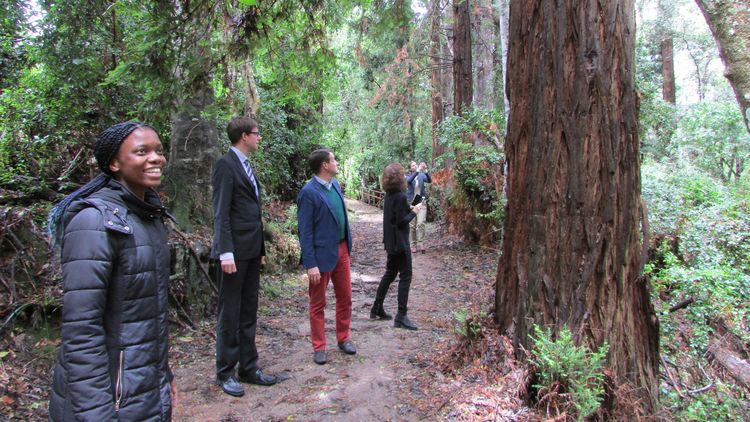


From educational research to environmental information systems - the areas in which the university cooperates with universities in South Africa are diverse. In this interview, Esther Ruigendijk, Vice President for Early Career Researchers and International Affairs, and Jenka Schmidt, Head of the International Student Office, talk about why these co-operations are important for research and teaching.
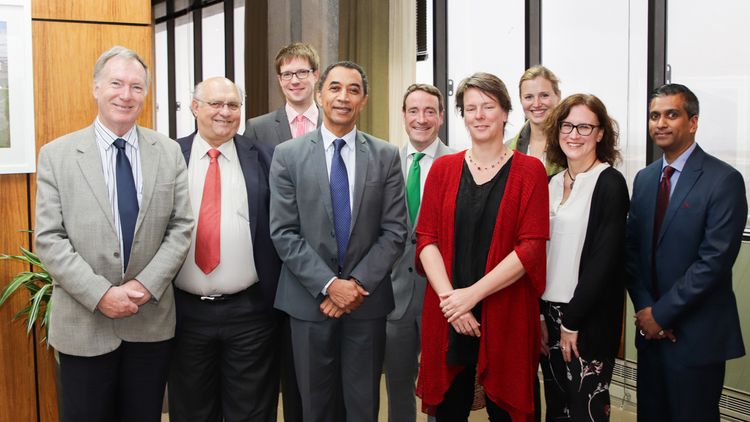
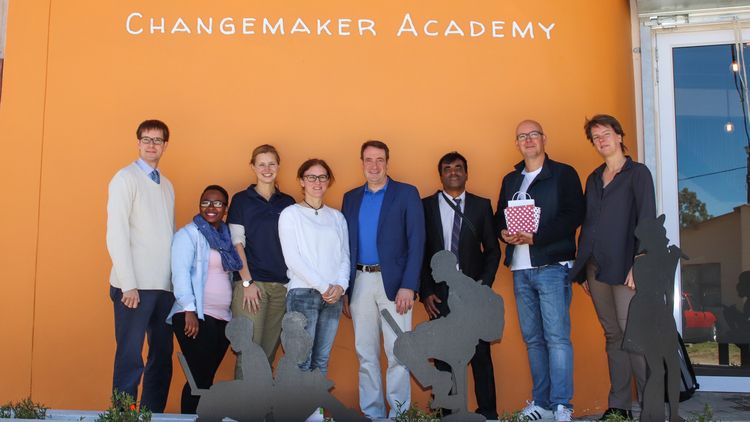
Ms Ruigendijk, Ms Schmidt, you and some colleagues visited the University of Witwatersrand in Johannesburg and Nelson Mandela University in Port Elizabeth. What links the University of Oldenburg with its partners in South Africa?
Nelson Mandela University (NMU) is our most important partner university alongside the RU Groningen. We have been cooperating for 20 years in teaching, research, transfer and further education - across several Schools. The universities are a good match, even though the NMU is significantly larger than ours: Both universities have strong regional roots and a large proportion of first degree graduates. We share values such as diversity and sustainability and reflect the role that universities and science play in society. The NMU is also very attractive for our students: they can combine a semester abroad with an internship, for example at a school or in a social institution such as Walmer Township.
How important is the student exchange programme and what can students expect?
Student exchange is a central element of the co-operation. Every year, we enable around five to ten Oldenburg students to go to South Africa for one or two semesters. There are also many shorter stays as part of the School's various projects. The students improve their foreign language skills, gain valuable insights into a different study system and strengthen their intercultural competences. They also appreciate the practice-orientated courses and the support offered to exchange students. And the study conditions are attractive: the NMU campus is located right by the sea. The students also praise the high standard of the courses at the University of Witwatersrand - If we were studying here, we would know where our exchange semesters were going. South Africa is a beautiful country - culturally and politically interesting, with very good universities and really interesting courses.
What other focal points are there in the co-operation?
We cooperate in research on climate adaptation, corporate environmental information systems, social entrepreneurship and educational issues, among other things. We finance research stays at the respective partner university or award scholarships for doctoral or Master's students. For example, a colleague from the NMU who is now a professor in educational science completed his doctorate in Oldenburg. We are currently cooperating with the NMU in the HEdIS and YEEES projects, for example, which are headed by Prof Dr Jorge Marx Goméz. Among other things, the various project partners are working on information technology solutions to sustainability issues. The ECOSOLA project, led by Prof Dr Bernd Siebenhüner, is concerned with how urban agriculture in Africa can be designed ecologically. The NMU is contributing expertise in organic farming in Africa, while the Oldenburg researchers are looking at ecological and social conditions.
Another focus is on educational research and educational management. How is the collaboration working here?
Extremely positive. In educational research, for example, we work together with the NMU and the Kenyan Moi University in the East and South African-German Centre of Excellence for Educational Research Methodologies and Management (CERM-ESA). Prof Dr Karsten Speck and Prof Dr Bernd Siebenhüner are primarily responsible for this. The first Kenyan Master's students received a DAAD-funded scholarship and graduated in Port Elizabeth, many with special honours. In numerous Master's theses, students have developed and tested methods that are important for meeting the educational challenges in southern Africa. University staff from the African partner universities can gain qualifications in various topics, such as effective research management or photo-based research methods.
The Erasmus Mundus degree programme EMMIR (European Master in Migration and Intercultural Relations) links our university with the University of Witwatersrand in Johannesburg. What are the main contents of this programme?
The degree programme, for which Prof. Dr Martin Butler and Dr Lydia Potts are responsible, deals with the complex topic of migration. For example, it deals with questions of human rights, democratic values, social aspects and labour markets - from a European and global perspective. Cooperation between European and African universities is particularly useful here. We can learn a lot from each other. Our South African colleagues have a lot of experience with the topics of diversity and migration. EMMIR students, for example, can do their final theses in Johannesburg. We want to expand this co-operation further.
In which areas are you planning further co-operation?
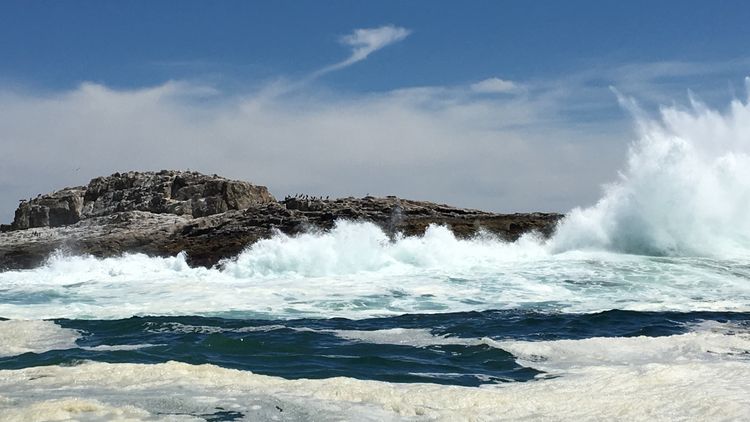
Both sides want to expand the exchange of students and young academics. We also want to expand our co-operation with the NMU, particularly in the marine sciences. We were invited to the new Ocean Science Campus and learnt about the research on site. That was very impressive. It became clear that our universities - despite all their differences - also have a lot in common. Particularly in the marine sciences, some of the scientists are working on similar topics, such as biodiversity, ecosystems and marine nature conservation. Our goal now is to network the experts from both universities and initiate joint projects.