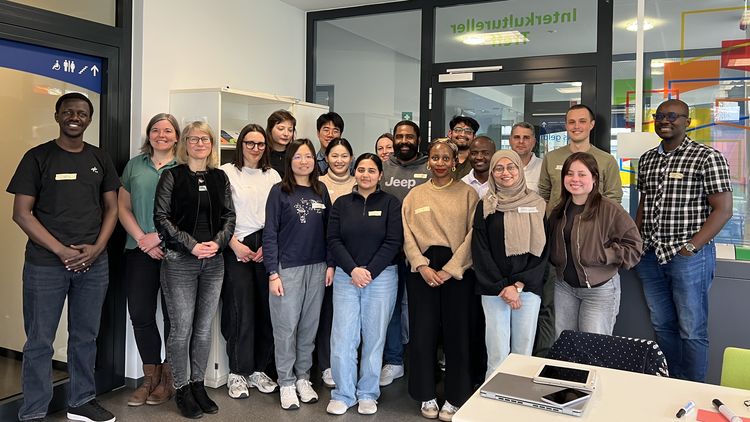


How does the German research system work, and how can I successfully secure external funding? International researchers at the University of Oldenburg can find the answers to these questions and more through workshops and advisory services.
Habilitation, the Wissenschaftszeitvertragsgesetz (Academic Fixed-Term Contract Act), Drittmittelförderung (third-party funding): If you're an international researcher looking to build an academic career in Germany, you might find the terminology a bit tricky. But the academic system itself and the paths to a professorship are also unclear to many people.
"The academic system in Germany is really complicated," says Dr Rezwana Binte Delwar from Bangladesh, who is currently a postdoctoral researcher at the Institute of Biology and Environmental Sciences. The hydrogeologist wants to stay in Germany to carry on researching and maybe even become a professor. But she's not quite sure how to make her dream a reality. The university's advisory services and workshops for international researchers are just what she needs.
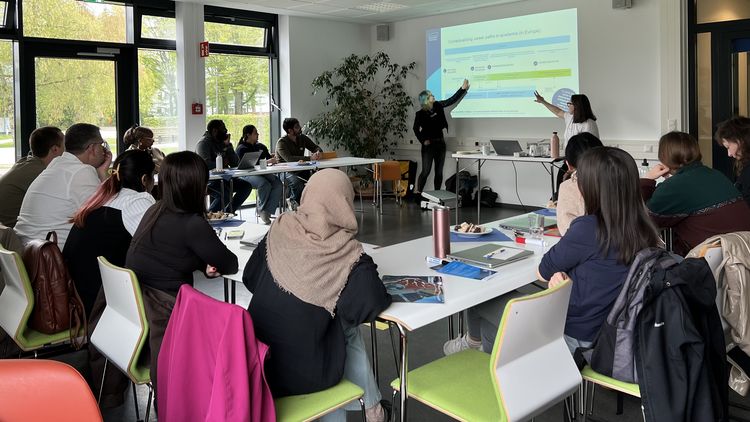
"We're here to help our international researchers figure out what they hope to gain from an academic career in Germany and how they can navigate our funding system strategically and successfully," says Dr Anne Clausen, International Research Funding Officer in the Department for Research and Transfer. Clausen and Dr Simone Brühl from the Study and Career Counselling Service have now run the workshop "Academic career paths in Germany" for the third time. Inger Zychla at the International Office has provided organisational support on each occasion.
Getting to know the academic culture
The aim of the workshops is to provide international researchers with the most comprehensive advice and the best possible service. Drawing on her experience of advising on funding opportunities in Germany and overseas, Clausen knows how important it is for early-career researchers to set clear goals if they wish to progress within the German academic system.
Timothy Musharu from Zimbabwe is specifically seeking information on this topic. He is currently studying for a PhD in Business Informatics within the research group led by Prof. Dr. Jorge Marx Gómez. He is unsure whether to pursue an academic career. While he enjoys research, he would also like to expand his small start-up in South Africa, where he completed his Master's degree. He says that the workshop, which he registered for just like Delwar, is helping him weigh up various options and define his goals more precisely.
At an early stage in their careers, international researchers benefit from reflecting on their skills and aspirations, including in relation to the job market, says Brühl, who advises PhD students within the ZSKB team. She also recommends that workshop participants familiarise themselves with the “unwritten rules of their respective disciplines”, as well as the established paths and rules of the German academic system. This requires networking within the relevant discipline and acquainting oneself with its academic culture, says Brühl.
During their workshops and advisory sessions, Clausen and Brühl explain to participants how to build an academic portfolio and which strategies to employ when applying for external funding, such as for their first independent project. For Delwar, a hydrogeologist, this advice has been invaluable in reinforcing her desire to pursue an academic career in Germany. She is now ready to set her sights on her next goal and submit her own research proposal. Time is of the essence, as her current postdoctoral position ends in February 2027.