-
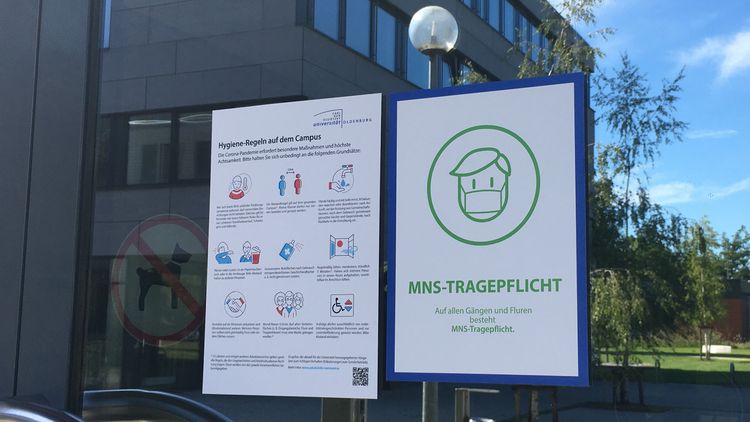
The coronavirus pandemic has drastically changed everyday university life. Photo: University of Oldenburg
-
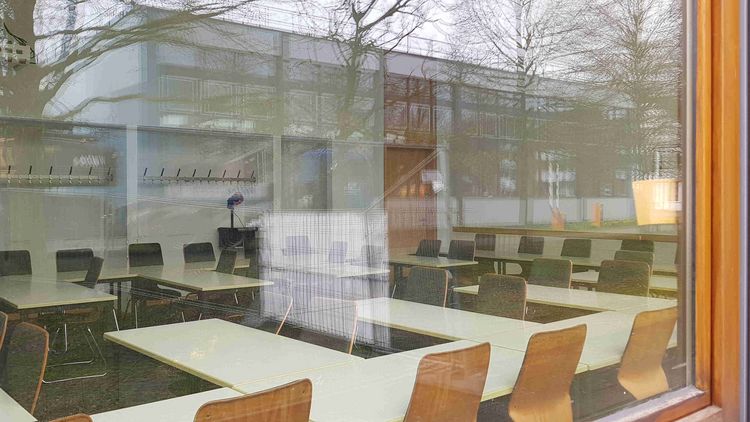
Empty lecture theatres were a common sight on campus during the summer semester of 2020. Teaching took place mainly online. Photo: University of Oldenburg
We’ve done it! A look back at the summer semester (Part 1)
Start of the summer semester postponed, all courses held online: The past summer semester was a particular challenge for everyone. Here, lecturers and students share how they coped with their new daily university routine.
Dr Sylvia Jahnke-Klein is a research assistant at the Institute of Educational Sciences and currently administers the professorship for school education with a focus on school development:
“The summer semester was an educational experience for everyone in terms of digital skills, but it was also very demanding. Ultimately, everything went well, but the workload was immense! The Data Centre and the Centre for Teaching and Learning did an excellent job and made it possible for high-quality teaching to succeed online.
I found the students to be very understanding and constructive. Somehow, we managed it together, and the oral examinations show that, despite everything, a great deal was learnt. And once again, I was able to see that our teacher training is making a difference: Master’s students have produced exceptionally good digital teaching modules as part of their course certificates, such as webquests, courseware modules, Padlets and WordPress blogs. These clearly demonstrate that, over the course of their studies, the students have learnt to design learning pathways that are both effective and motivating.
What remains from the 2020 summer semester: online teaching worked surprisingly well thanks to a tremendous effort from everyone, but I certainly do not wish for this to become the norm; teacher training thrives on lively exchange.”
Prof Dr Anja Bräuer heads the Department of Anatomy at the University Medical Centre, Dr Veysel Ödemis is a research assistant and teaching coordinator in the department:
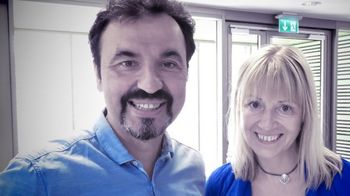
“The lockdown caught us, medical students in Oldenburg, in the middle of the current semester. We had already started our normal face-to-face classes at the beginning of March. Overnight, we had to switch to exclusively online teaching – and this in anatomy, one of the most teaching-intensive subjects in medicine. This was, and still is, a challenge: we had to familiarise ourselves intensively with the use of digital media ‘in the blink of an eye’. However, after a somewhat bumpy start, we were able to integrate this quite well into our day-to-day teaching. We lecturers have learnt a great deal about working with digital media and will endeavour to continue integrating these skills into our daily teaching and faculty life. We believe that the pandemic will provide a boost to digitalisation at the university, including in the field of anatomy.
However, social contact with other students and us lecturers is particularly important for first-year students. And medical studies thrive on ‘touching, examining and understanding’. We are therefore delighted that our colleagues from Groningen are giving us the opportunity to resume in-person macroscopic teaching using body donations during the winter semester. After all, basic knowledge of the body’s structure and the functional and topographical relationships between organ systems cannot be conveyed exclusively through digital media.”
In the video, medical student Carolin talks about how the transition to the digital semester went for her and the challenges she had to face as a tutor.
Prof Dr Ira Diethelm is a university lecturer in the didactics of computer science at the Department of Computing Science:
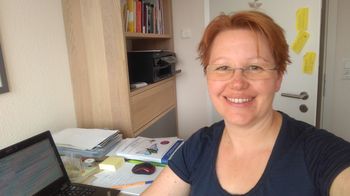
"As I had already recorded my lecture "Didactics of Computing Science I" as an mp3 in the lecture theatre in previous years, I was able to benefit from this this year. The recordings can be accessed via StudIP and are intended for students who are unable to attend due to overlaps or other commitments. They are designed in such a way that you don't need the slides when listening, but possibly only for reference.
I wanted to maintain this during the coronavirus period. Many of my students already have children and for this reason, like me, were particularly reliant on flexible formats. After I had recorded the first lecture sitting at my desk and staring at the wall, I quickly realised that I couldn't do this for the whole semester. The dynamic was completely missing. I therefore started to add an intro to existing recordings, for example, which contained a question or an online enquiry.
This year, there were around 50 students enrolled in the lecture, usually slightly fewer. Ten to 15 of them regularly attended the exercise, which my colleague Nils Pancratz also conducted online, but synchronised. Fewer people than usual have registered for the oral examinations so far. Many students have expressed the wish to take the exam in the autumn. We will of course make this possible.
Overall, everything went well, but I really missed the direct dialogue with the students and their spontaneous feedback. I look forward to when the conditions are such that this is possible again without any complications."
Max-Simon Kaestner is a research assistant in the Department of Didactics of History:
"It is no easy task to sum up this summer semester’s lectures, as I look back – now with a little hindsight – with mixed feelings. It was very exciting to have to rely consistently on digital formats for the first time when designing the courses. ‘Rethinking’ the seminars – most of which had already been planned – was enjoyable and sparked creativity, but at times it also took up a lot of time and tested our patience. One challenge was to find an alternative type of examination fairly quickly for those students who, due to school closures, were unable to collect data as part of the research and development placement. I will have very fond memories of the lively discussions within our working group and the advice provided by the E-Didactics team and IT services. Both were a great help to me in preparing the courses.
The students played a major part in the largely successful online semester. I was truly impressed by how well the majority of them coped with online teaching in my courses. Not only did many students demonstrate great flexibility, but they also enriched the courses with exciting and creative responses to questions and challenges relating to history didactics. Nevertheless, in a joint review with the students, it became clear that practical exercises, in particular, cannot take place exclusively online without some compromises.
For the post-pandemic period, I hope that lecturers and students will retain the openness to new ideas that was evident in many areas throughout the semester. However, the desire to return to face-to-face interaction with students and colleagues is just as strong."


Topics
- Astronomy
- Biology
- Botanical garden
- Chemistry
- Computing Science
- Cooperations
- Covid
- Culture
- Dutch Studies
- Early Career
- Economics
- Educational Sciences
- Energy
- Energy Research
- Environmental Sciences
- Equal opportunities
- German Studies
- Graduate academy
- Health Services Research
- Higher Education Policy
- History
- Human Medicine
- International affairs
- Marine Sciences
- Material Culture
- Medical ethics
- Medical Physics and Acoustics
- Music
- Neuroscience
- People
- Philosophy
- Physics
- Presidential Board
- Psychology
- Research
- Slavic Studies
- Social Sciences
- Special Needs Education
- Sport Science
- Study Affairs
- Sustainability
- Teacher Education
- Theology
- Transfer
- University Medicine
- Ukraine
- Wind Physics