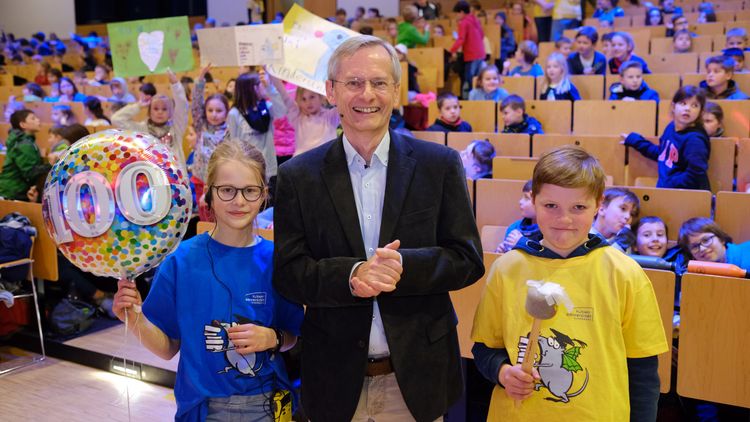
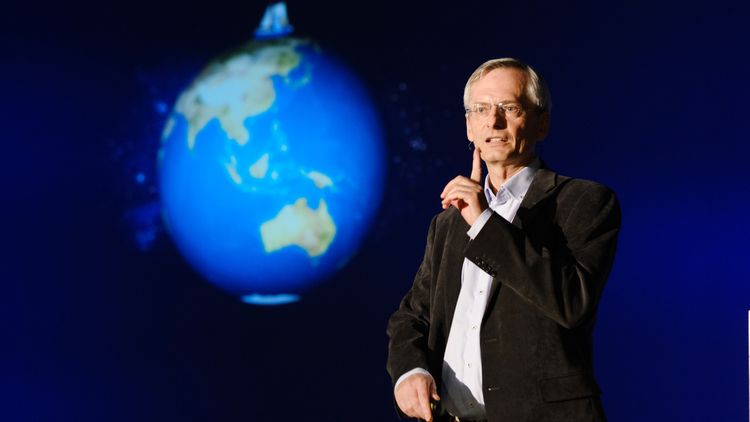
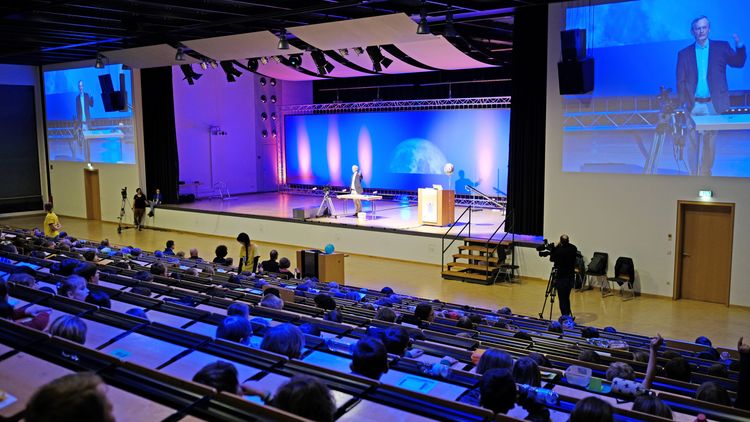
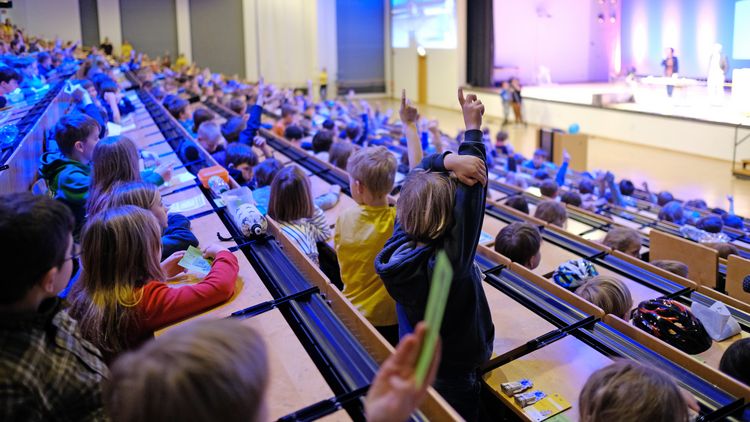


Can you live on the moon? Physicist Andreas Engel addressed this question in the 100th KinderUni lecture. At the end, the children in the packed Audimax realised that the moon is definitely worth a trip!
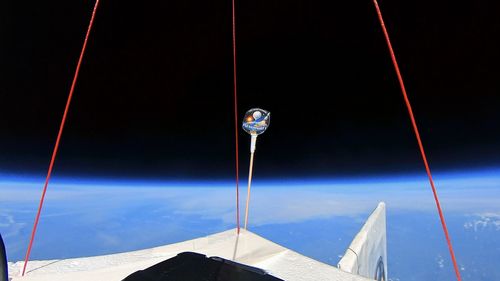
Unbearably hot in the sun during the day and freezing cold at night: the moon is not exactly a cosy place. There is no air to breathe, no rivers, no wind, no plants and no animals. At first glance, it seems desolate. So why do scientists still want to explore the moon - almost 50 years after the first human set foot on the celestial body?
Because the Earth can be viewed and explored differently from the moon - that was one of the answers Prof Dr Andreas Engel gave his young audience. And because the moon is a good place from which to explore the universe, such as our red neighbouring planet, Mars. Using a fire extinguisher and a mobile base, the physicist vividly explained how space rockets propel astronauts into space thanks to the principle of recoil. The children learnt an amazing detail: A rocket consumes as much fuel in a single second as an aeroplane on a journey from Germany across the Atlantic to North America.
Astronauts could land on the moon again in the next decade, Engel reported. And in 2040, there could be a lunar station that would actually enable people to live on the inhospitable celestial body. Walks would then only be possible in a space suit, of course. The candidates for such a moon mission, today's eight to twelve-year-olds, listened with rapt attention. Whoever sets off into space as an astronaut should think of him and bring him a stone from the moon, said Engel.
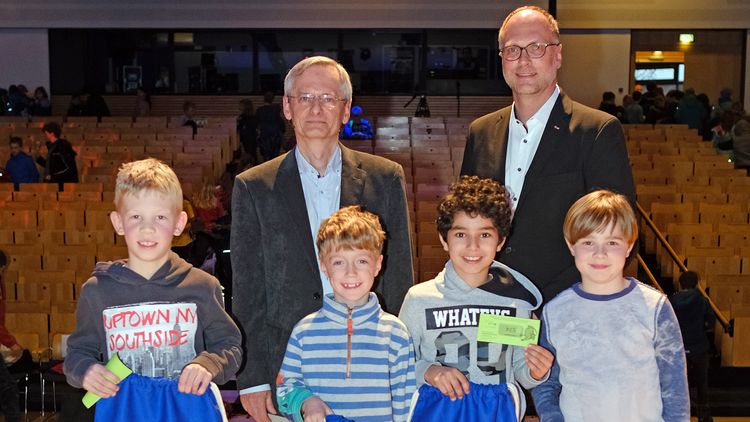
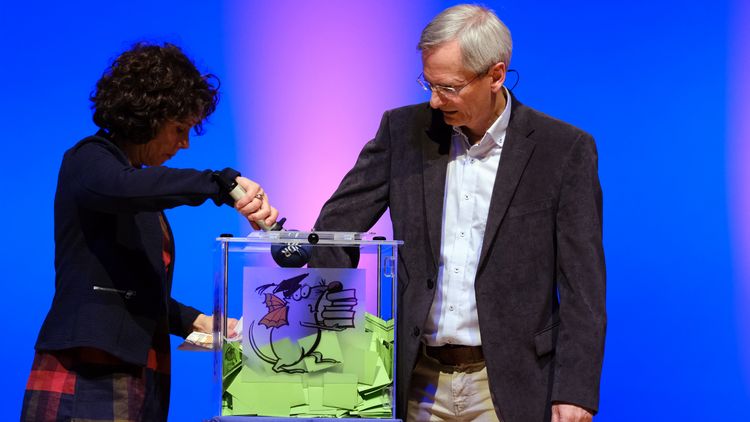
The main prize in the raffle that followed was not a trip to the moon. Nine-year-old Erik from Oldenburg was delighted with a weekend trip by train to the capital Berlin. He received the prize from Olaf Meenen from the LzO, which has financially supported the KinderUniversität from the very beginning. Three other children received an experiment set as a prize.