
Peter Freiherr von Danckelman
Peter Freiherr von Danckelman
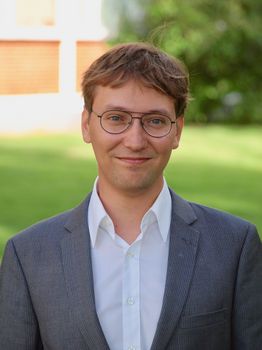
Doctoral project
Prosopographia Palmyrena
Explanation of the research project
For decades, the mainstream of Palmyra research has assumed that the city of Palmyra, located in the Roman province of Syria, was an essentially Greek city. This thesis, which is mainly supported in the French-speaking world, is essentially based on the observation that the epigraphic evidence primarily contains institutions originating from the Greek area, such as a demos, the phyles and offices such as that of the strategos. However, in view of the bilingual Palmyrene-Greek nature of the Palmyrene inscriptions and the strong kinship ties of the elites to tribes that can be inferred from them, the explanatory approach of viewing Palmyra as a purely Greek-influenced city has been criticised, which attributes the special focus of the Palmyrene elites on long-distance trade and the so-called Palmyrene special empire primarily to connections between the elites and polymorphous nomadic tribes living in Palmyrene.
In view of these conflicting research positions, the dissertation project aims to analyse the parts of the bilingual Palmyrene inscriptions edited by Hillers and Cussini that are written in Palmyrene Aramaic. To this end, it is organised along two lines: On the one hand, a prospography of the persons named in the inscriptions is to be compiled (hitherto a desideratum of research) in order to gain an overview of the networking of the Palmyrene elite in the steppe surrounding Palmyra, the city world of Syria and Mesopotamia as well as in the domain of the Parthians and the later Sassanids. At the same time, the offices and institutions of the political world of Palmyra occupied by this elite, most of which were designated with Greek loan words, will be analysed under the hypothesis of a transcultural Romanisation of Palmyra. To this end, it is necessary not to regard familiar Greek terms such as "βουλή" from the outset as part of a classical Greek city constitution, but to approach them from the "Aramaic" side and to scrutinise them in this way. A new view of Palmyra's elites and their institutions gained in this way can then be used to better understand Odainath's and Zenobia's unique development of power in the 260s.
Aim of the work
Was Palmyra an anomaly in the Roman Empire? Was it a Greek polis or the urban centre of a polymorphous tribal society? Which of the two models can be considered more plausible?
A single work will not be able to settle this great debate beyond doubt. However, the question is useful in order to gain a clearer view of Palmyrene society against the background of both models. To this end, three key questions must first be asked:
1. to which ethnic, social and cultural collectives did the Palmyrenians who can be recorded in a prospography feel they belonged?
2. how did Palmyra communicate with other urban centres in Roman Syria and Parthian Mesopotamia? What forms of competition existed and what networks were maintained?
3. in what ways did the local population, especially the local elite, adopt institutions, practices and symbols that were obviously derived from the symbolic repertoire of Greek urban societies in the Hellenistic and Roman East? What content did they fill such borrowings with?