Project 'gentes' and 'nationes'
Project 'gentes' and 'nationes'
Gender history of community concepts in the 15th/16th century
Research project
(funded by the Lower Saxony Ministry of Science as part of the "Pro*Niedersachsen" programme)
In the project, the team led by Oldenburg medieval historian Prof Dr Almut Höfert is investigating how gender concepts and ideas of nations, peoples, tribes and cities were mutually dependent during the Middle Ages. While historians have already intensively researched this question with regard to the modern nation, corresponding studies on medieval history are still scarce. Höfert and her team also shed light on specific terms such as "the Saxons", "the Frisians", "the Saracens" or "the Germans", "the Turks", "the French" and ask about their origins.
News
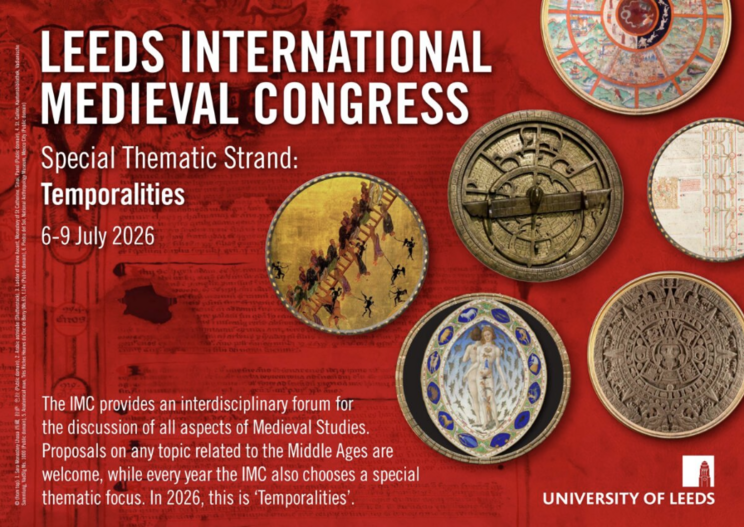
International Medieval Congress - University of Leeds:
19th century national anthems evoking fatherland, fraternity and ferocious soldiers fighting for their nation indicate that modern nations were deeply gendered. Pre-modern notions of nations, peoples and other communities have been less explored in this regard. Our session focuses on the 15th and 16th centuries but will also indicate long term developments before and after this timeframe. With the advent of the printing press, (almost exclusively male) authors spread their travelogues and ethnographic compendia with the explicit goal of "decribing the whole world" through the printing press and (also mostly male) humanists reshaped the concept of natio competing for their "national honour". The session will explore how gender as a "central category of social differentiation" (C. Ulbrich) was embedded in the different dynamics and discursive formations.
'Gentes-' and 'nationes-' Discourses in France (PD Dr Anja Rathmann-Lutz)
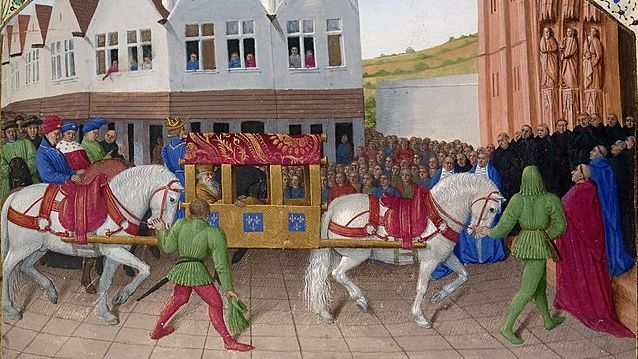
The sub-project "gentes- and nationes-Discourses in France from a gender-historical perspective in the 15th/16th century" examines some of the central texts in which political order and the historical formation of communities and nations were considered in late medieval France, such as Christine de Pizan's Cité des Dames (1405), the Grandes Chroniques de France and Robert Gaguin's Compendium de origine et gestis Francorum (1483/95). In a second step, the French translation and adaptation of the Cosmographia, François de Belleforest's Cosmographie universelle de tout le monde (1575), is compared with Münster's work and analysed for similarities and differences in the gender-marked collective designations.
'Gentes' and 'nationes' in the Roman-German Empire (M. Ed. Laura Kampelmann)
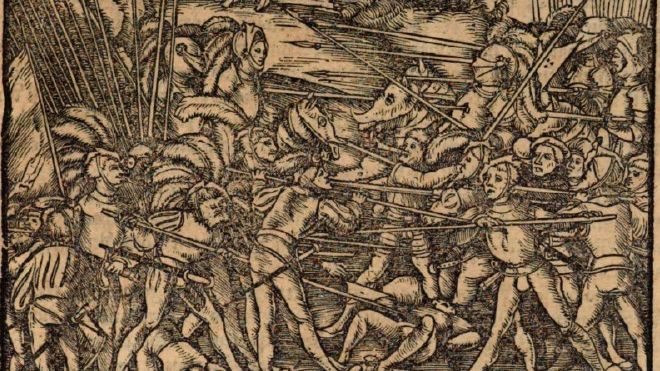
The sub-project "gentes and nationes in the Roman-German Empire" sub-project places Sebastian Münster's Cosmographia (1544) at the centre of research as a document of humanist thought in the Roman-German Empire. The genre of "world descriptions" bundles historical, political, geographical, astronomical, moral and religious content in the 15th and 16th centuries and thus offers an insight into the humanist discourses on (world) knowledge. Specifically, as part of these knowledge discourses, humanist ideas of collective formations will be analysed in terms of their gender markers. Both descriptions of the world and descriptions of countries and cities by German humanists will be used as sources. Thus, urban-communal community designations as well as gentes and nationes designations form the object of investigation of this gender-historically orientated sub-project.
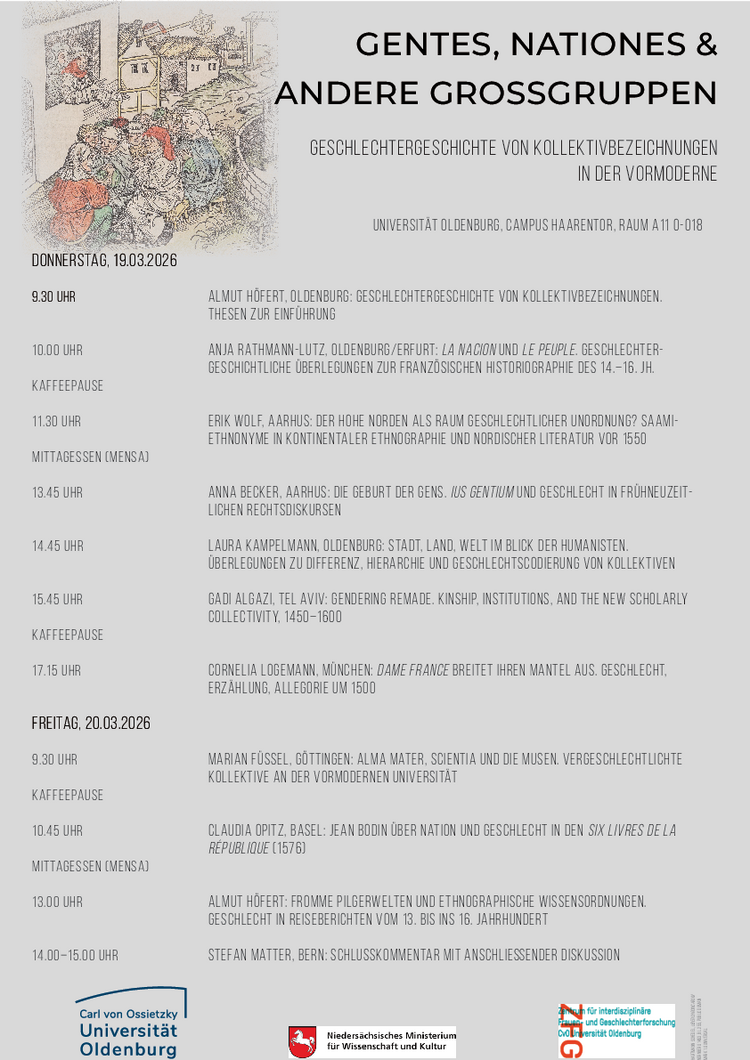
Conference 19 March - 20 March 2026: Gentes, nationes and other large groups (CvO University of Oldenburg)
Conference - University of Oldenburg:
Date: 19-20 March 2026
Gentes, nationes and other large groups: Gender History of Collective Names in the Premodern Era
Abstract: Among collective names, gentile concepts, which legitimised European monarchies such as the regnum Francorum from late antiquity onwards, gained new relevance in the 15th and 16th centuries. The number of travelogues and ethnographic compendia that set themselves the goal of "describing the whole world" (p. Münster) increased exponentially with the advent of printing. At the same time, humanists reshaped the concept of natio and shaped pre-modern national (and regional) discourses. Other collectives and their concepts also changed: the city became "the subject" (C. Meyer), the Roman-German empire was institutionalised with imperial diets and estates, Christendom emphasised its endangered borders in the face of the Turkish threat and at the same time expanded into the New World, the reformers elevated the common man to the reference value of a just and God-pleasing order. The guiding principle of the conference will be to examine the role of gender as a central "category of social differentiation" (C. Ulbrich) in these discourses and dynamics.