


Marine researchers at the university have investigated the antifouling effect of animals. Their findings could help to develop environmentally friendly biopaints.
Boat owners are familiar with the problem: once the boat has been in the harbour for a while, it quickly becomes colourful under the water surface. Microorganisms such as bacteria or algae form a so-called biofilm and cover the hull, keel and rudder blade. Larger animals such as mussels or barnacles also colonise this later on. But why are some animals living in the water free of these biofilms?
A team of scientists led by Prof Dr Peter Schupp from the Institute of Chemistry and Biology of the Marine Environment (ICBM) at the University of Oldenburg has investigated this question. The results show that animals can protect themselves from fouling by producing certain chemical compounds. The protection depends on the type, quantity and structure of the compounds. This knowledge could help to develop environmentally friendly paints that can, for example, protect ships and marine measuring instruments from fouling for longer. The scientists have published their findings in the journal "Marine Drugs". The research was carried out as part of the "Biodiversity & Health" funding programme, which was supported by the German Federal Ministry of Education and Research (BMBF).
Antifouling effect depends on various factors
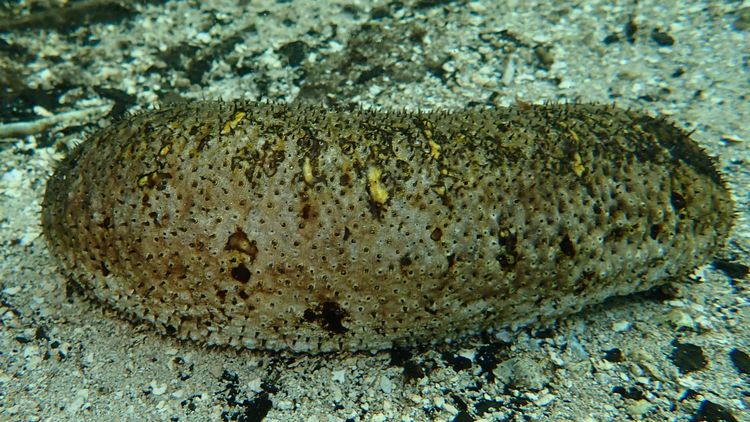
Sea cucumbers live on the seabed and can be found all over the world. The animals have a cylindrical shape and move very slowly, making them an ideal colonisation surface for biofilms. However, sea cucumbers produce - depending on the species - active substances that can prevent such colonisation: these include so-called saponins. This means that sea cucumbers are also equipped with a natural antifouling agent.
Schupp and his team used sea cucumber species from waters off Indonesia and Guam to clarify the effect of the different saponins on antifouling. They also used the diatom Cylindrotheca closterium, which is frequently found in biofilms. Elham Kamyab, a doctoral student in Schupp's Environmental Biochemistry working group, carried out various experiments to investigate why only certain saponins provide effective protection against biofilms.
The result: the antifouling effect depends on the type of sea cucumber, the saponin concentration and the molecular structure of the saponins. "Using our methods, we were able to identify certain saponins that are particularly suitable as antifouling substances," says Kamyab.
Important search for new coatings
For the environmental biochemists, these findings are a first step towards a biodegradable paint that benefits both the environment and the industry: many of the existing paints are not biodegradable and are also toxic to the environment. The search for new protective coatings for ships, measuring instruments and other marine technology is therefore important. In this way, maintenance work and costs can be saved and the environment protected at the same time.
As saponins are quite complex compounds, they are not suitable for synthetic production due to their high cost. "However, if we know more about the molecular structures, we can identify the active parts of the molecule in order to produce them industrially later," says Schupp.