PLAWES
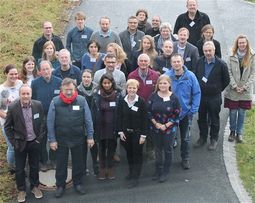
PLAWES launched with ICBM participation
PLAWES
PLAWES
Microplastic contamination in the model system Weser - Wadden Sea National Park: a cross-ecosystem approach
PLAWES - Project summary
In PLAWES, the plastic pollution of a large river catchment area with European dimensions will be comprehensively analysed for the first time worldwide using the Weser National Park Wadden Sea as a model system. As a pioneering study, PLAWES will carry out a cross-disciplinary and cross-ecosystem analysis of microplastic (MP) contamination and investigate various point (wastewater treatment plants, separation systems) and diffuse (drainage, atmosphere) sources and input pathways. The findings will be incorporated into a modelling approach for balancing and identifying primary transport mechanisms and accumulation zones. Ecosystem effects of MP in the Weser-Wadden Sea system will be analysed based on the interaction of microplastics with pathogens in biofilms and aquatic invertebrates. The findings of these ecologically particularly relevant aspects are used to estimate the environmental risk of MP for the model system and subsequently make it transferable to other systems. In addition, new information and teaching materials will be created using the model system as a concrete example in order to make relevant knowledge available to civil society and decision-makers.
The ambitious, highly interdisciplinary project is supported by an internationally recognised consortium that not only has many years of experience in the relevant disciplines, but also plays a pioneering role in the investigation of MP in aquatic systems. The aim of PLAWES (based on BMBF MiWa and JPI Oceans BASEMAN) is to generate a consistent picture of sources and input pathways, accumulation areas, transport routes and risks of microplastics from the terrestrial catchment area via rivers to the sea, as well as to develop an educational concept on the topic in order to provide the basis for national and international action strategies together with stakeholders from politics, business and society.
The PLAWES joint project is made up of a total of 6 work packages, with a total of 8 institutions involved.
The ICBM is involved in work packages 1 to 4 of the joint project PLAWES. These are primarily the planning and implementation of the sampling campaigns in the Lower Weser (WP1) and the detailed, mass-based microplastic analysis in the sampled water bodies, sediments and in recent and historical biota (WP1, WP2 and WP4).
All data obtained will be quality-assured, validated and comprehensively interpreted. They also form an important basis for RAUMIS modelling in WP 3. In co-operation with UBT and AWI, ICBM is responsible for the extraction, purification and analysis of MP particles from water and sediment samples.