
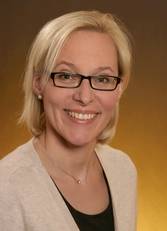
Prof Dr Ines Oldenburg
Prof Dr Ines Oldenburg
Curriculum Vitae
Since September 2015
- Research Director at the Institute of Educational Sciences / General Studies Working Groupat the C.v.O. University of Oldenburg
April 2015
- Appointed to the Ludwigsburg University of Education (W3)
May 2014
- Habilitation in the field of Educational Science, specialising in ‘Didactics of General Studies’.
Since October 2013
- Acting Professor of Didactics of General Studies at the C.v.O. University of Oldenburg / Head of the Interdisciplinary General Studies/General Education Research Group
Since September 2011
- Seconded as a lecturer and research assistant to the Institute of Educational Sciences / Interdisciplinary General Knowledge / General Studies Research Group at C.v.O. University of Oldenburg
Since July 2008
- Transferred to the Lower Saxony School Inspectorate; worked as a school inspector, with extensive involvement in primary schools
July 2008
- Appointed as a government school inspector
February 2007
- Successful admission to the selection process for school inspectors seeking promotion to the school inspection service career path
January to June 2007
- Secondment to the Lower Saxony School Inspectorate
September to December 2006
- Successful completion of the training programme to become a school inspector
Winter semester 2004/2005
- Acting as the professorship for ‘Interdisciplinary General Studies / General Education’ for Prof. Dr Astrid Kaiser (Faculty I) at the C. v. O. University of Oldenburg
Since the 2001 summer semester
- Lecturing posts in Department 1 / School I at the C. v. O. University of Oldenburg
Summer semester 2001
- Contributing lecturer on courses in Department 1 (Pedagogy) at the C. v. O. University of Oldenburg
since August 2001
- Headteacher of VGS Lemwerder-West, Lemwerder
February 2000
- Awarded a Dr. phil. in the Department of Education (Faculty 1) at C. v. O. University of Oldenburg
August 1997
- Appointed to the Lower Saxony civil service
Summer semester 1997 to winter term 1999/00
- Doctoral studies in Education
May 1997 – August 1997
- Research assistant at the Institute of Educational Sciences 1 / Department 1 of Education at the C.v.O. University of Oldenburg
March 1997 to August 1997
- Lecturer at the Leer Adult Education Centre in the ‘German for Ethnic German Returnees’ programme
November 1996 to August 1997
- Member of the project ‘Motivations for and circumstances of study among Oldenburg students of the subjects of social sciences, sociology and politics’ at the C. v. O. University of Oldenburg
Since 1996
- Member of the Centre for Educational Research at the C. v. O. University of Oldenburg
September 1996
- Passed the Second State Examination for teaching at primary and secondary schools
May 1995 to October 1996
- Trainee teacher at the Buchholz Teacher Training College, based at Sittensen Primary School
December 1994
- Passed the First State Examination for teaching at primary and secondary schools, specialising in German, Protestant Religious Education and General Studies
Research focus
- Teaching and learning methods in General Studies (social science and natural science aspects and their integration with a view to a multi-perspective approach)
- Quantitative educational research on the issue of ‘quality’ in General Studies
- Quantitative educational research on selected issues in all-day primary schools
- Qualitative educational research on selected issues facing primary school headteachers
- Issues in primary school pedagogy
- External evaluation in the education sector and possible courses of action for implementing teaching development
- knowledge transfer
- Leadership of the ‘Inclusive General Studies’ research group: Research-based learning for the development and empirical testing of teaching and learning strategies for heterogeneous learning groups in inclusive General Studies (the so-called FoL project: Research-Oriented Teaching at the University of Oldenburg)
- Inclusion in General Studies – inclusive General Studies in classroom practice
- Design of learning materials for General Studies / Eye-tracking in the context of usability studies with primary school children
Teaching
Lectures
Winter term 2026 / 2027

Summer term 2026
Winter term 2025 / 2026
Summer term 2025
Winter term 2024 / 2025
Summer term 2024
Winter term 2023 / 2024
Summer term 2023
Winter term 2022 / 2023
Summer term 2022
Winter term 2021 / 2022
Summer term 2021
Winter term 2020 / 2021
Summer term 2020
Winter term 2019 / 2020
Summer term 2019
Winter term 2018 / 2019
Summer term 2018
Winter term 2017 / 2018
Summer term 2017
Winter term 2016 / 2017
Summer term 2016
Winter term 2015 / 2016
Summer term 2015
Summer Semester 2019
- Key Issues I – Sustainability: A Case Study of Interlinked Topics in Multi-Perspective General Studies: Plastics and Microplastics (SE, BA)
- Scientific approaches – the ‘research cycle’ using the example of the technical perspective: vehicle construction (SE, BA)
- Key Issues II – Making sustainability tangible for children
- Accompanying course for the Master’s thesis in General Studies (SE, MA)
Winter semester 2018/19
- Competence development and assessment in General Studies (SE, MA)
- Concepts in General Studies I (SE, MA)
- Concepts in General Studies II (SE, MA)
- Concepts in General Studies III (SE, MA)
Summer Semester 2018
- Scientific Approaches – the ‘Research Cycle’ (SE, BA)
- Key Issues I – Sustainability in Practice (SE, BA)
- Accompanying course for the Master’s thesis in General Studies (SE, MA)
Winter semester 2017/2018
- Introduction to the Didactics of General Studies (Lecture, BA)
- Concepts in General Studies I
- Concepts in General Studies II
Summer semester 2017
- Key Issues in General Studies I – ‘Sustainability’ in Practice (SE, BA)
- Approaches – Research and Experimentation with Children (SE, BA)
- Approaches – Practical Natural Sciences – the ‘Research Cycle’ (SE, BA)
- Accompanying course for the Master’s thesis in General Studies (SE, MA)
Courses in the Winter Semester 2016/2017
- Introduction to the Didactics of General Studies (Lecture, BA)
- Planning General Studies V (Practical Course, BA)
- Concepts in General Studies I (SE, MA)
- Concepts in General Studies II (SE, MA)
- Concepts in General Studies III (SE, MA)
Courses in the 2016 Summer Semester
- Key Issues I in General Studies (SE, BA)
- Science and Technology in General Studies: Content (SE, MA)
- Science and Technology in General Studies: Methods (SE, MA)
- Accompanying course for the Master’s thesis in General Studies (SE, MA)
Courses in the Winter Semester 2015/16
- Introduction to the Didactics of General Studies (Lecture, BA)
- Selected Methods in General Studies – Natural Sciences (SE, BA)
- Concepts in General Studies I (SE, MA)
- Concepts in General Studies II (SE, MA)
Courses in the Summer Semester 2015
- Key Issues I in General Studies (SE, BA)
- Key Issues II in General Studies (SE, BA)
- Supporting courses for the practical placement in General Studies: preparation, support and follow-up
- Accompanying course for the Master’s thesis in General Studies (SE, MA)
Courses in the 2014/15 winter semester
- Concepts in General Studies I (SE, MA)
- Concepts in General Studies II (SE, MA)
- Introduction to the Didactics of General Studies (VL, BA)
- Accompanying course for the practical placement in General Studies: Preparation, supervision and debriefing
Courses in the Summer Semester 2014
- Gender-sensitive approaches in General Studies: ‘Boys and girls at school and in the classroom’ (SE, BA)
- Intercultural Approaches in General Studies (SE, BA)
- Key Issues in General Studies I: Education for Sustainable Development (ESD) (SE, BA)
- Key Issues in General Studies II (SE, BA)
- Accompanying course for the Master’s thesis in General Studies (SE, MA)
Courses in the Winter Semester 2013/14
- Introduction to the Didactics of General Studies (VL, BA)
- Concepts in General Studies I (SE, MA)
- Concepts in General Studies II (SE, MA)
- Selected Methods and Media in General Studies: Scientific Aspects (SE, BA)
- Selected Methods and Media in General Studies: Social science aspects (SE, BA)
Courses in the 2013 summer semester
- Key Issues in General Studies I: Visual Cultures and Media (SE, BA)
- Key Issues in General Studies I: Environmental Education (SE, BA)
- Key Issues in General Studies III: Education for Sustainable Development (SE, BA)
- Gender-sensitive approaches in General Studies: Use of modern ICT (SE, BA)
- Intercultural approaches in General Studies: The ‘other’ you – experienced in and through school (interdisciplinary project with the Research Centre for Children’s and Young Adult Literature at the C.v.O. University of Oldenburg) (SE, BA)
Courses in the winter semester 2012/13
- Selected Methods and Media in General Studies: Scientific Aspects I (SE, BA)
- Selected methods and media in General Studies: Scientific Aspects II (SE, BA)
- Selected Methods and Media in General Studies: Social science aspects (SE, BA)
- Content, Competence Development and Assessment in General Studies I (SE, MA)
- Content, Competence Development and Assessment in General Studies II: Practical Research (SE, MA)
Courses in the 2012 summer semester
- Key Issues in General Studies I: Energy Education (SE, BA)
- Key Issues in General Studies II: Environmental Education (SE, BA)
- Key Issues in General Studies III: Sustainable Development (SE, BA)
- Gender-sensitive approaches in General Studies (SE, BA)
- Intercultural approaches in General Studies (SE, BA)
Courses in the Winter Semester 2011/12
- Selected Methods and Media in General Studies: Scientific aspects (SE, BA)
- Selected methods and resources in General Studies: Social science aspects (SE, BA)
- Concepts in General Studies I (SE, MA)
- Concepts in General Studies II (SE, MA)
- A New Introduction to the Didactics of General Studies (VL, BA)
Nomination for the ‘Teaching Award’ in the 2011/12 academic year in the ‘Best Course’ category at the C. v. O. University of Oldenburg
Lectureships at the University of Oldenburg (Department 1 of Pedagogy and School I of Educational Sciences)
Summer Semester 2001:
School-age children today: between motivation and anxiety
Winter Semester 2001/2002:
How school can make you ill
Summer Semester 2002:
Practical aspects of teaching in primary schools
Winter term 2002/2003:
Early learning in primary school – more than just reading, writing and arithmetic
Summer Term 2003:
Shaping the transition to primary school – early learning in primary schools
Winter term 2003/2004:
‘Crawling towards Harvard’ – Aspirations and realities of contemporary primary school practice, with particular emphasis on the transition phase
Summer Term 2004:
Joint teaching assignment with Prof. Dr Astrid Kaiser: Action-oriented approach in General Studies
Summer Term 2005:
Action-oriented approach in teaching
Winter Semester 2005/06:
Assessment in General Studies
Other activities
- Research-related activities outside the University of Oldenburg
Since 2016
Active member of the scientific advisory board of the journal ‘General Studies Weltwissen’
Since 2014
Active member of the scientific advisory board of the journal ‘Grundschule’
2007–2008:
Helped to establish the ‘School Management’ distance-learning programme at the IQSH / C.A. University of Kiel
since 2004
Presentations at conferences organised by the GDSU and DGfE, amongst others
Since 2002
Regular delivery of numerous professional development events, workshops, training sessions and lectures:
- as part of the ofz (‘Oldenburg Further Training Centre’) and the diz (Didactic Centre of the C.v.O. University of Oldenburg):
- as part of ‘Pedagogical Week’,
- as part of the ‘Parents’ University’,
- for the Association for Systemic Psychology in Oldenburg
- and the ‘East Frisian University Days’, and
- the ‘School Management’ conference series, the Kiel School Leadership Symposium,
- for the ‘BNE Agency’ project,
- for various training providers for primary school teachers and early years educators
- Advisor at specialist conferences organised by the University of Vechta and the City of Leer on digital education
on the topics of
- school anxiety among children and teachers, counselling for parents regarding children’s academic difficulties, psychosocial stress among pupils, stress management for pupils and/or teachers, brain research,
- starting school; promoting physical activity, perception and concentration in primary school
- school climate, school management, external evaluation of schools using the ‘School Quality Orientation Framework’, drafting mission statements as part of school programme work, school inspections, quality development in schools, quality of teaching
- Implementing Education for Sustainable Development (ESD) in General Studies
- Basic education in technology and the natural sciences within General Studies
- Implementing workshop-based learning in General Studies
- Implementing multi-perspective General Studies with an inclusive focus in primary schools
- Assessment in General Studies
- The use of digital media in multi-perspective General Studies
- Participation in the academic self-administration of the University of Oldenburg
-Decentralised Equal Opportunities Officer for School I until 2018
-Chair of the General Studies Subject Committee until 2018
-Member of the School-University Dialogue Group until 2017
Publications
Theses:
- Oldenburg, I. (1994). The educational problem of school anxiety. Causes, consequences and possibilities for change: Unpublished seminar paper for the teaching qualification examination for primary and secondary schools. Oldenburg: n.p..
- Oldenburg, I. (1996). The use ofa psychological diagnostic tool as an aid to pupil observation for the differentiated assessment of achievement motivation – illustrated using a third-year pupil: Unpublished seminar paper for the second state examination for teaching at primary and secondary schools. Buchholz Nordhordheide: no publisher.
- Oldenburg, I. (2000). School-specific anxieties among children and how these are perceived by their class teachers: An empirical study of third and fourth year classes in primary schools and fifth and sixth year classes in urban and rural regions of Lower Saxony: PhD thesis. Oldenburg: no publisher given.
- Oldenburg, I. (2014). Perspectives on General Studies as a multidimensional construct, with particular reference to key fundamental questions regarding the development of school quality: Habilitation thesis. Oldenburg: n.p..
Monographs and edited volumes:
- Oldenburg, I., Scholz, W.-D., Loeber, H.-D., Söller, A. & Krull, G. (1997). Studying the social sciences. An empirical study of study orientations and academic difficulties among Diplom graduates in social sciences. Sociologists and Political Scientists in Faculty 3 at the University of Oldenburg. Oldenburg: BIS-Verlag.
- Oldenburg, I. (2001). School Anxiety. Oldenburg: Oldenburger Vor-Drucke.
- Oldenburg, I. (ed.). (2012). School and inspection. 9 critical studies. Baltmannsweiler: Schneider.
- Oldenburg, I. (2013). School-Specific Fears in Children and How They Are Perceived by Their Class Teachers. An Empirical Study of Years 3 to 6 in Lower Saxony (2nd edition). Berlin: Rhombos.
- Becher, A., Miller, S., Oldenburg, I., Pech, D. & Schomaker, C. (Eds.). (2013). Communicative General Studies. Festschrift for Astrid Kaiser. Baltmannsweiler: Schneider.
- Oldenburg, I. & Oetken, M. (2014). Narrating, Representing, Reporting. Interdisciplinary Perspectives on Non-Fiction in Children’s and Young Adult Literature. Baltmannsweiler: Schneider.
- Oldenburg, I. & Schmitt, A. (in preparation, to be published in 2020) (eds.). Multi-perspective approaches to science and General Studies. Braunschweig: Westermann .
- Oldenburg, I. & Wulf, J. (in preparation, to be published late 2019/early 2020): Teaching General Studies from Multiple Perspectives (working title). Book series. Baltmannsweiler: Schneider.
Articles in journals or anthologies:
- Oldenburg, I. (1997). How ‘progressive’ can the information society be? A plea for a self-assured pedagogy against the reduction of pedagogy to media-use techniques. In M. Zöllner (ed.), From organised security to unexpected independence? Conference on Young Cultural Studies and Practice in Essen, 21–23 May 1997 (pp. 192–195). Cologne: Hanns Martin Schleyer Foundation.
- Oldenburg, I. (2000). Creating a ‘little letter monster’ as part of an interdisciplinary German and art lesson. FLOH’s Box of Ideas No. 26. Tips from teachers for teachers. 1st quarter 2000. Munich.
- Oldenburg, I. (2001). Anxiety – (not) an issue for today’s schoolchildren!? Reflections on pupils’ performance- and exam-related anxieties and how these are perceived by their teachers. In F. W. Busch & H. Schwab (Eds.), Intellectuality and Practical Politics (pp. 241–251). Oldenburg: BIS-Verlag.
- Oldenburg, I. (2002). School anxiety in children. Primary School, 7–8, 73–75.
- Brüdt, H. & Oldenburg, I. (2003). Plants and fertilisers. Grundschule, 3, 51–56.
- Oldenburg, I. (2003). Motivation – in practice: A truly vibrant person. Primary School, 4.
- Oldenburg, I. & Gerdes, D. (2003). Introductory theses on teaching and learning from a neurodidactic/neuropedagogical perspective (‘Brain-Based Learning and Teaching’). Available at: www.rpz-aurich.de, 2003. (currently available at: www.dr-dirk-gerdes.de/exemplarische-texte-aus-dem-rpz-kontext/Brain-based-Learning-and-Teaching/)
- Oldenburg, I. (2003). Children’s fears and how teachers can address them. Grundschule, 10, 34–37.
- Oldenburg, I. (2004). Sustainability in General Studies – a teaching project on the topic of ‘soil’. In A. Kaiser & D. Pech (Eds.), The World as a Starting Point for General Studies. Volume 6 (pp. 154–166). Baltmannsweiler: Schneider.
- Oldenburg, I. (2005). Supporting children’s educational development through targeted parental guidance. In F. Hellmich (ed.), Teaching and learning according to IGLU – primary school education today (pp. 277–288). Oldenburg: Centre for Teaching and Learning, University of Oldenburg.
- Oldenburg, I. (2007). School inspection and quality development. Experiences from Lower Saxony. Schulmanagement, 6, 26–30.
- Oldenburg, I. & Mörking, D. (2008). Controlling in schools, Part 1. Practice-oriented quality development in schools. School Administration Lower Saxony, 3, 73–76.
- Oldenburg, I. & Mörking, D. (2008). Controlling in Schools, Part 2. Procedures for managing the process of quality development in schools. Lower Saxony School Administration, 4, 100–104.
- Mörking, D., Oldenburg, I., Schwank, E. & Sommer, N. (2011). The contribution of school inspection to school development: Can school inspection ‘save’ schools in difficulty? Lernende Schule, 56, 21–27.
- Oldenburg, I. & Mörking, D. (2012). School development between autonomy and evaluation-based management. In I. Oldenburg (Ed.), Schools and Inspection – 9 Critical Studies (pp. 9–16). Baltmannsweiler: Schneider.
- Oldenburg, I. (2012). School inspection and quality development. On the classification of the inspection process, with particular reference to experiences in Lower Saxony. In I. Oldenburg (ed.), Schools and Inspection – 9 Critical Studies (pp. 73–84). Baltmannsweiler: Schneider.
- Oldenburg, I., Mörking, D., Sommer, N. & Schwank, E. (2012). The implications of the ‘Serious Deficiencies’ quality rating in school inspections. Aspects of educational monitoring using the example of the follow-up inspection procedure. In I. Oldenburg (ed.), Schools and Inspection – 9 Critical Studies (pp. 137–148). Baltmannsweiler: Scheider.
- Oldenburg, I. & Mörking, D. (2012). Process design and controlling in dealing with inspection results. In I. Oldenburg (ed.), Schools and Inspection – 9 Critical Studies (pp. 149–176). Baltmannsweiler: Schneider.
- Oldenburg, I., Müller, M. & Würz, C. (2013). ‘Tomorrow’s democracy is not merely prepared by democracy in schools’. Learning about democracy in early years education. Kindergarten heute, 1, 28–33.
- Oldenburg, I. (2013). What does General Studies actually look like today?! – Making the most of the opportunities offered by external evaluation. In H.-J. Fischer, H. Giest & D. Pech (Eds.), General Studies and its Didactics. Assessing the Current State and Developing Perspectives (pp. 231–238). Bad Heilbrunn: Klinghardt.
- Oldenburg, I. (2013). ‘Communicative General Studies’: Implications for school practice in the light of today’s school realities. In A. Becher, S. Miller, I. Oldenburg, D. Pech & C. Schomaker (Eds.), Communicative General Studies. Facets of Development (pp. 121–134). Baltmannsweiler: Schneider.
- Oldenburg, I., Mertens, A., Röbken, H. & Zierer, K. (2013). School inspection and teaching quality: What is the profile of General Studies? Current trends in Lower Saxony. Journal of Educational Administration, 30/2, 45–58
- Oldenburg, I., Mertens, A., Röbken, H. & Zierer, K. (2013). Individual support and learning in a community?! A quality analysis of General Studies. In B. Kopp, S. Martschinke, M. Munser-Kiefer, M. Haider, E. Kirschhoc, G. Ranger & G. Renner (Eds.), Individual support and learning in a community (pp. 12–18). Wiesbaden: Springer.
- Oldenburg, I., Mertens, A., Röbken, H. & Zierer, K. (2013). Elementary science and social studies in German primary schools. A comprehensive analysis based on school inspection data. Journal of Educational Research, 1/1, 13–25.
- Oldenburg, I. & Kaiser, A. (2013). ‘Kräuter-Company’: Suggestions for communicative and action-oriented learning. Lernchancen Heft, 95.
- Oldenburg, I., & Brüdt, H. (2013). What do men have in the place where women have a womb? Sexuality: Answering children’s questions based on biological expertise. Primary School General Studies, 60, 22–26.
- Röbken, H., Mertens, A. & Oldenburg, I. (2013). Autonomous or participatory? Which decision-making model leads to greater satisfaction with all-day schooling? Die Ganztagsschule, 4, 1–15.
- Oldenburg, I. & Robbers, T. (2014). The ‘other’ you – experienced in and through school. In I. Oldenburg & M. Oetken (Eds.), Narrating. Portraying. Reporting. Interdisciplinary perspectives on non-fiction in children’s and young adult literature (pp. 221–228). Baltmannsweiler: Schneider.
- Oldenburg, I. (2014). The (underestimated) didactic potential of narrative non-fiction for children: exploring social science perspectives. In I. Oldenburg & M. Oetken (Eds.), Narrating. Representing. Reporting. Interdisciplinary Perspectives on Non-Fiction in Children’s and Young Adult Literature (pp. 117–142). Baltmannsweiler: Schneider.
- Oldenburg, I. & Röbken, H. (2014). What kind of knowledge do practical journals in primary education provide? An empirical analysis of selected German journals. In M. Peschel (ed.), Supportive Learning Situations and a Competence-Oriented Task Culture (pp. 221–228). Bad Heilbrunn: Klinkhardt.
- Oldenburg, I. & Overberg, J. (2015). Why was school inspection abolished in Finland? An analysis from an expert perspective. Journal of Educational Administration, 1, 19–30.
- Oldenburg, I. & Lüpkes, J. (2015). Primary schools and the media as key actors in sex education: An empirical analysis from the perspective of primary school pupils. In H.-J. Fischer, H. Giest & K. Michalik (Eds.), Education in and through General Studies (pp. 197–202). Bad Heilbrunn: Klinkhardt.
- Lüpkes, J. & Oldenburg, I. (2015). Sex education – How much diversity can a democratic society tolerate? Sex education is social and political education. Grundschule, 3, 26–29.
- Lüpkes, J. & Oldenburg, I. (2015). A sensitive topic. How current lines of discourse on ‘sex education’ are unfolding in society, schools and academia. Grundschule, 3, 6–9.
- Oldenburg, I. & Lüpkes, J. (2015). Sex education from *Bravo*? What children learn from the media and what consequences this has for schools. *Grundschule*, 3, 23–25.
- Oldenburg, I. (2015). Using the mouse in the classroom. Grundschule, 6, 26–27.
- Oldenburg, I. & Wulf, J. (2015). The refugee crisis in Europe – a teaching concept. Grundschule, 10, 42–43.
- Oldenburg, I. & Oetken, M. (2015). Stories of the child prodigy. Biographical picture books about Mozart. A list of criteria for ‘good’ non-fiction children’s books for learning through biographies. Grundschule, 9, 31–33.
- Oldenburg, I. & Overberg, J. (2015). Steering instead of control: Transformation of school inspection and supervision in Finland. In Search of Inspiration. Journal for School Development, 3, 26–31.
- Lüpkes, J. & Oldenburg, I. (2016). Walking the line of modesty with humour? Sex education as social education in Years 1 and 2. General Studies: World Knowledge, 1, 6–7.
- Oldenburg, I. & Lüpkes, J. (2016). Sex education and love. A big topic made easy with ‘Aunt Lisbeth and Love’. General Studies: World Knowledge, 1, 34–41.
- Lüpkes, J. & Oldenburg, I. (2016). More than just flowers, bees and the stork: taking the first steps towards addressing the topic of sexuality. Primary School General Studies, 2, 25–29.
- Oldenburg, I. (2016). ‘Increasingly prickly’ – on the tension between the state’s and parents’ educational responsibilities: de-escalation strategies for teachers. Primary School, 1, 12–14.
- Oldenburg, I. (2016). The staff advisory group – how do I organise a parents’ evening on sex education? Primary School, 3, 54.
- Oldenburg, I. & Brüdt, H. (2016). Forest floor. A teaching project on ‘Education for Sustainable Development (ESD)’ in Year 4. Sache Wort Zahl, 158–159, 70–79.
- Röbken, H. & Oldenburg, I. (2016). Leaderless (primary) schools: Management recommendations for sustainable leadership. Journal for School Development, 3, 39–44.
- Oldenburg, I. & Wulf, J. (2016). Assessing needs – but please do it properly! Support plans in practice. Primary School, 9, 6–9.
- Oldenburg, I. (2016). What are the benefits of support plans?. Primary School, 9, 24.
- Oldenburg, I. (2016). Under pressure. Learning difficulties and behavioural problems among primary school pupils are often linked to (excessive) pressure to perform, which stems from parents. Primary School, 10, 14–16.
- Oldenburg, I. & Lüpkes, J. (2017). Sex education within the context of multi-perspective General Studies. In H. Giest, A. Hartinger & S. Tänzer (Eds.), Multi-perspectivity in General Studies (pp. 74–82). Bad Heilbrunn: Klinkhardt.
- Oldenburg, I. (2017). Offering added value. Encouraging rather than praising. Primary School, 2, 18–20.
- Oldenburg, I. & Rodríguez, F. (2017). Relating to the real world – learning makes sense! Grundschule, 2, 26–29.
- Oldenburg, I. & Seifert, S. (2017). Classroom management: the foundation of social learning. General Studies: World Knowledge, 4, 10–13.
- Oldenburg, I. & Lüpkes, J. (2017). Is it OK for me to praise myself sometimes? 14 questions to think about. General Studies: World Knowledge, 4, 45–46.
- Oldenburg, I. (2018). Max simply won’t speak. The long road to a diagnosis of ‘selective mutism’. Primary School, 10, 22–25.
- Oldenburg, I. (2018): Documenting and understanding experiments. Primary School 7, 26–29.
- Oldenburg, I. & Wulf, J. (2018). The honeybee – how important is it really? A Lernwerkstatt. General Studies: World Knowledge, 3, pp. 22–31.
- Oldenburg, I., Röbken, H., Schmitt, A. & Wachenfeld, P. (2018). Leadership challenges faced by acting headteachers in primary schools. Journal of Educational Administration, pp. 29–44.
- Röbken, H., Lemkuhl, P., Schütz, M. & Oldenburg, I. (2019, in preparation). School inspection as a routine reform (working title).
Editors of didactic and pedagogical journals:
- Oldenburg, I. & Lüpkes, J. (2015). The debate over love: Sex education in primary schools. Grundschule, 3.
- Oldenburg, I. & Lüpkes, J. (2016). Sex education in early years. Feelings, relationships, togetherness. Weltwissen General Studies, 1.
- Oldenburg, I. (2016). Support Plans in Practice: We’re Taking Measure! Grundschule, 9.
- Oldenburg, I. (2017). Effectively tackling classroom disruptions. How to manage challenging educational situations and what support options are available to you. Grundschule, 1.
- Oldenburg, I. (2017). Sparking Motivation! How to inspire your pupils to learn. Primary School, 2.
- Oldenburg, I. & Lüpkes, J. (2017). My Class and I. Social Learning in General Studies. General Studies: World Knowledge, 4.
- Oldenburg, I. (2017). Language-sensitive teaching: The transition from everyday language to the language of education is a challenge for every child. Primary School, 8.
- Oldenburg, I. (2018). Don’t Be Afraid of Tablets and the Like. Digital Media in Primary Schools. Primary School, 7.
- Oldenburg, I. (2019). Brilliant lessons with animals. Achieving learning objectives with dogs and other animals. Primary School, 1.
- Oldenburg, I. & Millmann, L. (2019), Inclusion can succeed. Primary School, 2.
- Oldenburg, I. (2019). A colourful mix. Identifying learning needs and using them in the classroom. Primary School 6.
- Oldenburg, I. & Lüpkes, J. (2019). Intercultural learning. General Studies: World Knowledge, 2.
Co-editing of textbooks for General Studies
Team LUPE investigates. Media education. Bildungshaus Schulbuchverlage Westermann Schroedel Diesterweg (...)
Conference contributions
Selected conference papers:
- University of Vechta / ZfL Education Day, April 2019: Digital media in General Studies
- Digital Education Symposium – Digital Education? Leer, September 2018: Tablets and smartphones in General Studies
- Global Conference on Education and Research, April 2018: Challenges Faced by Interim Headteachers in Germany (in collaboration with H. Röbken, A. Schmitt & P. Wachenfeld)
- International Conference on Education, June 2016 (Zagreb): Leadership Transition in Primary Schools (together with H. Röbken and P. Wachenfeld)
- Oldenburg Expert Forum Network ‘Children and Natural Sciences’, April 2017 (Oldenburg): Keynote presentation ‘It takes your breath away: Air is not nothing!’ – A multi-perspective look at the didactic potential of the topic ‘air’
- Exhibition opening ‘Here I am a child, here I am allowed to be one’ – the progressive educator Karl Prelle, May 2015 (C.v.O. University of Oldenburg): ‘Progressive Education and Primary School Practice Today’
- GDSU Annual Conference, March 2016 (Erfurt): “I don’t want to know just one thing about sex education, but many different things” – empirical findings on sex education at the intersection of natural and social science perspectives in General Studies
- Children and Natural Sciences Network, April 2015 (Oldenburg): Keynote presentation on the topic of ‘Air’
- North German Workshop Days (OFZ, University of Oldenburg, in cooperation with the University of Vechta, LIS Bremen, IQSH Kiel, LI Hamburg, NLQ Hildesheim, IQMV Schwerin), March 2015:
- ‘School development a failure’?! – On dealing with empirical findings regarding school and quality development
- Why was school inspection abolished in Finland? An expert analysis
- GDSU Annual Conference, March 2014 (Hamburg): Do teachers know how children ‘feel and what they want’? An empirical approach to the educational potential of the subject area of sexuality
- GFPF Annual Conference, May 2013 (Kassel): Quality development in autonomous schools: Between administrative control expectations and professional responsibilities
- GDSU Annual Conference, March 2013 (Solothurn, Switzerland): Knowledge transfer in General Studies – How does ‘theory’ translate into ‘practice’?
- DGfE Primary School Research Conference, September 2012 (Nuremberg):
Individual support and learning in a community?! General Studies in Lower Saxony. A comprehensive analysis based on school inspection data
- GDSU Annual Conference, March 2012 (Berlin):
What does modern General Studies actually look like?! ‘Reviewing the current situation and developing perspectives’ – Making the most of external school evaluation for General Studies didactics too
Third-party funding and research projects acquired
- March 2016 to the end of 2017: Partnership with the ‘Haus der kleinen Forscher’ foundation (special funding from the Federal Ministry of Education and Research)
The non-profit ‘Haus der kleinen Forscher’ foundation runs a nationwide initiative to promote the education of children of nursery and primary school age in the fields of science, mathematics and technology. Through its programmes, it supports educational specialists and teachers in guiding girls and boys on their journey of discovery through everyday life. The foundation’s partners include the Helmholtz Association, the Siemens Foundation, the Dietmar Hopp Foundation and the Deutsche Telekom Foundation. It is funded by the Federal Ministry of Education and Research.
- From January 2016: Lernwerkstatt General Studies as a cooperation partner of Oldenburger Forscherbambini e.V. (www.forscherbambini.de) as part of the Technology/Lego Education kits programme for schools and nurseries.
- Development of the General Studies Lernwerkstatt based on a new concept
- Primary schools and the media as key players in sex education: An empirical analysis from the perspective of primary school pupils in Lower Saxony (in collaboration with Dipl.-Päd. Julia Lüpkes, General Studies Working Group, CvO University of Oldenburg)
- Leaderless primary schools (in collaboration with Prof. Dr H. Röbken, professorship for Educational Management, CvO University of Oldenburg)
Completed:
‘Networking early childhood science education in the context of childcare centres and the training of trainee teachers in General Studies’ (implementation of a regional education network); Funded by special grants from the ‘Haus der kleinen Forscher’ foundation (March 2016–December 2017)
- ‘Non-fiction books in General Studies’ – participation by C.v.O. University of Oldenburg in the annual ‘KIBUM’ (Children’s and Young People’s Book Fair) organised by the City of Oldenburg: Co-operation project between the Institute of Educational Sciences/General Studies Working Group, the Research Centre for Children’s and Young People’s Literature (OlFoKi / Dr M. Oetken) and the Institute of Art and Visual Culture / T. Robbers: Proposal to the EWE Foundation for partial funding (successfully reviewed in 2013)
- Leadership of the ‘Inclusive General Studies’ research group: research-based learning for the development and empirical testing of teaching and learning strategies for heterogeneous learning groups in inclusive General Studies (the so-called FoL project: Research-Oriented Teaching at the University of Oldenburg); Funding from the BMBF (2012–2014)
Third-party funding and research projects commencing before 2013:
- ‘Breaking down the boundaries of local stakeholder constellations? All-day schools as a catalyst’ (co-operation project with the ‘Educational Management’ research group / Prof. Dr Heinke Röbken at the C. v. O. University of Oldenburg; 2012–2013)
- Quality in General Studies – a comprehensive analysis of General Studies in Lower Saxony: the ‘SiNABS’ project (co-operation project with Prof. Dr K. Zierer / School Pedagogy and Prof. Dr H. Röbken / Educational Management; 2011–2013)
- Funding from the research-related portion of the programme budget of the Presidential Board of C. v. O. University of Oldenburg for the research project ‘What characterises a “good” school? An empirical analysis based on data from the Lower Saxony School Inspectorate’: Positive evaluation in 2011.
- Funding from the central research pool of C.v.O. University of Oldenburg to support the preparation of a proposal for a grant from the Ministry of Science and Higher Education (MWK) for the research project ‘Expertise among primary school teaching staff in the design of performance assessment tools for General Studies’: Positive review 2004.
- School-specific anxieties among children and their perception by their class teachers. An empirical study of Year 3 and Year 4 classes in primary schools and Year 5 and Year 6 classes in urban and rural regions of Lower Saxony: replication study 2004. Supported with funding from the DIZ Oldenburg