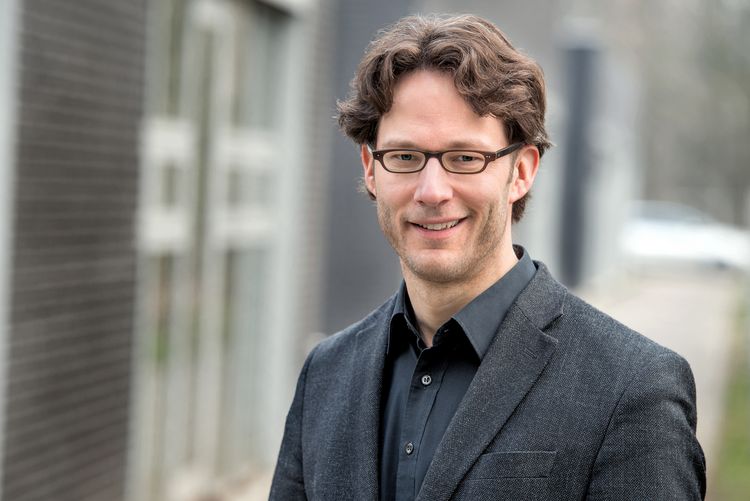

This coming Saturday, 21 October, the university will host the "1st Oldenburg Day of General Practice", a completely new training format in the north-west. Healthcare researcher Michael Freitag initiated it - and explains the background.
QUESTION: Mr Freitag, the School of Medicine has set up an almost unprecedented network of teaching practices: Around 120 GPs train students on a voluntary basis during their practical phases - what is their motivation?
FREITAG: We are indeed particularly proud of our network of teaching physicians. The students have one-week placements in the teaching practices in the north-west region from the first semester and benefit from the practical orientation of the Oldenburg degree programme right from the start. The teaching physicians in turn enjoy the exchange with the university and the next generation of doctors. They are happy to pass on their enthusiasm for their speciality to the students. And they are happy about the opportunity to organise the training of the future generation of doctors in a more practical way than they experienced during their own studies. After all, outpatient medicine has not been part of medical studies up to now - even though this is where most patients are treated and there are also other specialisations and sometimes completely different needs in practice. Of course, the students also bring a certain amount of variety and a breath of fresh air to the practices. Both the practice teams and the patients benefit from this. Last but not least, the teaching physicians naturally also want to promote their speciality. However, this does mean additional time expenditure for the practices. The teaching physicians receive compensation for this.
QUESTION: What are the most pressing issues facing GPs in the region today?
FREITAG: There are a number of them: How can we manage to cope with the increasing number of patients, increasing medical possibilities and demands? How can I keep up to date professionally and organisationally with a reasonable amount of effort? How can I keep on top of the jungle of regulations, contracts and other formalities? And with the increasing possibilities in diagnostics and therapy, it is always a question of what is necessary, superfluous or even harmful.
QUESTION: GPs also take part in training and further education programmes at University Medicine Oldenburg. Which topics are particularly popular?
FREITAG: First of all, we offer training courses for our teaching physicians to prepare them for the students' observations. Each observation has a specific topic and an accompanying logbook. Our teaching physicians are also prepared for feedback and examinations in practice. Here, the exchange between the teaching physicians and the department is particularly important. We are also starting to offer seminars for doctors in further education. The focus here is primarily on topics that are specific to GP practices - think, for example, of tricky consultation situations in the practice and the corresponding rational diagnosis and treatment.
QUESTION: What do you expect from the 1st Oldenburg Day of General Practice - and what message do you want to send out to the region?
FREITAG: We clearly want to establish a new training format in the north-west. It is still something special and new that the subject of general practice has arrived at university. With the Day of General Practice, we have the opportunity to bring GPs to the university and offer them a tailor-made programme. With a scientific approach, but at the same time independent of pharmaceuticals and personal. Most of the speakers are also GPs or medical assistants. We have already had very good experiences at other university locations and we are confident that the General Practice Day will also become a permanent fixture in Oldenburg.
QUESTION: This training programme is aimed at both GPs and medical assistants. What can participants expect on 21 October?
FREITAG: We have put together an exciting training programme. What makes it special are the parallel workshops, which ensure good interaction between speakers and participants. Medical practices can take part with their entire team, and the contributions are aimed at both doctors and medical assistants. The event takes place without the support of the pharmaceutical industry and naturally also serves to network the participants. It is actually intended as a "celebration of general practice", a speciality that is otherwise not so much in the limelight. For the premiere, we have a special highlight in the programme: a keynote speech from the German Institute of Humour and a musical contribution.
QUESTION: Your event starts the evening before in the Alte Landtag. What is on the programme?
FREITAG: The evening before, we are inviting people to a public evening symposium. Dr Jörg Berling, Chairman of the Association of Statutory Health Insurance Physicians of Lower Saxony, will give an introduction to the current situation of GP care in the north-west. We then expect Prof. Dr Thomas Kühlein from the University of Erlangen-Nuremberg as keynote speaker with a lecture on the topic "Specialising in the whole person? - The importance of scientific general practice for medical care". Finally, we are planning a panel discussion with representatives from the north-west region.
More on the topic
Press release Programme flyerContact
Prof Dr Michael Freitag
Department of Health Services Research
Tel: 0441-798/4307
allgemeinmedizin@uni-oldenburg.de