
Helping people to find personal happiness: An alliance of six institutions - including the university - has set itself this goal for young people who have doubts during their studies.
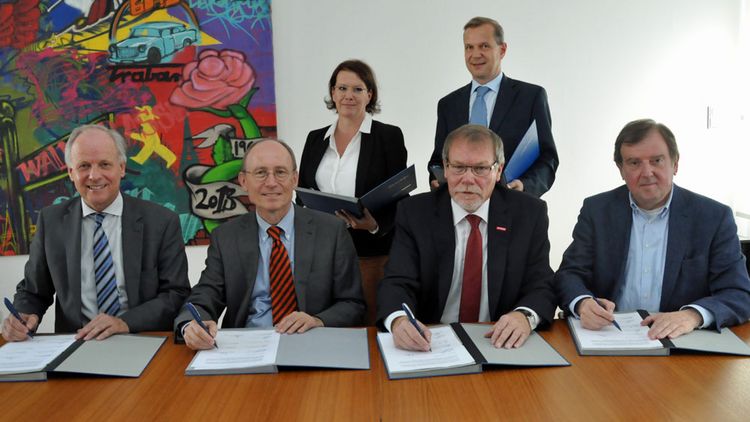
The Oldenburg Chamber of Skilled Crafts, the Lower Saxony Chamber of Agriculture, the Oldenburg Chamber of Industry and Commerce, the Oldenburg-Wilhelmshaven Employment Agency, the Oldenburg Job Centre and the University of Oldenburg will work together in future to target (potential) drop-outs. "This group of people represents a valuable potential pool of skilled labour. In addition to drop-outs, the target group also includes their personal environment such as parents, relatives and friends," states the cooperation agreement presented by the participating institutions today.
Nationwide, 500,000 young people start a degree programme every year - and the trend is rising. They are prepared to put up with long waiting periods for their dream university place. However, only a good two thirds make it to the end: Almost 30 per cent of Bachelor's students leave German universities without a degree. This includes students who change their degree programme, change their place of study or end their academic career prematurely.
According to a study by the German Centre for Higher Education Research and Science Studies (DZHW), reasons for dropping out without a degree include performance problems, financial bottlenecks, a lack of motivation and a lack of practical relevance.
The cooperation partners will support the dropouts in making a new start, beginning with a dual vocational training programme in a business sector that offers a wide range of opportunities and career paths. The goal: a win-win situation that opens up new future prospects for young adults and helps Oldenburg's economy to better utilise potential for securing subject and management staff.
The partners want to reach the target group by addressing them directly and indirectly. At the same time, they want to provide companies with targeted and increased advice on how to perceive university dropouts as potential for the training and labour market and to take advantage of the resulting opportunities to secure skilled workers. The cooperation partners are striving to improve transitions, dovetailing and permeability between higher education and vocational
education, for example by mutually recognising achievements and skills from academic appointments or studies.