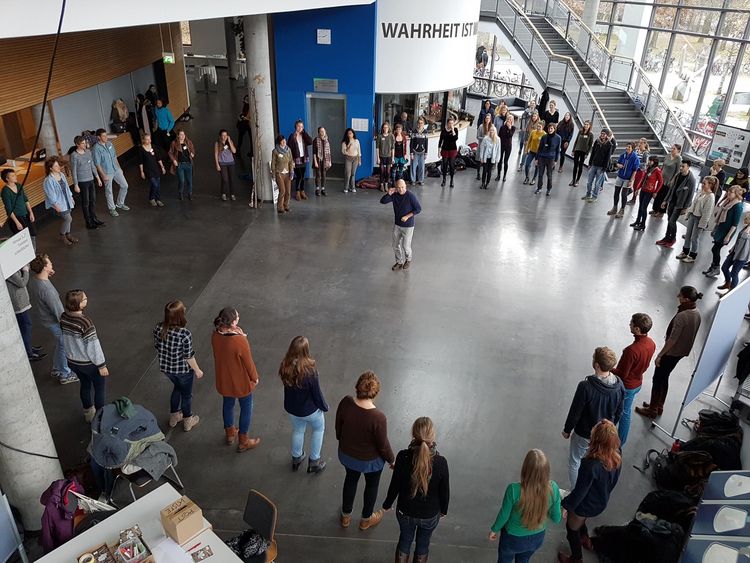


"Think. Act. Change." Under this motto, students at the university have been organising the NachDenkstatt - a three-day conference on sustainability - for six years now. It's happening again this coming weekend.
Thursday afternoon, shortly after 4.00 pm. In the sofa corner of the General Students' Committee (AStA), a few students are sitting comfortably in the armchairs and on the couches, some are chatting animatedly, most have a laptop on their lap. "I'll see if there's still room in the foyer, it's so full here today," says Tiuna Hollricher and disappears down the corridor. There are still a few seats free at a row of tables in the seating area at the back of the cafeteria foyer, so the organisers' meeting of the NachDenkstatt is quickly moved there. In addition to Tiuna, Britta Klages and Antonia Kaiser also grab their rucksacks and laptops and move to the new location.
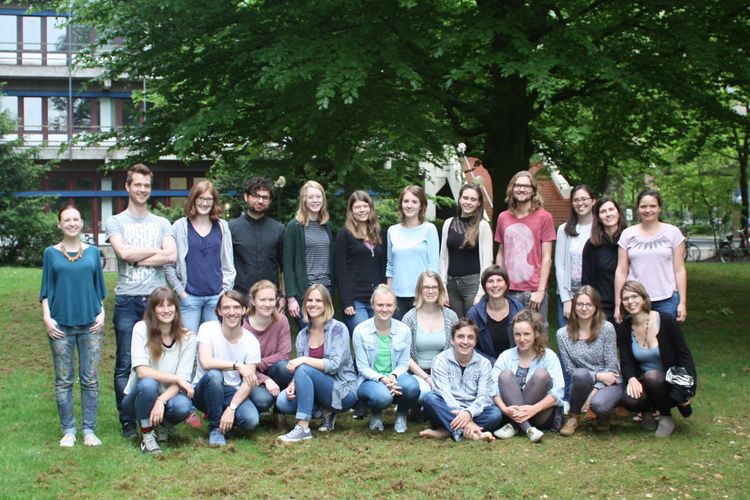
The three students belong to the sixth generation of NachDenkstatt. Launched in 2012, a new team comes together every year to plan, prepare and organise the three-day workshop conference with a great deal of commitment and passion. This year, there are a total of around 25 people in the organising team, who take care of logistics, finances, catering, marketing, the supporting programme and atmospheric aspects such as the break design. A lot has happened since the first planning meeting in May. Now, so close to the conference, there is still a lot to do and, above all, details to be clarified: Who needs a van and when? Have the budgets been finalised? Who will speak at the opening event? To keep an eye on everything, the students organise themselves via WhatsApp groups and online tools. "Taking care of the financing and getting through the sponsors' funding conditions is sometimes quite tricky," comments Philipp Quentmeier on the discussion. The students organise the conference on a voluntary basis; they don't get any credit points or grades for it. Instead, they gain all the more life experience. Some of this year's organisers were participants at last year's conference - and were so enthusiastic that they wanted to help design the workshops and supporting programme themselves this year.
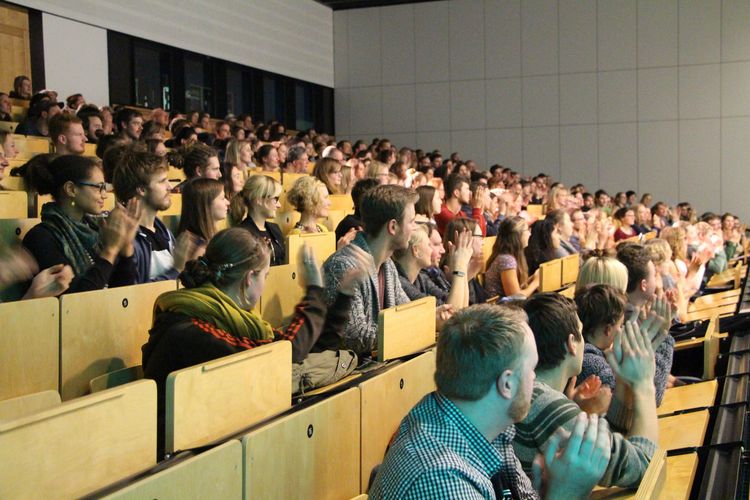
The organisers are expecting a total of 60 participants this year. Those wishing to take part had to apply online - the NachDenkstatt marketing team selects who will ultimately be allowed to attend. When registering, everyone has chosen one of four workshops on which they would like to discuss during the three days. The ideal of the NachDenkstatt is transdisciplinarity: all participants should be able to contribute on an equal footing, regardless of whether they are academics, students or experts from the field. The aim is to work together to find concrete solutions to pressing social issues, develop concepts and plans and then implement them.
Sustainability in everyday life
The topics of the workshops pick up the participants where their own commitment often threatens to fail: in everyday life and their own convenience. The pressure to perform, flexibility and accessibility dominate the everyday lives of many people today. Where is the time left to do without plastic or repair a broken washing machine? "Sustainability? Yes, of course! But sorry, no time!" - is the title of one of the workshops in which participants will discuss mindfulness, slowing down and giving up consumption. Anyone who is specifically interested in how a life without microplastics and with as little waste as possible can work will receive suggestions and practical tips in the workshop "'I'm closer to you than you think' - Your microplastics: recycling, plastic avoidance and zero waste". Also taking part: blogger Caro Hoops (einbisschengrüner.com), who we reported on in the last Uni-Info and who is also involved in the organising team of the Nachdenkstatt.
The NachDenkstatt itself demonstrates that many smaller and larger adjustments can be made in everyday life to avoid waste and live more sustainably: "We have the flyers produced in a climate-neutral way. The paper is certified with the Blue Angel," explains Philipp. Instead of printing new posters, old ones are covered with up-to-date information, the catering is vegetarian and vegan, and a clothes swap corner invites people to swap unloved T-shirts and trousers for new skirts and jumpers.
Ideas for a better world
In addition to these very specific questions about personal, sustainable action, the exhibition also addresses issues affecting society as a whole, such as nutrition and globalisation. In "Critical cuisine - How does the future "eat"?", participants will look behind the scenes of our food system and discuss its challenges and potential: who needs to take responsibility and where in order to shape the future of our food in a sustainable way? The "One size fits all?!" workshop focuses on structures of global inequality. Together with experts, the participants will work out the reasons why the global North is so much better off than the South. The aim of the workshops is to explore one's own position in this network of relationships and to develop ways in which everyday behaviour can contribute to change. In order to include international students and interested parties, the workshop will be held in English. The organisers are drawing attention to the conference via the university group of international students.