
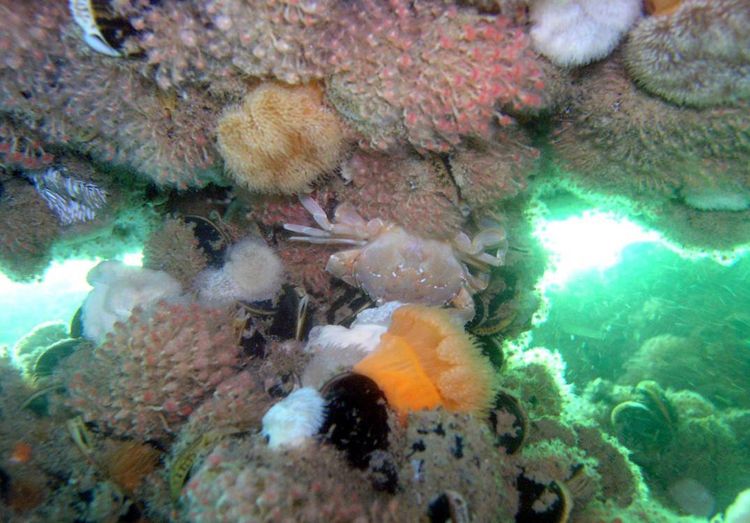
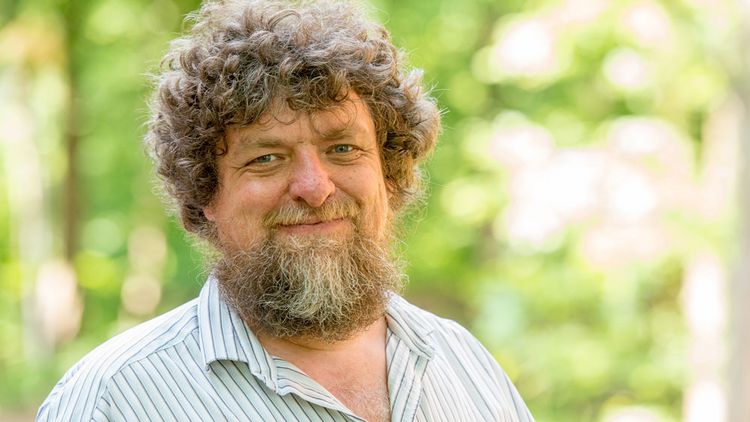


Researching biodiversity in the oceans and developing practical concepts for nature conservation - this is the challenge that scientists at the newly founded Helmholtz Institute for Functional Marine Biodiversity want to tackle. In this interview, biodiversity expert Helmut Hillebrand talks about how this can be achieved.
QUESTION: Mr Hillebrand, you have been conducting basic ecological research for a long time, i.e. investigating how ecosystems are structured and how species live together. Your focus is on biodiversity in the oceans. What do you see as the most important challenges in this field, which - like climate change - has long been part of the public and political debate?
HILLEBRAND: One of the key questions for me is: what are the actual consequences of changes in biodiversity? In research, biodiversity has long been regarded as an answer variable: If the system changes, biodiversity also changes. About 25 years ago, the first studies came out that showed that this is only one side of the coin: This is only one side. Because a change in biodiversity always entails a change in the system. For example, if the biodiversity in a marine area changes, other processes also take place there. The rate at which oxygen is produced by plant representatives is different if the diversity of these organisms changes. This is also important for humans. Our need for resources and our lives depend on marine algae producing oxygen and our ability to fish. This link to humans is often presented as the final link in a more or less linear chain of effects from global change, to biodiversity change, to functional changes and then to human society.
QUESTION: And you don't share this idea?
HILLEBRAND: In recent years, it has become increasingly clear to me that this final bridge between functional change in the system and human society has been written up very much from a cause-and-effect scientific perspective. In reality, however, society defines what it wants. Society sets a framework for what should be protected, what should be utilised, in what way the sea is an important system for humans. But this is something that the natural sciences alone cannot research, but only together with scientists from other disciplines. We can therefore only analyse the status of biodiversity in the sea and the changes in an interdisciplinary way.
Establishing the social context
QUESTION: What other challenges do you see?
HILLEBRAND: Much of what is known in basic research only very slowly leads to recommendations for action. This is partly due to the fact that the results of basic research are published in specialised journals: This is because those who work in practical nature conservation sometimes cannot access this information at all - and also have a different need. In order to improve this, we need to develop concepts and make recommendations for action.
QUESTION: How do you intend to tackle this problem?
HILLEBRAND: At our new Helmholtz Institute for Functional Marine Biodiversity, we are not only conducting basic research, for example to quantify the extent to which biodiversity is changing. We also want to derive conservation concepts from this. However, these concepts should not only be based on natural science, but we also want to establish the social context. We want to clarify which issues are actually addressed by such conservation concepts. We want to try to at least narrow the gap that we believe exists between basic research and the management of ecosystems.
QUESTION: You mentioned that you want to quantify changes in biodiversity better. Where are the practical obstacles?
HILLEBRAND: At the moment, the approaches are often very simplistic. One measure, for example, is the number of species: you simply count how many different species there are in a group of organisms, for example how many different fish species there are. Then you look at how this number changes over time. The assumption behind this is that if the system develops favourably, recovers from human intervention or is placed under protection, the number of species increases. However, if, for example, there is greater human intervention, then the number of species will also develop negatively over time. Conversely, this has led to the assumption that the system is not doing badly if the number of species does not develop negatively.
The number of species - a false friend
QUESTION: And that's not right?
HILLEBRAND: No. The basic expectation that a negative impact also leads to a negative development in species numbers is not correct. We show this in a new study in which we look at the balance between immigration and extinction of species. Both do not work at the same speed. Immigration often happens quickly, extinction often takes a long time. This means that it is impossible to say whether more or fewer species will remain in a system over a long period of time based on short-term trends.
QUESTION: What does this mean in practice?
HILLEBRAND: Simply observing the number of species or another simple index does not allow you to describe the state of a system. But precisely such status descriptions are an integral part of many directives, such as the European Marine Strategy Framework Directive. The authorities and also the non-authority representatives of nature conservation therefore need a tool with which they can better describe changes in biodiversity.
QUESTION: Does the Framework Directive only call for looking at the number of species and not at which species there are?
HILLEBRAND: The Framework Directive is even broader than that. It says that the descriptive variable of the status is biodiversity. It does not define what is being done. The number of species is a simple measure. However, we want to emphasise that the number of species can be a false friend: It provides information that does not reflect the changes in the system. But with the same data as a basis, there are ways to get much more information about the changes in biodiversity.
QUESTION: How can you put these findings into practice?
HILLEBRAND: In this case, we are specifically publishing our results in a journal from which many colleagues working in the applied field also get their information. We are explicitly focussing on monitoring, i.e. environmental monitoring, and assessments, i.e. the evaluation of ecosystems. We hope to achieve something with this. We are also planning a workshop at the end of this year for state and federal authorities and for non-governmental conservationists in the marine sector. In the long term, we need to create a platform for interaction in order to bring together basic research and the needs of practical nature conservation.
Mutual understanding
QUESTION: How can the transfer from research to practice be accelerated?
HILLEBRAND: That sounds a bit like saying: Here's the great basic research, which is consistent in itself, but nobody pays any attention to it. I don't think that's quite right. There are political requirements that justify environmental monitoring and the assessment of ecosystems. The authorities try to fulfil these requirements as closely as possible. On the other hand, there is basic research with comparatively specialised results that are published in a specialised way. In this way, basic research is also consciously taking the risk that this information will not reach the people who - equipped with a completely different corset - are trying to apply the best assessment criteria available. I believe that a longer-term dialogue is needed in order to achieve this mutual understanding.
QUESTION: So it's also about reciprocity.
HILLEBRAND: Exactly. Of course, at the action level, neither the financial resources nor the expertise are available to develop complex forecasting models or new technologies to monitor ecosystems, for example. That has to come from basic research. One example of how we can improve our data situation in this way is molecular observatories with which we can continuously monitor biodiversity in more places. This is clearly a task for basic research. And yet we still want to maintain contact with users. After all, it makes no sense to develop something that is not needed later on. That is what we are trying to strengthen with the Helmholtz Institute.
Interview: Constanze Böttcher