
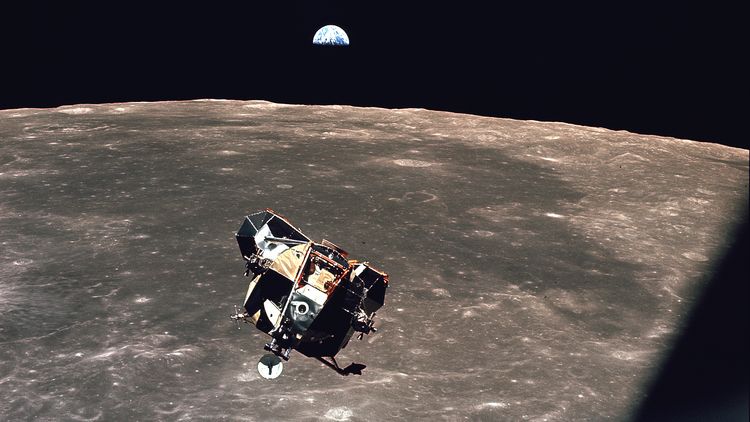
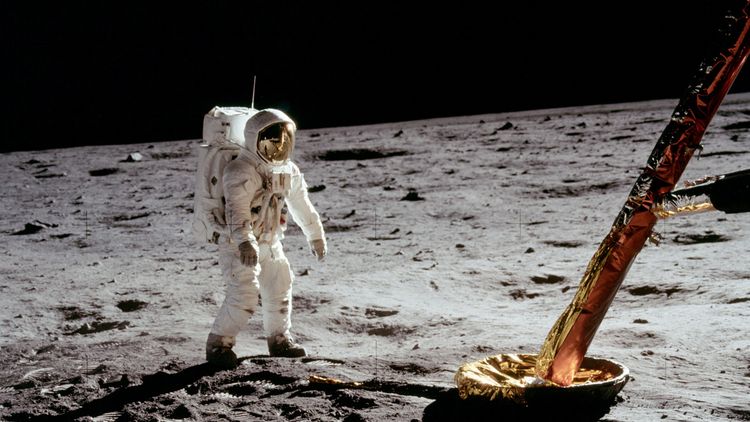
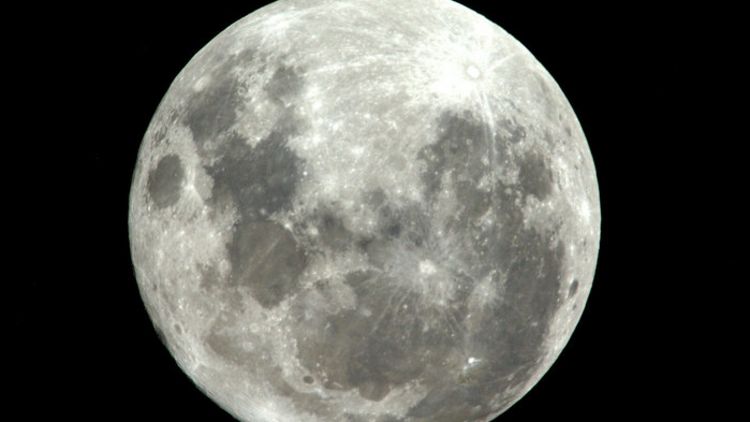
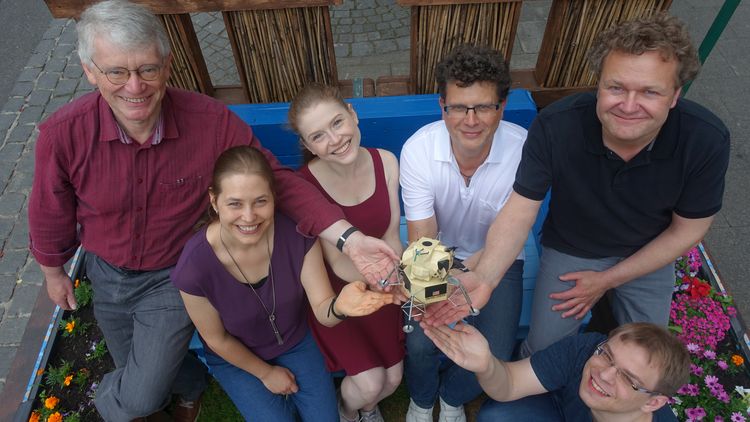


Space enthusiasts around the world are celebrating the 50th anniversary of the moon landing. So are Björn Poppe and Kay Willborn from the University Clinic for Medical Radiation Physics. In this interview, they talk about the dangers and curiosities of the Apollo missions - and about the role of radiation protection in future missions.
Prof Poppe, what fascinates you about the moon landing?
Poppe: You have to imagine that every smartphone today has more computing power than was available for planning the moon missions back then. It's unbelievable that it still worked.
Dr Willborn, how dangerous were the Apollo missions?
Willborn: Unfortunately, there were casualties early on in manned space travel: the entire Apollo 1 team died in a fire in the capsule before the launch. The Soviet Union also lost a cosmonaut during the first Soyuz mission in 1967. Many things were developed from experience, but you have to remember: the moon landing was a very complex project with a large number of components. There was a considerable risk that the mission would fail.
Poppe: In addition, many things could not be calculated in advance down to the last detail, for example the landing on the moon. The Apollo astronauts were trained to fly past boulders during the approach. That almost went wrong.
According to conspiracy theories, the Apollo astronauts could not have survived the journey through the Earth's radiation belts because the radiation levels there are too high. What do you think of this?
Poppe: As with the other conspiracy theories about the moon landing: nothing.
What is this claim based on?
Poppe: The Earth has two radiation belts, the so-called Van Allen belts, in which the density of charged particles is particularly high. At an altitude between 700 kilometres and 6000 kilometres, more high-energy protons are measured, and between 16,000 and 58,000 kilometres, mainly electrons. Even before the Apollo missions, it was possible to estimate the radiation doses during the transfer of a spacecraft very well. The flight through the belts took about an hour, and the astronauts were indeed exposed to a comparatively high dose of radiation. However, this exposure was significantly lower than that experienced during a computerised tomography (CT) scan in medicine. A lethal exposure would have been about a thousand times higher, and the astronauts were additionally protected from the radiation by the space shuttle.
Willborn: "The total exposure per mission was in the order of one to two medical CT examinations. Such a dose only slightly increases the risk of cancer. By comparison, the risk of a heavy smoker developing lung cancer is several thousand times higher than the additional risk from the radiation during the six to ten-day Apollo missions. However, the problems become greater when you think about the long missions to Mars that are now being planned.
A journey to Mars would take a year or longer.
Willborn: This is precisely one of the main problems of modern space travel. If you want to comply with today's limits, you can't actually send astronauts to Mars.
How can future astronauts be protected from radiation over this long period of time?
Poppe: Many possibilities are being considered, from special shielding in spaceships to additives in food that are intended to minimise the damaging effect of radiation on cells. The eleven-year solar cycle also plays a major role because the radiation exposure can vary during this time.
What are the requirements for a permanent base on the moon or Mars?
Poppe: The accommodation there must have special radiation protection. Space agencies are also seriously considering caves as a base for accommodation because rock offers natural protection against radiation.
What kind of radiation are the astronauts exposed to in the immediate vicinity of Earth?
Poppe: Our planet is surrounded by charged elementary particles, dust particles, small pieces of rock and space debris. Knowing and describing this radiation environment is extremely important for space travel. As radiation physicists and radiation physicians, we can make a contribution here: for example, our team tests highly sensitive detectors for cosmic radiation and measures the distribution of dust near the earth using various methods. We cooperate closely with the European Space Agency ESA in this field.
The University Clinic for Medical Radiation Physics has set up an exhibition in the foyer of the Pius Hospital on the subject of the moon landing. Which exhibit is your favourite?
Willborn: There is a so-called moon letter in the exhibition. This is a letter that astronauts on the Apollo 15 mission secretly smuggled to the moon. A German stamp dealer had given the astronauts stamped letters to sell them later at a high price. This was discovered, the astronauts were disciplined and the dealer's premises were searched by the FBI. Since then, the letters have been traded as rarities among collectors.
Poppe: We also have a small piece of rock from Mars in the exhibition. This inconspicuous lump was hurled into space during an impact on the Red Planet and landed on Earth as a meteorite after a long journey through space. I find it very inspiring to imagine that a piece of another planet is lying here.
Interview: Ute Kehse