

Students help refugee children to find their feet in a foreign world - that's what the university and city's "Buddy" project is all about. A success story that has continued this year.
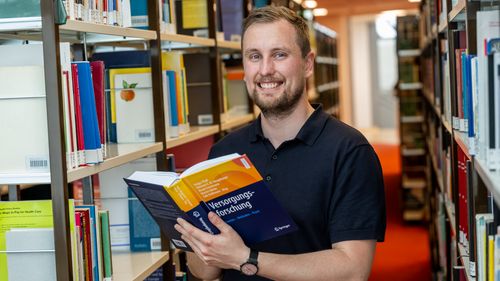
Offering support to children who have had to flee war and persecution, making their start in a foreign country easier or bringing joy into their everyday lives after painful experiences: This is made possible by the "Buddy" project, which the university has been implementing in co-operation with the city since 2015. Prepared as part of a seminar and accompanied by reflection sessions, Master's students spend time with their protégé once a week for at least eight months. 10 special education and rehabilitation education students specialising in education for children with emotional and social developmental disabilities took part in the fourth round of the project this year. The children are between five and 16 years old and mainly come from Iraq or Syria.
"The students help the children to find their feet," says Dorin Strenge, who has moderated the project initiated by Prof Dr Monika Ortmann in 2015 since the beginning and has accompanied it as a lecturer. For example, the "buddies" show them how to take the bus or where the nearest playground is. The weekly meetings also include baking together or a visit to the swimming pool. The project works, Strenge continues. "The children are more stable because they have experienced reliability and stability again for a long time." They become more self-confident, make connections more quickly and improve their language skills. And the students also benefit, Strenge is convinced: "They learn important skills for their future careers, such as empathy or how to deal with different cultural backgrounds."
Space for fun and dialogue
The entire project is scientifically monitored and evaluated. For the students, this means not only volunteering, but also preparing and following up on the meetings and carrying out research as part of the seminar. After project completion, they can decide whether they want to remain in private contact with their little "buddy". "That depends on many factors, such as how old the child is and whether the students move away after their studies. But it usually works out quite well. Last time, the connection lasted for about half of the students," says Strenge happily. Even after the end of project, all children should have something that continues to structure their everyday lives and brings them into contact with their peers - for example, at a sports club or a holiday activity programme. At least that is the aim of the programme, continues Strenge.
The summer party that concluded the project this year was just as familiar and warm as the months before. Framed by a colourful programme with a clown show, circus education and a water fight, the focus was on handing over the "notebooks", which were created jointly by "Buddy" and the child over the course of the project. These record excursions and activities with photos or drawings. "It was another very nice conclusion. We reviewed the project together and immersed ourselves in the notebooks," says Strenge. "If the financing from the city's Office for Immigration and Integration is approved again, we can continue the project next year."