


Wherever a wind farm is planned, there is often protest. Yet the energy transition cannot succeed without local acceptance. Social scientist Jannika Mattes has researched the conditions that lead to the success of wind energy projects in various regions.
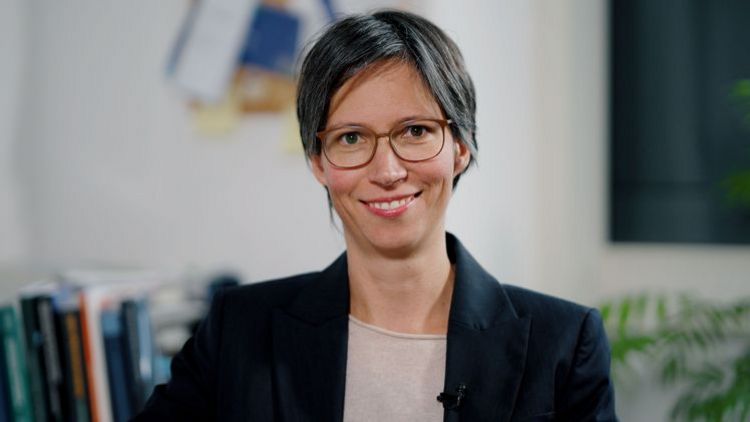
Prof Dr Jannika Mattes is convinced that it is precisely at local level that the success of the energy transition is decided. The social scientist spent five years working with an interdisciplinary Emmy Noether research group on the project "Regional Energy Transition: Social Negotiation, Standardisation and Learning Processes in the Wind Energy Sector" (REENEA) on regional approaches to the energy transition and recently submitted her final report to the DFG. "The energy transition requires electricity to be produced in many more regions today than in the past," says Mattes. Where there used to be power plants in just a few municipalities, today wind farms in particular generate electricity decentrally in communities across Germany, alongside solar plants and biogas power plants. Mattes and her team therefore conducted 25 to 30 interviews with people involved in wind power projects in each of six regions - Oldenburg, Hamburg, Magdeburg, North Hesse, North Frisia and the Uckermark. These included entrepreneurs, local politicians and members of citizens' initiatives. The researchers also made observations on site, analysed documents and spoke to stakeholders in Berlin, Brussels and Hanover at a supra-regional level. Finally, the six qualitative case studies were compared with each other: How do normative expectations, regional debates and local stakeholder networks shape the implementation of wind energy projects in the respective region?
Changing framework conditions have consequences
"The energy transition process remains fragile," summarises Mattes and illustrates the problems using three examples. Firstly, any change to the legal framework at a federal level can have a massive impact on regional planning. For example, when fixed feed-in tariffs for wind energy had to give way to tenders in 2017, many small regional wind power project developers were no longer able to keep up - they had to make way for the large supra-regional providers. The second aspect concerns the hydrogen economy. Although praised by decision-makers in politics, many companies in Germany are suffering from unclear framework conditions. Manufacturers that should actually be investing in the coupling of the still largely separate sectors of heat, mobility and electricity in order to accelerate the energy transition are instead moving abroad or reorienting elsewhere, the study continues. Thirdly, the expansion of renewable energies can come to a standstill if there is a lack of areas that are easy to plan and utilise, such as large meadow landscapes. "In many regions, new wind farms are being built closer to cities or in forests. But these areas are controversial," says Mattes. This inevitably leads to local social conflicts and the question of how acceptance for such projects can be achieved.
The question of the extent to which people accept wind turbines in their community repeatedly played a major role in the studies. Nature conservation, noise, shadow flicker and other reports are supposed to help legitimise the turbines. However, more and more people are not satisfied with these reports as a basis for accepting the turbines. But how can critics be convinced?
Community wind farms, trade taxes and transparency are key
The results of the study also shed light on this, even if Mattes emphasises that he has "no patent remedy". For example, local value creation through subsidised community electricity tariffs, community wind farms and the like is fundamental. Business tax also has a major influence on acceptance: in Federal States where the local municipalities receive a higher tax share of the profits generated by wind turbines, people are more likely to accept the turbines than in countries where only a small proportion of the tax remains locally. In addition, many people trust local operating companies and project development offices more than companies from abroad. "If people say 'this is one of ours', there is a greater chance that a wind power project will be successfully realised," says Mattes. Last but not least, transparent processes and a genuine willingness to engage in dialogue during the planning process are advantageous because citizens then feel that their interests are more likely to be heard. According to the study, these principles apply across all regions, even if acceptance cannot be "manufactured" mechanically - it is fuelled by a variety of factors and each region has its own dynamics.
Mattes is continuing her work on this focus. In the follow-up project WindGISKI, for example, she is researching the social dynamics and conflicts that arise when people struggle over the legitimacy of wind energy sites. Mattes will also be involved in projects at the Energy Research Centre of Lower Saxony (EFZN). Among other things, she will be focusing on social science issues relating to the development of a hydrogen economy - another Herculean task facing society in the implementation of the energy transition.