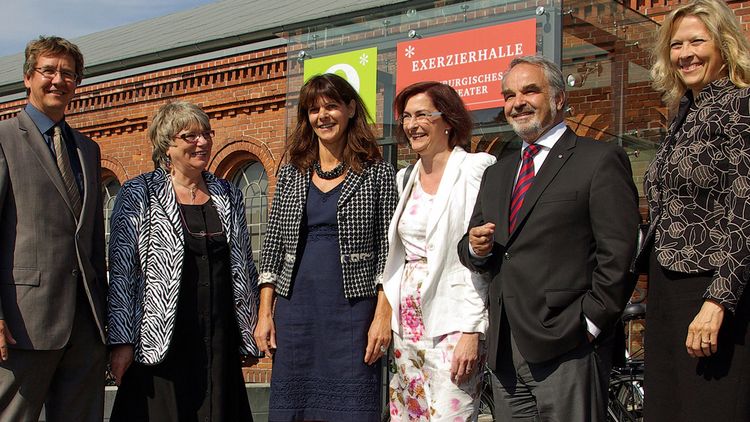

Minister of State for Culture Bernd Neumann is once again funding the north-west German co-operation project "Freedom Space Reformation" this year. Projects and events will take place until December under the annual theme "Reform movements, Reformation and religious pluralisation between fanaticism and tolerance".
The large-scale project "Reformation Freedom Space" brings together science, culture, church and society. Prof Dr Dagmar Freist, historian at the University of Oldenburg, is in charge of the project.
This year's focus is on the opportunities and challenges of freedom of faith and religion in the past and present, the success and failure of tolerance, hatred and fanaticism. The project traces the beginnings of the Reformation movements and the start of religious diversity in north-west Germany and looks at how religious conflicts have been represented through the centuries in art and music, in the landscape and in the culture of life.
"Freedom Reformation is not a traditional anniversary event that primarily celebrates 'great' historical moments or 'important' personalities," explains Freist. Rather, it is about the multifaceted, constantly renewing and often complicated confrontation of the people of the north-west with the central questions of their existence from the 15th to the 21st century.
This year's events are organised around five main themes, which deal with different aspects of the annual topic. Under the title "Origins of religious pluralisation", the focus is on the beginnings of religious differentiation before Luther and Calvin; the topic area "Religious freedom, fanaticism and tolerance" deals with crises and opportunities of multi-religious coexistence in the past and present; concerts, productions and readings are offered on the topic of "Religious pluralisation in music, art and theatre", which deal with religious upheavals or questions of faith; Religious Pluralisation and Material Culture" focuses on the "tangible" traces of the history of religious diversity in buildings and landscapes; finally, "Religious Pluralisation - Young People in the Archive" stands for school and study projects in which schoolgirls from Oldenburg, East Frisia and the Netherlands research the history of their region.
In addition to Freist, the project management team includes: Prof. Dr Andrea Strübind (University of Oldenburg), Prof. Dr Matthias Weber (Federal Institute for the Culture and History of Germans in Eastern Europe), Thomas Adomeit, Hartmut Lübben (both from the Evangelicalluth. Church Oldenburg) and Sven Kramer (Protestant Church of East Frisia). Further information on the Internet.
More on the topic
Freedom space ReformationContact
Prof Dr Dagmar Freist
Institute of History
Tel: 0441-798/4640