Contact

Press & Communication

+49 (0) 441 798-5446

“Methods Week”: Safe, anytime-valid inference

9 to 11 September 2026

University of Bremen, Multi-purpose Tower Block, 1st floor, Room MZH 1470

Free for students –
€ 65 (in-person) or € 25 (online) for researchers and university staff

Programme and details (PDF)

About ZeSOB

The Centre for Statistics in Oldenburg and Bremen was founded in 2015 by members of the Departments of Mathematics at both universities. It offers statistical consultancy to researchers, the regional business community and society, as well as continuing professional development opportunities in statistics, such as regular academic colloquia and seminars. The members of ZeSOB also deliver and coordinate postgraduate training in stochastics and statistics at the two universities of the Northwest Alliance.

As a cluster of expertise in applied and theoretical statistics in the North-West region, ZeSOB brings together statistical know-how, develops it further and raises its profile. The focus is on applications and the resulting research into statistical methodology. Traditionally, the University of Oldenburg has specialised in financial and actuarial mathematics, whilst the University of Bremen has focused on applications in biology and medicine. These are complemented by further fields of research, such as environmental sciences in Oldenburg and materials sciences in Bremen.

NWA-funded projects

Under the “Advanced” funding line of the Northwest Alliance Research Fund, the statisticians affiliated with ZeSOB – Prof. Dr Thorsten Dickhaus and Prof. Dr Werner Brannath (both from Bremen), Prof. Dr Peter Ruckdeschel and Prof. Dr Marcus Christiansen (both from Oldenburg) have secured a total of four research projects to interlink their research even more closely and drive it forward. The SAVI method – together with the so-called E-values, which also play a role in the Methodology Week – is a key unifying element in this context.

Contact

Prof. Dr Peter Ruckdeschel

Institute of Mathematics

More

“The Appeal of Numbers”: A profile of Prof. Dr Peter Ruckdeschel from the 2016 issue of the research magazine EINBLICKE

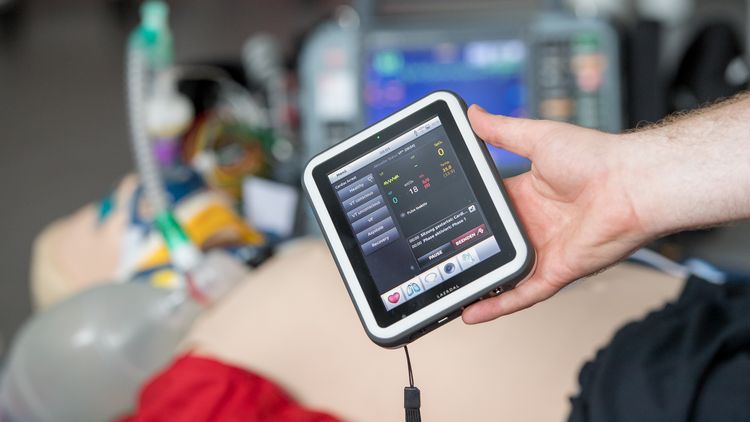
  • Simulation at the Clinical Training Centre of the School of Medicine and Health Sciences in Oldenburg: “The aim is to monitor and keep the error rate low over the long term, whilst making numerous decisions over an extended period.” University of Oldenburg

In search of reliable conclusions

New statistical methods, which have applications far beyond the field of mathematics, are the focus of a three-day joint event organised by the Centre for Statistics in Oldenburg and Bremen. Registrations are open until 2 September. 

New statistical methods that can also be applied beyond the field of mathematics – for example in psychology, medicine or computer science – are the focus of a three-day joint event organised by the Centre for Statistics in Oldenburg and Bremen (ZeSOB). Registrations are open through 2 September.

The ZeSOB “Methods Week” will take place from 9 September through 11 September, this time at the University of Bremen campus. Students, PhD candidates, researchers and anyone else interested in new mathematical methods are invited to attend – particularly those from the Universities of Oldenburg and Bremen. The event is funded by the “NoW – Northwest Alliance Research Fund”. 

The event topic describes something that many researchers would surely like to have when exploring scientific questions, as would people in general who have to make decisions over a longer period of time: “Safe anytime-valid inference (SAVI)”. 

There have been significant developments in this field at an international level in recent years, particularly in the Netherlands, North America and England, but there are also contributions from Bremen, says Bremen-based statistician Prof. Dr. Thorsten Dickhaus. As evidenced by an increasing number of workshops, publications and the first job vacancies, the SAVI method is becoming increasingly established, adds the Oldenburg-based statistician Prof. Dr. Peter Ruckdeschel. “The aim of this method is to control and keep the error rate low in the long term when dealing with many decisions over an extended period.” 

One exampe is the monitoring and treatment of an unconscious patient in hospital based on the monitoring of various parameters such as blood pressure, heart rate and blood values. “If one were satisfied with an error rate of five per cent in this context and were to check the patient’s readings 20 times, the errors could, in the worst-case scenario, accumulate – which, of course, must be avoided,” says Ruckdeschel. 

In this area, statistics have long offered “a very limited toolkit”, according to Ruckdeschel; now, SAVI as a method enables consistent, long-term error control. It also helps, for example, banks that wish to avoid liquidity problems at all times. 

The speaker at the event is the Dutch mathematician Dr. Alexander Ly, who completed his PhD at the University of Amsterdam in 2018 and is now a researcher at the Centrum Wiskunde & Informatica in Amsterdam. According to host Dickhaus, Ly is characterised by a particular rigour in deriving statistical methods, “combined in a unique way with a very keen eye for efficient implementations and real-world applications, such as those used in manufacturing”. When it comes to implementation and application, Ly is regarded as “one of the world’s leading experts”. 

Ruckdeschel emphasises that the three-day ZeSOB event is traditionally designed not only to convey the subject matter but also to offer a “hands-on” opportunity to present and discuss one’s own mathematical or scientific problems. A few spots – including some for online participation, if required – are still available; registration is open via the ZeSOB website through 2 September.

This might also be of interest to you:

A photograph of the equipment at a substation, taken from below, with the sky tinged with blue and orange.
iStock/wx-bradwang
Research NWA Energy Research Top News

Lower Saxony’s energy system to become more resilient

Greater resilience for electricity and heating grids: The University of Oldenburg is involved in two of the five newly funded projects by the Energy…

more: Lower Saxony’s energy system to become more resilient
Illustration of a quantum material interacting with light: a red light wave strikes a rectangular plate consisting of a single layer of grey atomic nuclei. Where the light wave and the material meet, a reddish glow spreads out.
Alberto de la Torre, Dante M. Kennes, Martin Claassen
NWA EXU Excellence Strategy Top News Physics

Boosting Computer-Aided Research on Quantum Materials

Researchers from Oldenburg and Bremen aim to make the Northwest more visible on the quantum physics map. Together with partners from Aachen and…

more: Boosting Computer-Aided Research on Quantum Materials
Daniel Schmidt / University of Oldenburg
NWA EXU Top News Higher Education Policy

Ralph Bruder Re-elected as University President

The university's Senate and Council have voted to appoint President Ralph Bruder to a second term ahead of schedule without a public call for tender.…

more: Ralph Bruder Re-elected as University President
(Changed: 18 Aug 2026)  Kurz-URL:Shortlink: https://uol.de/p82n13944en
Zum Seitananfang scrollen Scroll to the top of the page