
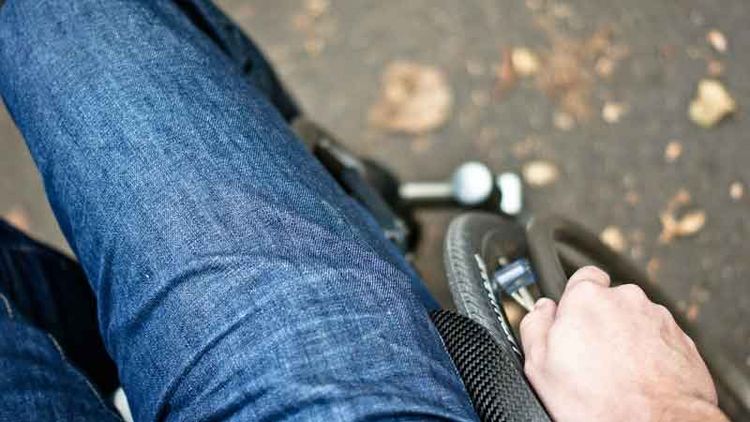

Gisela Christel Schulze is calling for the debate on inclusion to be opened up. In this interview, the rehabilitation teacher talks about the advantages and disadvantages of inclusive education - and explains why inclusion must apply not only to school age, but to all stages of life.
QUESTION: Mrs Schulze, what exactly is inclusion?
SCHULZE: Inclusion means that a society recognises the diverse and individual needs of its members. Every person - this is a central demand - must be accepted by society in their individuality and have the opportunity to fully participate in it. The current debates on inclusion are based on the United Nations Convention on the Rights of Persons with Disabilities, which came into force in 2008.
QUESTION: What is the significance of this convention?
SCHULZE: The Convention on the Rights of Persons with Disabilities is not only the first binding legal source for people with disabilities. It also represents a paradigm shift for international disability law: away from a deficit-orientated model of disability and towards a human rights model of disability.
QUESTION: When people talk about inclusion at the moment, they usually mean the inclusion of disabled pupils in mainstream schools. Are teachers prepared for this?
"Inclusion cannot be a cost-cutting model."
SCHULZE: No, neither at mainstream schools nor at special schools. One thing is clear: Inclusion in educational institutions takes time - and the support of parents as well as the involvement of institutions. It is a multi-layered and very sensitive process that does not work in a rush. And we're not just talking about schools, but about all areas of society. If inclusion is to succeed for society as a whole, significantly more financial resources are needed: Inclusion cannot be a cost-cutting model.
QUESTION: What are the advantages of inclusion in schools?
SCHULZE: If the teachers are well prepared, if they receive support from therapists or individual assistance, if parents - whether of children with or without disabilities - are involved and if the individual development of each child is recognised: then inclusive teaching can be very enriching for all learners.
QUESTION: Where do you see difficulties?
SCHULZE: The inclusive school as it is currently envisaged in Germany is not good for all adolescents. Especially if they have problems with social and emotional development. This can lead to a paradoxical effect: That school inclusion leads to social exclusion. Inclusion in schools has clear limits if children cannot be supported in their cognitive and social development according to their needs.
QUESTION: As an expert, how do you view the debate on inclusion?
SCHULZE: It's mainly about early intervention and primary school. That is very one-sided. Inclusion in education must be considered as a concept for all phases of life.
QUESTION: What other areas are involved?
"Inclusive society must develop programmes across the entire lifespan."
SCHULZE: Not just educational institutions - and here, please, from early education to vocational training or a degree. Inclusion is important when it comes to health, work and reintegration into the labour market, for example after an illness or accident. An inclusive society must develop and provide services across the entire lifespan. Sick and elderly people also have a right to social inclusion and participation. However, they are at risk of severe exclusion due to a shortage of resources in the healthcare system.
QUESTION: Why is it that there is still no Gender equality in so many areas of life?
SCHULZE: There are many reasons for the exclusion of old and sick people that I just mentioned. Support measures simply cost money, and the authorities - whether for education, social affairs, health or labour - pass the financial responsibility on to each other; there is no question of co-operation here. One thing is clear: the costs of inclusion must be distributed across society as a whole and borne by many areas.
QUESTION: How long do you think it will take for the United Nations Convention on the Rights of Persons with Disabilities to be implemented?
SCHULZE: That's difficult to say. One thing is certain: it will take some time. Because the implementation of the Convention is a gradual process. All people in a society are affected and must face up to the issue if it is to succeed. But I am confident: Gender equality for women has not yet been fully realised. But we have made significant progress in recent years.
QUESTION: What research topics relating to inclusion are you focussing on?
"Showing young people with disabilities the opportunity to study at university."
SCHULZE: There are basically two topics that my "Rehabilitation/Health Care" team is working on: Firstly, diversity and academic management at the university for students with disabilities. Here we are cooperating with the "Hearing-Sensitive University of Oldenburg" working group and the "One University for All" project initiated by the German Rectors' Conference, among others. We want to show young people with disabilities the opportunity to study at university - and support students with disabilities so that they do not have to drop out of their studies prematurely due to special problems. Ultimately, all students benefit from this, even those who don't have a disability.
QUESTION: And the second topic?
SCHULZE: Health services research in the rehabilitation of stroke patients and their relatives. One of our aims here is to enable patients to participate in social life again after a stroke. Our partners are rehabilitation scientists, social scientists, doctors, philosophers from the University of Oldenburg and the Evangelical Hospital Oldenburg with its "Stroke Unit". We hope that the results of our research projects will provide impetus for innovative intradisciplinary care research in the fields of both health and education.