
From wind ensembles and choirs to electronic music: music lecturer Christiane Abt explains in an interview what role the university's Carl von Ossietzky Composition Competition plays in teaching and what makes a world premiere so special.
Mrs Abt, this year marks the 21st edition of the International Composition Competition. What is the idea behind it?
The students we train at the Institute of Music to become music teachers at general education schools or for work in editorial offices or academia learn, among other things, to read, play and perform current pieces from the field of new music. The problem, however, is that current compositions of new music are often very difficult to play. There are hardly any works that are both artistically challenging and suitable for our students who are not aiming for a solo career. Violeta Dinescu, former university lecturer in composition at the Institute of Music, has recognised this gap and closed it with this competition. Participating composers, who generally write very demanding music, are encouraged to compress their works more. In this way, new compositions are created at an intermediate technical level, which can also serve as educational works and inspire students to create their own compositions.
How has the competition been received by the students?
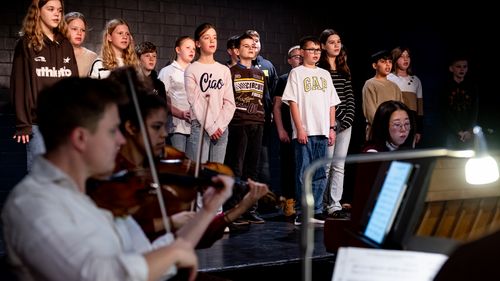
They are very inspired and touched that compositions have been created especially for them. Working with the new works is also part of the curriculum in various ways. And in addition to us graduates, students are also on the jury. In this way, they learn by example how to talk about music and judge it, which they in turn have to pass on themselves later. As the students also perform the compositions, they also work together with the composers. This is a great opportunity to have your finger on the pulse of the times and gain insights into the world of music creators. Students often have less to do with new music otherwise; most of the works that students dedicate themselves to in the course of their training are older than they are. However, this gives them the opportunity to accompany the creation and performance of new music. And don't forget: performing a world premiere is something really exciting. Reading music and translating it into sound in your head is an extremely demanding task. With existing works, you can listen to a recording beforehand to judge the composition. With new works, you have to start from the typeface and hear or realise the sounds internally.
With new music, the typeface is certainly different to what we are used to...
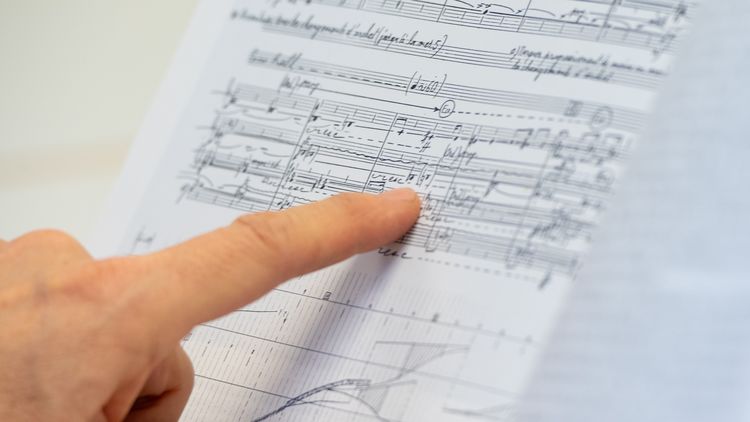
Yes, the grades are often more like graphics, often very pictorial. Some look like modern graphics that are visually sophisticated, and there are large, detailed legends and playing instructions. That looks quite impressive.
Back to the competition. What else characterises it?
We often receive entries from musicians who are just finishing their own composition training or who are teaching themselves. However, as we have no age restrictions, established, very renowned composers also submit works. Although our prize money is quite low by international standards, the competition and the University of Oldenburg are recognised worldwide. This is also thanks to Violeta Dinescu's high international reputation. She has created a large network - also through the Composers' Colloquium, which she initiated and led for many years. My colleagues Krystoffer Dreps, Volker Schindel and I have taken over the management of the competition for the 21st edition and are now also contributing our own networks.
What is this year's competition about?
Last year, we advertised the prize for a larger ensemble with orchestra. We received and awarded prizes to very appealing competition entries, but due to the coronavirus, we still have to wait for the performance and award ceremony. We have therefore adapted the format this year and announced the prizes for compositions for one or more pianos played experimentally and/or electronically. We can easily place the instruments on the stage of the university auditorium so that we can hopefully perform these works in the summer. We are very much looking forward to it and are expecting a large audience again - as was the rule in the years before Corona.
What happens next?
The next few years are secure - also thanks to good basic funding from the Presidential Board for our prize money. Nevertheless, donations are of course very welcome, many areas still need to be organised: Advertising, rehearsals, guest musicians and travel costs. But we are very optimistic. Next year, we want to hold the competition for music theatre, i.e. music with movement, and in the following year, 2024, the focus will be on electronic music.