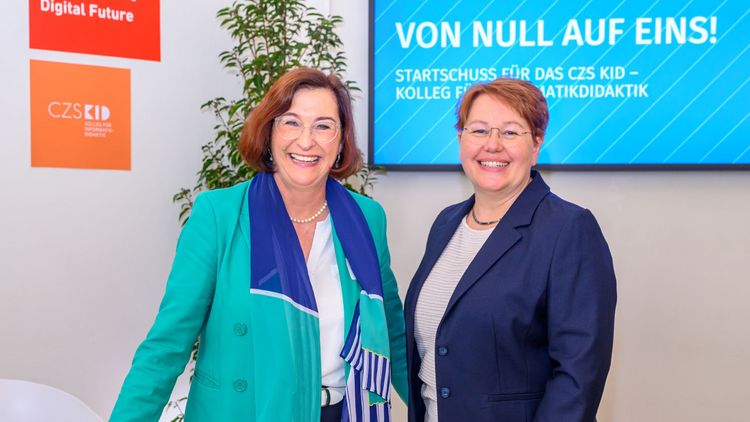


Germany needs more computer science teachers – and, to train them, more educationalists specialising in computer science with academic expertise. This is where the new doctoral programme CZS KID, launched this week, comes in. Ira Diethelm, computer science education specialist from Oldenburg and one of six lead researchers, talks about reservations about technology, computer science as the key to social participation, and the „Oldenburg connection” within the programme.
You have been calling for years for an expansion of computer science teaching in German schools – for which, in turn, there is still a shortage of thousands of teachers. Is computer science education now gaining the necessary additional momentum, not only in research but also in teacher training?
Absolutely. To ensure more high-quality teaching, we need more teachers; to ensure they are well trained, we need more university lecturers and professional development trainers; and these, in turn, can only be secured by having more people with PhDs in this field – which is precisely why we now have our doctoral programme. We are laying the foundations for this and strengthening the existing structures. Research and teaching are interdependent: without teaching, there can be no research into teaching; and without researchers, there will be fewer teachers and less teaching.
Why is computer science so important in schools in the first place?
Just as the natural sciences explain natural phenomena – such as why it rains or why we have seasons at all – computer science explains the digital phenomena of our world. These may seem to change every day with social media or AI, but – like the weather – they can be traced back to stable laws. For 50 years, the internet has functioned according to the same rules, which – unlike the laws of nature – are man-made. Understanding this, and realising that the digital space can be shaped, is an important insight that children can grasp in computer science lessons.
Perhaps also that artificial intelligence doesn’t really ‘know’ anything.
Exactly. They learn, for example, that a generative AI system only ever calculates a probable correct answer. They learn how easy and yet how difficult it is to get a machine to do what you tell it to do via a programme. This puts many myths into perspective and also dispels a certain apprehension here and there: it’s just zeros and ones and ideas – nothing more. The fact that every child needs to learn this is not just my personal opinion, but also that of the Conference of Ministers of Education and Cultural Affairs and the European Commission. Knowing that the internet consists solely of a network of other people’s computers is important so that you can have a say when, for example, data retention or filtering systems are being discussed and decisions are being made about regulating access. Or to understand how one’s own social media behaviour, the adverts displayed and increasing polarisation are linked.
So it’s about understanding certain mechanisms that go beyond the technology itself?
Democracy requires a broad education for society as a whole – and IT lessons form the basis for digital literacy in the digital world. The fact that Germany has some catching up to do in this area is demonstrated by the latest PISA study, which, for the first time, also tested computing skills under the heading ‘model-based problem-solving’. Germany performed even worse in this area than in the other categories. The fact that this has now been tested underlines its relevance.
Twelve million euros in funding over the next seven years: how do you assess this?
Firstly, it is the largest sum of funding ever allocated specifically for research projects in computer science education. We are not aware of any other project or private funding initiative anywhere in the world in which such a sum has been made available specifically for this field of research. Another notable feature is the comparatively long duration of the funding, which represents an immense vote of confidence – whilst, of course, also reflecting certain expectations.
What are the main objectives of this wide-ranging Research Training Group?
The research we carry out within the programme is very closely linked to schools. On the one hand, our remit is simply to lay the foundations for broader and better teacher training, with a view to increasing the volume of computer science lessons. But it is also important to have a significant qualitative impact on computer science lessons, so that their content reaches more children. The ideas and findings of the Research Training Group are intended to have a practical impact and be useful in practice, providing direct, meaningful support for teachers. Ultimately, better teaching benefits the children.
In which areas of computer science education research is it particularly important to make progress, and what is your focus there?
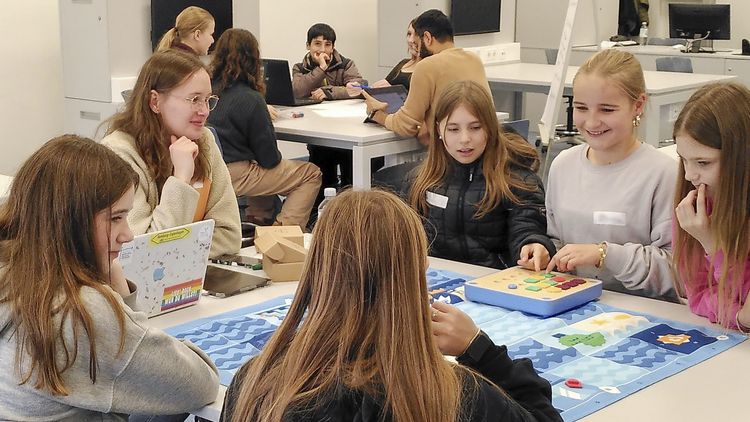
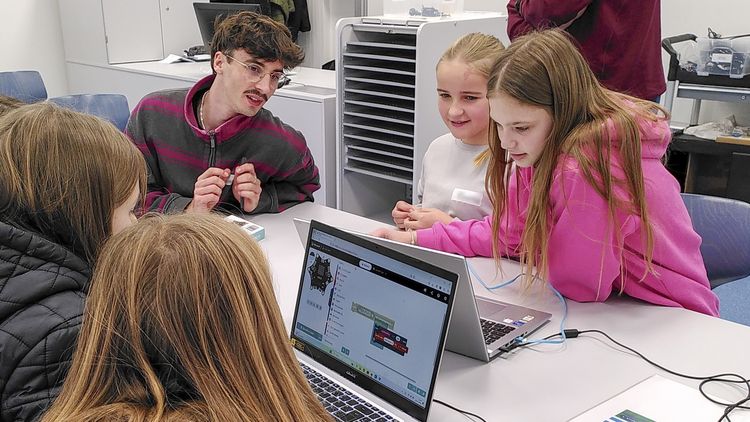
Many people think that computer science lessons are all about programming – unfortunately, this includes quite a few teachers. Yet there are four traditions of computer science education, all of which our research group explores through its holistic approach: algorithmic problem-solving, data-driven knowledge acquisition, socio-technical responsibility and self-directed technology design. The latter, for example, involves children and young people creating something in small ‘maker’ projects using microcontrollers – something that reacts according to their ideas and, for instance, flashes or beeps when shaken or at a certain temperature, similar to a warning system for natural disasters. In this way, they experience how programmes not only contain algorithms, but also react to and interact with people and the environment, can be shaped, and change their behaviour based on collected data – such as temperature.
This sort of teaching can also cater to the children’s different interests…
Exactly – some might be more interested in sensors and actuators, whilst others might be more interested in interaction with people or the impact on society: when is it actually too hot? Who actually decides that? Or others might be more interested in analysing the measurement data and the information behind the data.... So we simply hope to make computer science lessons more interesting and effective for an even wider and more diverse range of children and young people – regardless of their family background. Last but not least, we want to facilitate educational advancement – entirely in line with the aims of the funding foundation.
And what should be the key areas of focus for future PhD projects within the research group?
There are three pillars, each of which is addressed by two sites: Why should children learn this, and what theories and models underpin it? What and how much do children actually learn here, and how can these skills be measured? And how can computer science lessons best be structured and incorporated into teacher training? In Oldenburg, we are addressing the final question and the development of teaching scenarios and professional development programmes. To this end, we are constantly trialling new approaches with school classes in our learning lab. The PhD projects will overlap in time at each location – there will be three per location over a period of seven years – and PhD candidates working on similar research questions will also exchange ideas with those at other locations and with those using different methods. In this way, we aim to help build a network even whilst they are still working on their doctorates and ensure that, later on, the alumni will naturally continue to conduct joint research and tackle larger research questions together, extending beyond the research group.
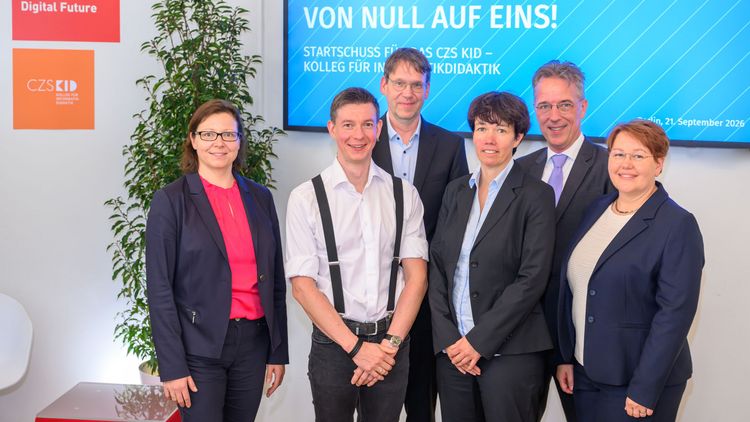
Looking at the lead researchers in the programme, one can sense that the collaboration has, in some cases, been well-established for a long time – not least due to time spent together at the University of Oldenburg?
Indeed! At the launch of the doctoral programme this week, I was once again reunited with my colleagues Claudia Hildebrandt and Nadine Dittert, with whom I had already conducted joint research in my Oldenburg research group – today, one is a professor in Heidelberg and the programme’s spokesperson, whilst the other is a professor in Koblenz. I’ve known some of the researchers involved for 25 years; for example, my colleague Carsten Schulte from Paderborn and I once completed our doctorates at the same time, working on similar topics. There are many areas of overlap where our collaboration is well-established. All of us are also active in the German Informatics Society, and so its role as a coordinating body and secretariat arose quite naturally.
Interview: Deike Stolz