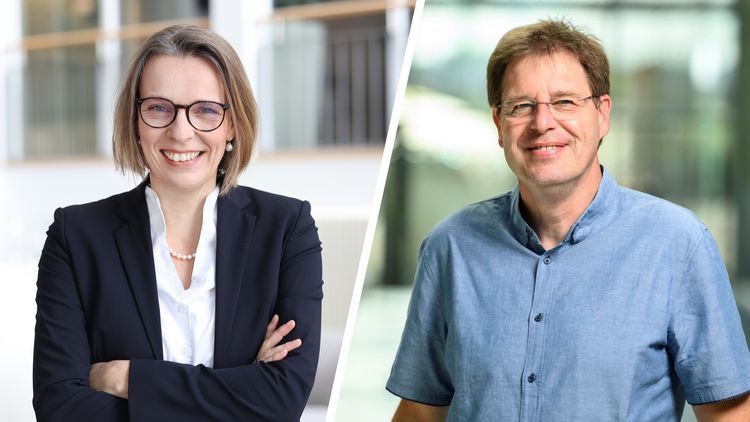
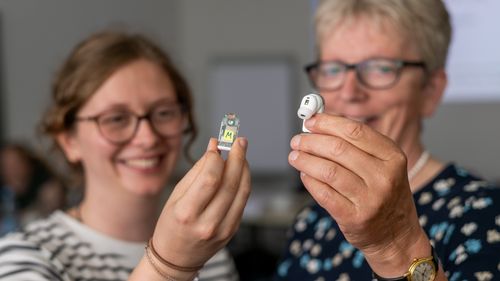
Energy systems expert Astrid Nieße and bioinformatician Frank Oliver Glöckner both initially studied biology, then moved on to data science. Based at the Universities of Oldenburg and Bremen, they now head digital data repositories for research: an interview.
You each head a digital data consortium within the German National Research Data Infrastructure (NFDI), one for energy research and one for biodiversity research. How important is data for research?
Glöckner: You can’t create knowledge without data. In this sense, the NDFI is an infrastructure for making science possible. Take biodiversity research: without comprehensive information on what is currently out there we can’t know what won’t or might not be there in the future. Or meteorology: when, during the COVID-19 pandemic, there were fewer aircraft flying around and providing data to be incorporated into weather modelling and forecasts, weather forecasts became less accurate. The problem resulting from such data gaps can basically arise in all areas, whether it’s climate change and global warming or biodiversity research. The denser the tapestry of data we weave, and the more widely we make it available, the better the evidence-based information that we provide to policymakers will be.
As a basis for decision-making in climate or environmental policy, for example?
Yes. Data is fundamental, and we firmly believe that it should be available to everyone. This is why the NFDI is working to mobilise this data, store it in publicly accessible repositories, and grant access to those who may not be able to collect it themselves in such vast quantities and across such a broad range – people in the Global South, for example, which is also suffering from the effects of climate change and declining biodiversity.
Nieße: For us, too, it’s less about simply storing data and more about handling data as digital objects. This means that we put our researchers in a position to work competently with data. An example of this is jointly developed energy scenarios that are made available in digital form, thereby improving comparability. When it comes to publishing data, however, collaboration with industry can become a hurdle because economic interests, contractual obligations or legal requirements may conflict with the transparency principles of “Open Science”.
Glöckner: That’s a key point. Unlike in energy research, we who work in the fields of biodiversity and climate research are in the privileged position of being able to make our data publicly available because it is a common good, collected using taxpayers’ money. Things are different in areas like the energy sector or in medicine, where data protection is a factor.
But despite having different topics as your focus, within the two NFDI consortia you lead you face common challenges…
Nieße: That’s right. Because ultimately this is about nothing less than a cultural shift.
Glöckner: Exactly, we need a shift in thinking: the focus must be on the common good as well as the awareness that data and descriptive information in particular, i.e. metadata, should be published independently of any publication. We must embark on this path together with the scientific community and take this into account right from the outset – because data without context-giving metadata is completely useless.
Does that mean you have to, or have had to, persuade researchers as well?
Nieße: Yes, and that in itself shows that alongside the development of data services this is also about conveying the fact that research is changing – and how. That it’s no longer about conducting research in a closed space, using a body of data and models that you yourself compiled, but about collaborative, data-driven research. That really is a genuine paradigm shift! And not everyone is on board with it. This shift will also require a generational change in some cases, and it will not succeed in every environment. “My data, my model?” – I once chose that as a title for a keynote speech.