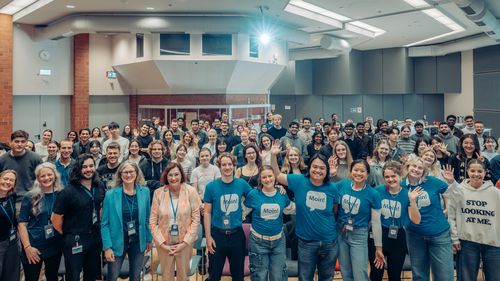
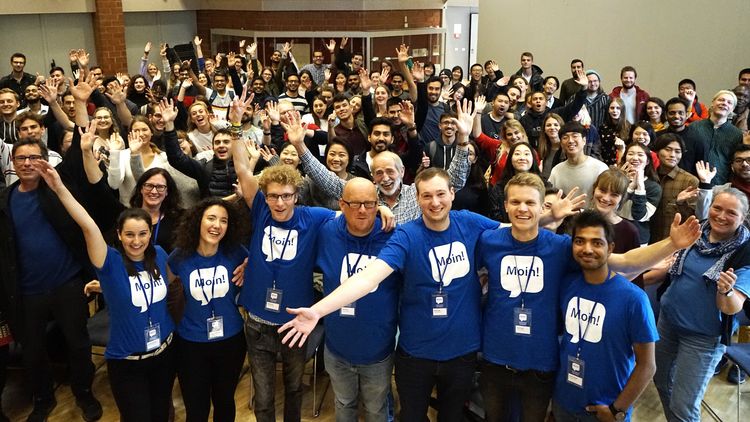

A city rally, student tutors and plenty of preparation: every semester, the University’s International Office welcomes students from all over the world with its International Orientation Week, helping them settle in.
“Welcome”, “Bienvenue” or simply “Moin”: anyone wanting to greet all Oldenburg’s students in their native language will be busy for a while. Around 1,200 international students from 130 countries are currently studying at the University of Oldenburg. And at the start of this year’s winter semester, more than 200 international students have arrived here.
To help the new international arrivals – whether exchange students, students on Bachelor’s and Master’s programmes or PhD candidates – get off to a good start at the university, the International Office organises an international orientation week on the Haarentor campus at the start of every semester.
Everyday matters
“Internationality – that means being open to the unknown, to the unfamiliar.” With these words, Prof. Dr Sabine Kyora, Vice-President for Student Affairs, Teaching and Gender Equality, opened this year’s International Orientation Week. Joining us this year are Janneke from the Netherlands and Maria from Spain, who are already looking forward to meeting new people and having new experiences in Oldenburg.
Boris Pohl from the International Student Office knows that the unknown often involves very everyday things. For several years now, he has been organising the orientation week, supported by student tutors. He and his student colleagues expertly answer questions such as “What do you need to bear in mind when booking a doctor’s appointment?” or “How does the German deposit system work?” are answered with ease by him and his student colleagues. “We’re well prepared and help international students settle into life in Oldenburg,” says Lasse Veers, one of the six tutors.
Reception at the Old Town Hall
The rest of the Orientation Week programme also helps students from all over the world settle in: staff from the International Office hold various information sessions offering tips on studying and living at the university and in the city. Naturally, an explanation of the German waste separation system is a must.
Every year, representatives of the city of Oldenburg also welcome the new arrivals at the Old Town Hall. Anyone who wishes to do so can sign the city’s Golden Book. In the evenings, the programme becomes more varied: “For example, we organise a city treasure hunt and an international games evening,” reports Pohl. It is precisely these informal get-togethers that help students overcome language barriers and get to know others quickly.
Point of contact for problems
The varied week traditionally concludes with the International Dinner at the Intercultural Centre. All students contribute dishes from their home countries to a large buffet. For Lasse Veers, this is clearly one of the highlights of the week: “From Chinese rice specialities to Spanish tortilla de patatas and American pancakes, there was something for everyone.”
But even after that, the tutors’ work continues: “Our support extends far beyond the orientation week. We remain the people to turn to if there are any problems and continue to organise events to ensure that international students settle in smoothly in Oldenburg and feel well looked after,” says Veers. With that in mind: “Welcome”, “Bienvenue”, or simply “Moin” to the University of Oldenburg.