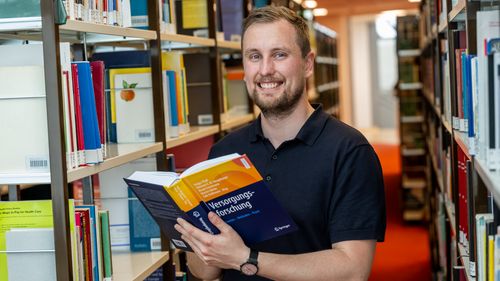

Student teacher Manuel Kock talks about his personal experience of starting university.
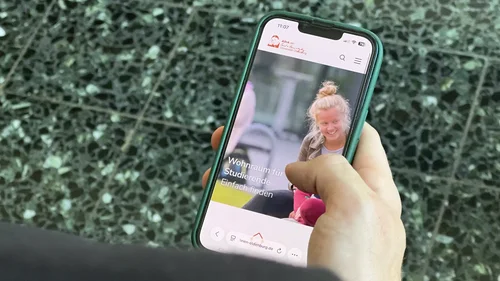
How do I find my way around campus? How do I organise my studies? These are questions that Manuel Kock also asked himself at the beginning. "It's a completely new system that you're thrust into. You suddenly have to make your own timetable ... and not just that one," he recalls of the start of his studies. During the orientation week, the so-called O-week, however, you are well supported. The student bodies invite their new students to campus rallies and pub evenings and explain how to put together timetables. "That takes away a lot of the uncertainty," says Manuel. He also familiarised himself with Stud.IP, the campus management system, during O-Week. "It's super helpful. I can't imagine university life without it," explains Manuel with a laugh. "The whole degree programme can be organised using it. You can register for seminars and lectures, access forms and grades and use the messaging function. And there's a notice board: you can find everything from bikes to rooms in shared flats."
Manuel is studying to be a music and maths teacher for grammar schools. The combination of subjects, which at first glance seems unusual, is a perfect match for him: "The more practical music degree is a welcome change from the very intensive maths courses. What's more, both subjects are very logical and are among the most precise languages," explains the 21-year-old. You shouldn't be put off by maths in particular - it's all about getting started. "I recommend every maths student to attend the preliminary maths course. It makes the start much easier." A nice side effect: during these two weeks before the start of his studies, Manuel also got to know fellow students. He is still friends with some of them today.
Don't let them drive you crazy
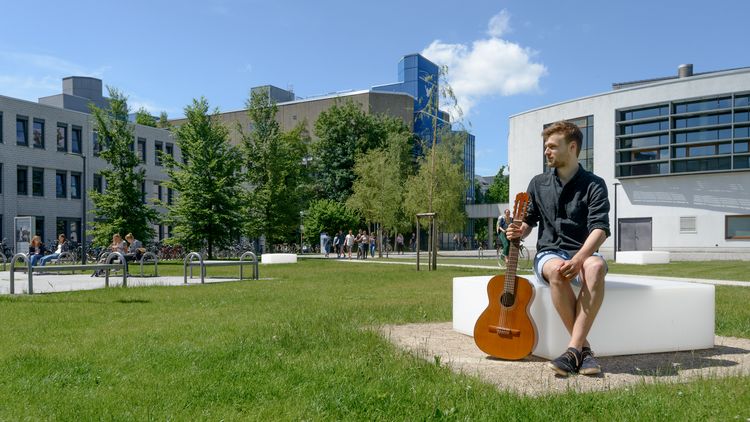
His experience from the first few semesters: "Make sure you work continuously from the start. You should prepare systematically for the exams. "It's important to be structured when you start studying, otherwise you'll work much longer than necessary." And he has another piece of advice for students: "Don't let yourself go crazy beforehand!" During their time at school, students often say that everything is much more stressful during their studies. Manuel's experience: "There's more to do, but the work doesn't have such a negative connotation. It's more fun and you don't have to force yourself to do something all the time, as you often did at school. As a music student in particular, you have many opportunities to realise your musical potential alongside your lessons: At recitals or in various music ensembles. The university also offers the opportunity to try out and learn different instruments. "I actually play the piano. But I've now also started playing the drums and learnt the guitar," says Manuel.
"Overall, I'm happier now. I spend most of the day doing things that I have chosen and that I feel like doing. So my advice is not to judge and choose subjects based on the amount of work they require." Although studying maths is very labour-intensive, it also has unbeatable advantages: "Correcting later is quicker," he laughs. He also prepares a lot with his fellow students in study groups - teamwork is the magic word. The team spirit is correspondingly strong.
When there is enough time between lectures or when his head is spinning from all the formulae, the university and its location in the countryside offer many opportunities to switch off and enjoy some free time. There are volleyball courts on the Wechloy campus, for example, and the surrounding area is ideal for barbecues and relaxing. Want to go into the city centre for an ice cream or coffee? No problem, you can be in the city centre in ten minutes by bike or bus.