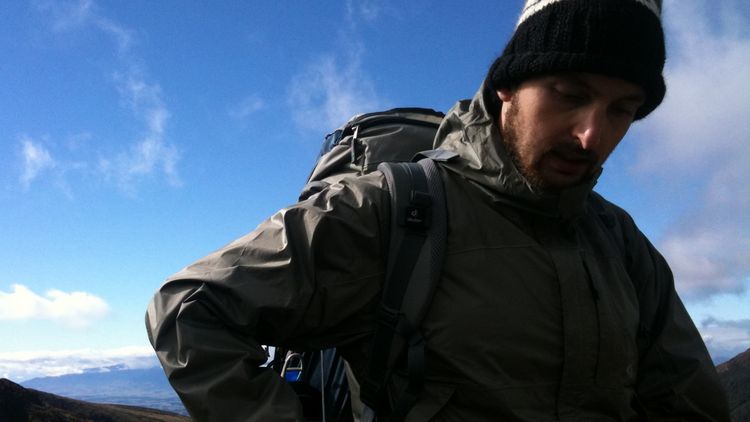


Christopher Sommer has completed his Master's degree in Museum and Exhibition at the University of Oldenburg. He is now travelling through New Zealand - and investigating the representation of migration in immigrant museums.
By Mark Brüggemann
Writing a dissertation on an exciting topic, receiving a scholarship and travelling a lot through a beautiful country: For Christopher Sommer, these dreams of many university graduates have come true. In order to gather material for his dissertation, the 27-year-old is visiting so-called "settler museums" throughout New Zealand - museums that focus on the many immigrant groups that have come to New Zealand throughout history. "The exhibition theme of migration is very popular in New Zealand," says Sommer. "For about 10 to 20 years, New Zealanders have been very interested in the multicultural foundation of their nation."
In addition to the Polynesian indigenous people (Maori), who were probably the first to settle the New Zealand islands in the 13th century, it was not until long after the discovery of the country by the Dutch navigator Abel Tasman (1642) that Europeans arrived as settlers - mainly English and Scots, but also Dutch, Germans, Czechs and others. Other immigrant groups such as Koreans and Indians were added more recently.
Sommer's empirical work in the settler museums consists of exhibition analyses and visitor research. "I talk to the curators about the intention of the respective exhibition, look at how the space is utilised and how media are used, and conduct interviews with visitors," says Sommer, giving examples of his day-to-day research. As a "Ph.D. Candidate", he now also has official doctoral student status at the university.
High cost of living
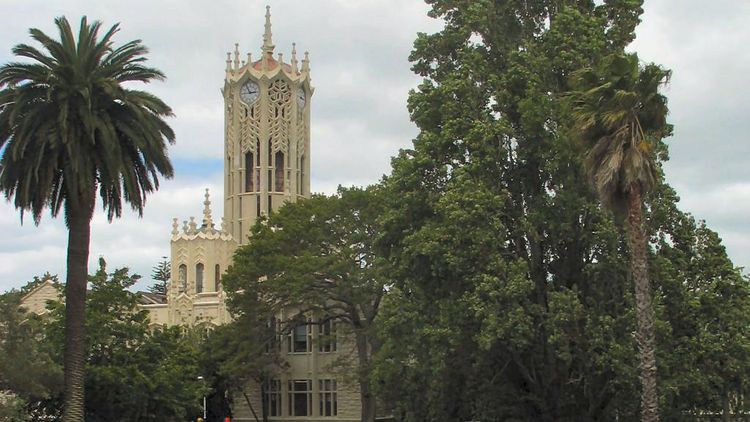
An art historian and a linguist are Sommer's academic supervisors in New Zealand. To finance his project, the Mannheim native receives a three-year scholarship for international students from the University of Auckland - around 1,000 euros a month. "That's a very good thing, but the cost of living in Auckland is high," says Sommer. The attractiveness of the city of 1.3 million inhabitants on the North Island of New Zealand is reflected in the rents, among other things. "For a simple, small single flat in the centre, you pay the equivalent of 600 to 700 euros in rent. Halls of residence are usually even more expensive than private flats," says Sommer.
He himself lives in a shared flat with his girlfriend from New Zealand, who is doing a PhD in laser physics. In addition to the rent and living costs, he normally has to pay the equivalent of 3,600 euros a year in tuition fees. "But I don't have to pay that as a scholarship holder," says Sommer. The fees in New Zealand are staggered according to subject area: While a doctorate in philosophy is still comparatively inexpensive at the aforementioned 3600 euros per year, prospective doctors have to dig much deeper into their pockets at around 20,000 euros per year of their doctoral studies.
Sommer was already able to familiarise himself with the University of Auckland during a semester abroad in 2009. He took a semester off from his "Museum and Exhibition" studies in Oldenburg and applied privately for the "Museum and Heritage" degree programme in Auckland. To do so, he had to have his German certificates translated and obtain a language certificate from the DAAD. "I only knew school English, which was one of my motivations for the stay," Sommer recalls. "I only had to write an essay in English for the DAAD language certificate; I only took the IELTS test (International English Language Testing System) in New Zealand." Sommer was also lucky with the tuition fees: due to an agreement between New Zealand and Germany in force at the time, he paid the lower rate for locals.
The sky is (almost) always blue
What Sommer likes most about Auckland is the multicultural atmosphere and the fact "that the sky is almost always blue". But he also enjoys leaving the city, which was built on 50 partly extinct, partly dormant volcanoes. "You only have to drive an hour out by car and you have absolutely unspoilt nature," enthuses Sommer, who is a keen hiker. He is particularly fond of the New Zealanders because of their relaxed behaviour and the flat hierarchies in everyday university life. Sommer is less fond of the national sports of rugby and cricket - and as a metal fan, the fact that so few international bands of this genre make a detour to New Zealand.
Christopher Sommer may or may not return to Germany after his doctorate, as he says himself: "I'm ready to apply internationally, and I'm also happy to learn a new language." Whether it's a career as a curator or director of a museum, working in an agency for exhibition concepts or an academic career, Sommer can imagine many things - including staying in New Zealand.