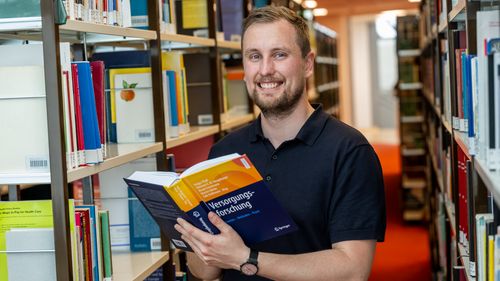
This year, the University of Oldenburg is hosting two conferences focussing on the topic of research during studies. Interview: Co-initiator Susanne Haberstroh, advisor for research-based learning.
QUESTION: What is forschen@studium?
HABERSTROH: We summarise two events under this name: A nationwide conference for student research on 8 and 9 June, and an international conference for research-based teaching and learning on 9 and 10 June. Both events will focus on the topic of research during studies. The first conference is primarily aimed at students, while the second is a specialist conference for academics who are involved in research-based learning.
QUESTION: Why is there a separate conference dedicated to this topic?
HABERSTROH: Many students do research from their first semester onwards. Unfortunately, the results often disappear into a drawer after marking. However, there is a great deal of commitment in student research and the results are great - we want to make this visible. I am convinced that students can benefit greatly from presenting their work to other students and teachers from the same subject and from other areas.
QUESTION: How can students take part?
HABERSTROH: It's simple. They just need to submit a short summary presenting their research, which is possible until 6 March. Then they can decide whether they want to present their research as a 20-minute lecture, a ten-minute short presentation or a poster presentation. Of course, students can also simply register as listeners.
QUESTION: Is this about completed research work?
HABERSTROH: Not only. Students can submit work in three categories: "Current research", which includes completed research. The second category is "Research on the move". This is where students can present their ideas or exposés and get valuable feedback from the audience. Then there is the category "Research failed". Students can take the opportunity here to present work that did not work out as they had imagined. There can be many reasons why a project cannot be realised as planned. The students themselves and the audience can learn a lot from this.
QUESTION: How has the response been so far?
HABERSTROH: We have already received interesting submissions from various disciplines throughout Germany. Our goal is to give all interested students the opportunity to present their research. That's why we support the speakers financially: we cover part of their travel and hotel costs as well as the participation fee. And they can also win something: A jury will award prizes for the best presentations and posters.