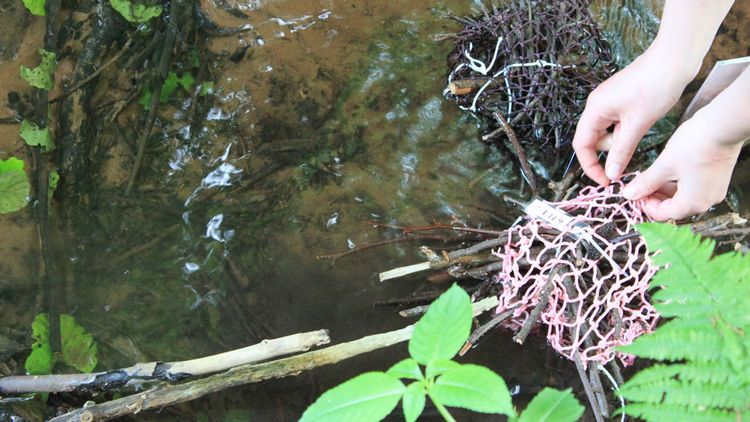


Reintroducing insects and other aquatic animals to streams in their natural environment: This is the aim of a new research project led by biologist Ellen Kiel. For three years, she and her team are developing suitable "mobile homes" made from natural materials such as wood and gravel with the help of students.
Streams and rivers have served mankind in many ways for centuries. They have been used as a source of drinking water as well as for the disposal of industrial water. As a central element of sophisticated drainage systems, they helped to absorb and drain water and, in many places, made it possible for people to colonise and cultivate wet or temporarily flooded areas.
The differentiated knowledge of the ecology of aquatic systems and the negative effects of a purely functional view and management of water bodies is far more recent. However, studies have shown that improved water quality and water body structure alone are not sufficient for successful renaturalisation.
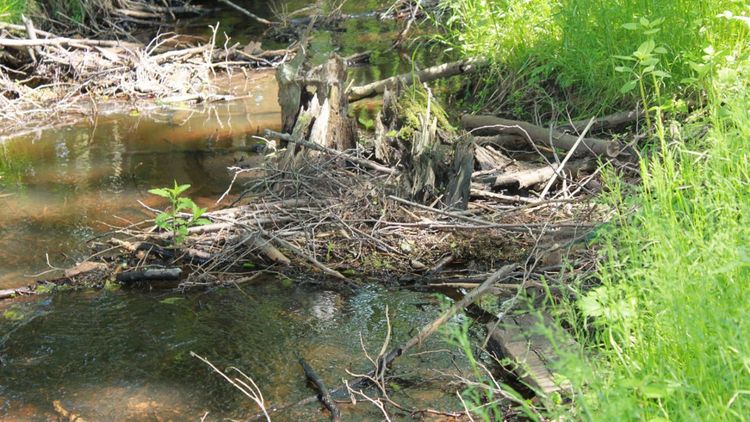
The legally prescribed assessment of watercourses therefore also uses the specific animal communities as a central indicator of the "ecological functioning" and quality of watercourses. "The water-specific fauna is often missing in 'broken', long-maltreated streams and does not always return there of its own accord," says Kiel.
This is why the North Rhine-Westphalian State Agency for Nature, Environment and Consumer Protection has now commissioned the University of Oldenburg with a research and development project to help typical species of small and medium-sized streams to reintroduce themselves to their natural habitat.
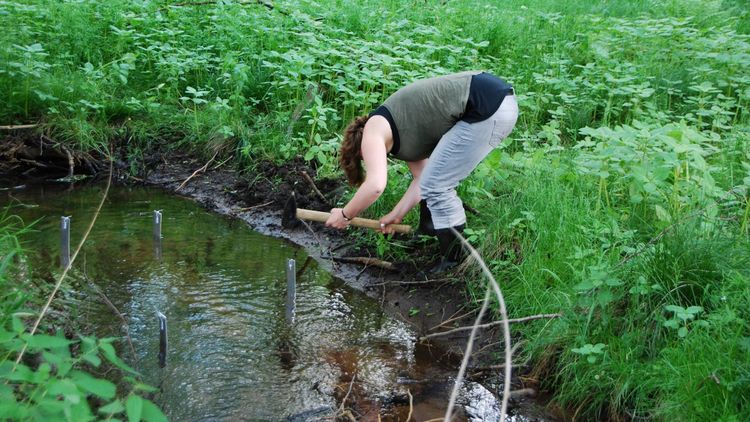
In the project in co-operation with the University of Duisburg-Essen and several regional water boards, Kiel and her team can already draw on findings from previous work. Together with students of environmental sciences and landscape ecology, they have developed a method suitable for off-road use that also fulfils scientific standards.
In field studies and final theses, the students compared different materials such as wood or gravel that characterise an intact stream bed. With the help of netting material, small packets can be made from these, which serve as a means of transport for mayflies, caddisflies or beetles to a new "home".
Further preliminary studies tested how and how quickly the animal "test subjects" can best be released and compared colonisation successes over time. This showed that the typical aquatic animals accept the "relocation offers" well.
Building on this, the team of biologists in the new project can now select specific materials for "mobile homes", for example to transport larvae to a specific body of water without loss and colonise them there.