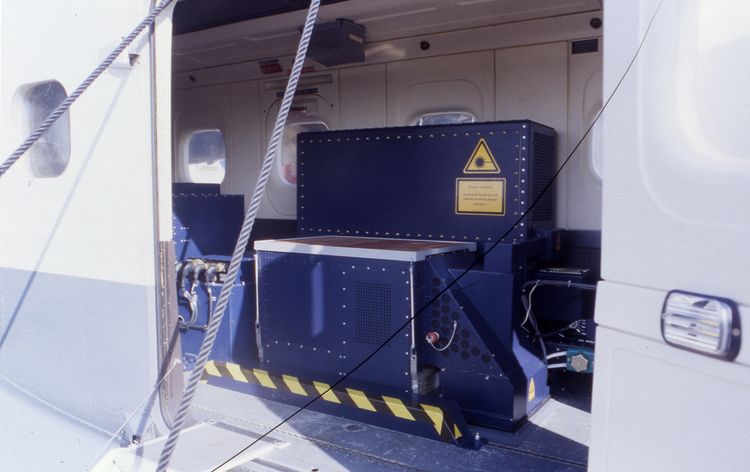
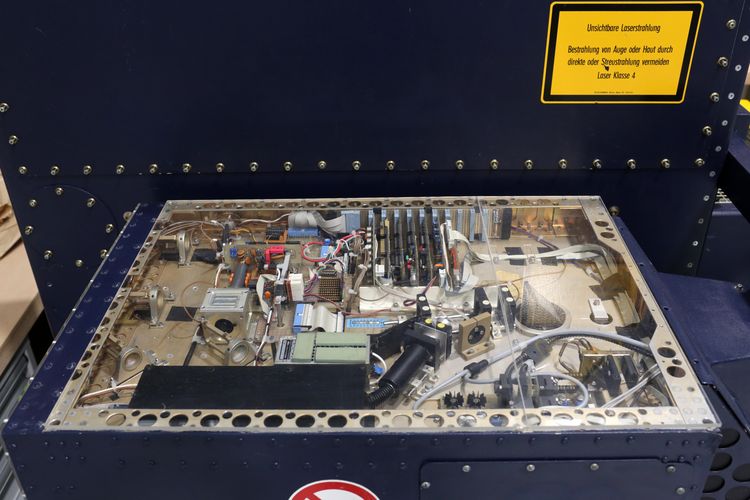


Monitoring and analysing oil spills from an aircraft: For years, this was the task of the "laser fluorosensor" developed by scientists in Oldenburg. Now the sensor, which was the model for many other models, has had its day and has travelled to Munich: in future, it will be accessible to researchers and the public at the German Museum of Masterpieces of Science and Technology. The device, developed at the end of the 1980s, was the first of its kind at the time.
"We are delighted to be able to make such a contribution to public relations," says Prof Dr Matthias Wollenhaupt, Director of the Institute of Physics, which donated the prototype to the museum. "The foundation will enrich our museum's collection with another exhibit that is important to the history of technology," adds Dr Jörn Bohlmann, the museum's curator responsible for shipping and marine technology. "The prototype of the laser fluorosensor laid the foundation for all the devices that are successfully in use today in the service of environmental protection," says the expert in maritime technology history. The development made a significant contribution to curbing oil pollution in our oceans. The curator is particularly pleased that the new exhibit not only conveys physical and scientific aspects, but also aspects of shipping and aviation as well as the history of environmental protection.
In the 1980s in particular, oil from shipping and oil rigs increasingly polluted the sea and coasts. The Marine Physics working group headed by Dr Rainer Reuter therefore developed the device, which can measure even small amounts of oil from an aircraft using short laser pulses. The measurement data allowed the researchers to determine the thickness of the oil film, for example, and to differentiate between different types of oil. This enabled them to determine the origin of the oil. "The further development of this prototype is still in full use today," explains Reuter. An operational instrument, i.e. one that can be used routinely in practice for official marine monitoring, did not exist before this development. The Oldenburg scientists developed the device as part of international co-operations funded by the Federal Ministry of Education and Research.