
Making socially challenging educational topics such as climate change or the sustainable use of resources accessible to young people in a new way: This goal unites four new didactic projects at the University of Oldenburg, which the German Federal Environmental Foundation (DBU) will be funding over the next three years.
"With these projects, the university will further expand its proven focus of expertise on education for sustainable development, which is also anchored in teacher training," says University President Prof Dr Dr Hans Michael Piper. The DBU's funding volume totals around 800,000 euros.
In the RETIBNE project, technology and computer science didactics are focussing on the repair skills of pupils and prospective teachers, together with nine other university partners. According to technology didactics expert Prof Dr Peter Röben and project manager Dr Katharina Dutz, repair knowledge and skills are an important element of technical and Computing Science education for sustainability.
Together with computer science didactics expert Prof Dr Ira Diethelm, they are developing repair tasks in which pupils gain an insight into technical processes and material cycles and acquire practical repair skills. Schools in the region will test the tasks designed at the University of Oldenburg before the cooperating universities develop them further with their school partners.
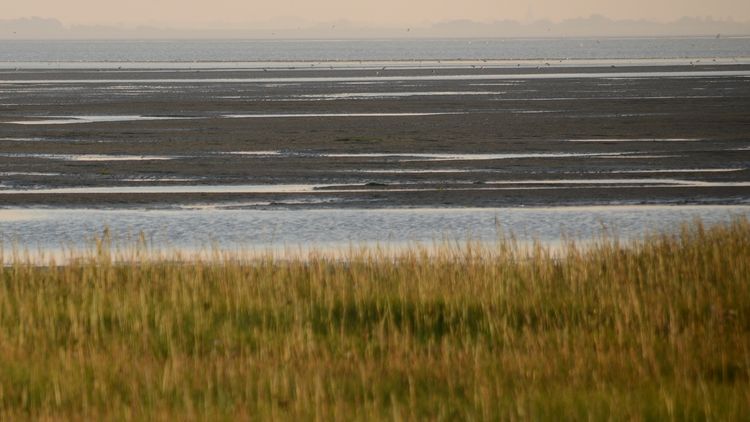
Physics didacticist Prof Dr Michael Komorek sees it as an important task to address physical mechanisms in the mudflats and coastal seas in schools and at extracurricular learning locations. "The combination of on-site teaching, for example on the island of Spiekeroog, and learning in the physiXS school laboratory will fill a previously blank spot in environmental education," says Komorek. The project will make a significant innovative contribution to the further development of extracurricular environmental education in large protected areas.
Specifically, aspects of marine and coastal dynamics against the backdrop of climate change are to be professionally analysed, didactically prepared and, in particular, incorporated into the educational activities of the Lower Saxony Wadden Sea National Park. The materials and training concepts to be developed for teachers will include the perspectives of other natural sciences and school education - in collaboration with the former Oldenburg educational scientist Prof Dr Klaus Zierer. Co-operation partners include the Hermann Lietz School and the National Park House on Spiekeroog.
Chemistry didactics expert Prof Dr Verena Pietzner is focusing on lessons with more vocational orientation. So far, academic appointments related to chemistry in preventive environmental protection have been an unknown field for many pupils and teachers alike. Special learning tasks in the CHEMOL school laboratory are designed to introduce students to academic appointments in business, landscape conservation, administration and environmental analysis.
"Young people are often unaware that many environmental protection measures require chemical knowledge," emphasises Pietzner. Chemical professions could be an interesting prospect, especially for young people who do not wish to study.
Together with her colleague Anja Wübben and Dr Holger Winkler from the Institute of Chemistry and Biology of the Marine Environment (ICBM), biology didactics expert Prof Dr Corinna Hößle aims to transfer current marine research to schools, teacher training and national parks. The plan is to establish a network between the university and national park centres. Innovative and up-to-date educational programmes are to be developed in cooperation with students in the "Wadden Sea Learning Laboratory".
"The aim of the project," says Hößle, "is to design, test and implement educational programmes from the ICBM's current research on the threat to and protection of the Wadden Sea UNESCO World Heritage Site for schools and national park houses from the perspective of precautionary environmental protection."
The four projects are closely interlinked. A total of five new positions for young scientists will be created. The materials and concepts developed at the end of the projects will be available to schools and extracurricular educational institutions.