
Prof Ulrich Teubner develops time diagnostics for ultrafast free-electron laser at DESY
Prof Ulrich Teubner develops time diagnostics for ultrafast free-electron laser at DESY
Prof Ulrich Teubner develops time diagnostics for ultrafast free-electron laser at DESY
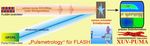
Oldenburg. The Intensive Laser Pulses working group led by Prof. Dr habil. Ulrich Teubner (external working group at IfP) will develop and build the timing diagnostics for the FLASH free-electron laser (FEL) located in Hamburg in collaboration with DESY in Hamburg. The BMBF is supporting this project with funding totalling €435,000 (funding reference 05K16ME1).
Since 2005, ultra-short, intense XUV pulses have been generated at the world's first FEL in the extreme ultraviolet (XUV) range. These can be used to "film" chemical or biological reactions, for example, as well as extremely fast crystal structure changes or phase transitions on a femtosecond scale (10^-15 seconds). The applications and research areas are as varied as they are interesting. For example, structural changes in molecules or combustion processes can be observed and optimised with unprecedented spatial and temporal resolution, as can electron transport in solar cells. Even changes in the arrangement of individual atoms can be resolved spatially and temporally.
The research group, which will spend the next three years developing the so-called XUV-PUMA (pulse duration measurement apparatus for the extremely short XUV flashes), includes the team from Hamburg as well as two doctoral candidates and research assistants from the working group and students from the two Engineering Physics degree programmes. In addition to the development of the XUV-PUMA itself, basic research is also part of the project. This includes, for example, research into ultrafast ionisation and in particular the relevant transport effects (e.g. electron diffusion). Another component is the investigation of the ultrafast development of the dielectric function during the interaction of FEL radiation with matter. In particular, these investigations will contribute to a deeper understanding of the FEL-matter interaction, especially the dynamics on the femtosecond time scale.