
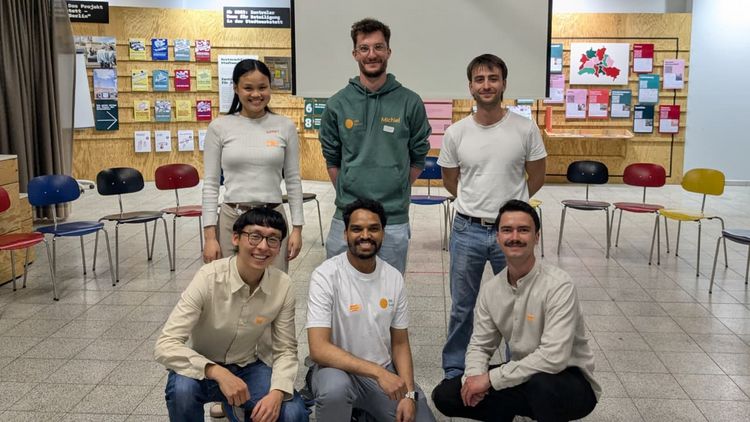


Rohan Manjesh (SuRE PPRE Batch 2024–26, India) joined the organising team of YES EUROPE's Future of Energy Days in Berlin — contributing five months of online coordination before coming together on the day itself to help bring the event to life.
Getting Involved
Earlier this month, I had the opportunity to join the organising team of YES EUROPE (Young leaders in Energy and Sustainability) for their Future of Energy Days event in Berlin. Over roughly five months, our team coordinated remotely — aligning on the programme structure, speaker lineup, and thematic focus. On the day itself, I was onsite helping ensure everything ran smoothly. It was a hands-on experience in event-building from the ground up, and a great complement to what we learn in the SuRE programme.
The Event: Climate-Neutral Heating by 2045
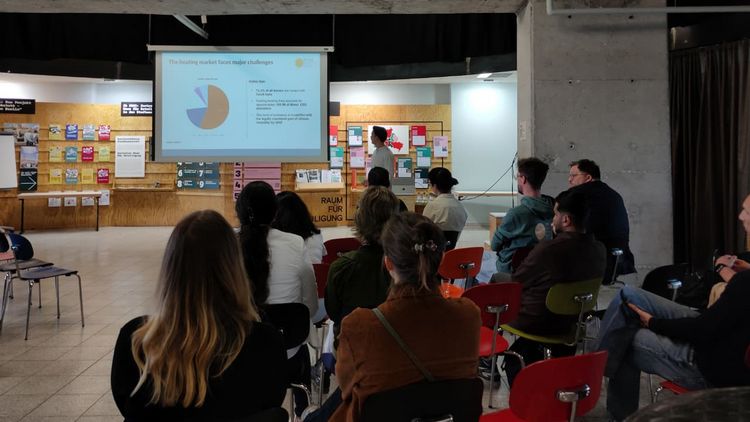
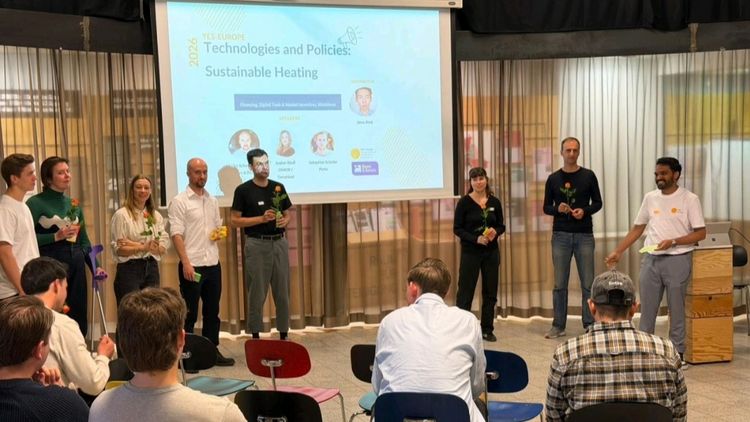
The evening brought together experts, startups, NGOs, consultancies and young professionals around a single question: how do we get Germany to climate-neutral heating by 2045? The programme was split into two focused sessions:
Part 1 – New Heating Technologies
Mathias Paul (thermondo) on scaling heat pumps
Julia Hellmer (co2online) on consumer acceptance and behaviour change
Niclas Kern (dsb) on energy efficiency consultancy in the building sector
Panel discussion: Road to climate-neutral heating 2045
Part 2 – New Businesses & New Ideas
Marius Schondelmaier (Bees & Bears) on financing models for the energy transition
Sebastian Schröer (perto) on energy efficiency as the overlooked lever
Amber Riedl (OHKW / Terra Heat) on reframing Germany's heat pump skills gap
Maxine Salmon-Cottreau (Comparative Research Network) on research-to-policy translation
Panel discussion: Financing, digital tools, market incentives and workforce
A recurring theme across both sessions: the heating transition cannot be driven by moral arguments alone — it must be embedded in an economic framework that makes it viable for homeowners, businesses and investors. Gas and electricity prices, financing access, and installer capacity are just as important as the technology itself.
What I Took Away
Being part of the organising team gave me a perspective I wouldn't have had as an attendee. Five months of remote coordination taught me a lot about how complex events are structured — aligning stakeholders, shaping a narrative across sessions, and managing the many moving parts that make a programme feel coherent. The onsite day was where all of that came together.
Substantively, the event reinforced how multi-dimensional the energy transition really is. The mix of startups, NGOs, researchers and consultancies in one room showed how many different angles there are to work on — and how important it is for students like us to engage beyond the academic bubble.
Why You Should Get Involved
YES EUROPE is a great network for young energy professionals looking to connect with practitioners across Europe. If you have the chance to attend one of their events — or better yet, contribute to organising one — I'd encourage you to go for it. The experience bridges the gap between what we study and how the energy transition actually unfolds in practice.
What many people don't realise is that YES EUROPE also welcomes volunteers beyond attending events. There are real opportunities to take on active roles within the network — from helping organise events like this one to contributing to ongoing projects spanning research, communications, policy engagement, and community building.
Contact:[rohan.manjesh@uni-oldenburg.de] | Rohan Manjesh, SuRE PPRE 2024–26, University of Oldenburg
YES EUROPE (Young leaders in Energy and Sustainability)
Linkedin post: