
Supervision, coaching and organisational development
Supervision, coaching and organisational development
Professional support for change processes
We teach you how to advise and support managers, employees and teams in the event of challenges, conflicts or change processes. The six-semester further education programme teaches comprehensive methodological skills. This will enable you to support clients in ensuring the quality of their work, reflecting on their actions and optimising their academic appointments.
We focus on psychodynamic-systemic action models. Participants deal with topics such as conducting conversations, dealing with conflicts in organisations, coaching managers, case work and team development. We also attach great importance to personal development. Intervention methods are practised using practical examples and can be implemented directly in everyday working life.
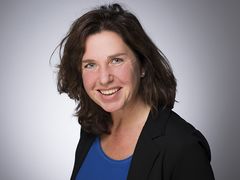
Dr Astrid Beermann
Diplom Sociologist

University degree
University certificate as a "Supervisor, Coach and Organisational Developer"
Possibility of certification by DGSv e.V. and DGSF e.V.


Network
Learning and working with experienced teachers in theory and practice
Collegial exchange and networking in learning and supervision groups



Details of the contact study programme
Develop counselling skills and personality
Our programme provides you with both scientifically sound foundations and a variety of practical methods. The spectrum ranges from learning theories and organisational concepts to ethical principles. You will learn how to shape professional contexts and develop your personality as a counsellor through self-reflection and self-awareness.
The contact study programme comprises the following number of teaching units (45 minutes each):
- 340 Theory and methodology
- 50 self-awareness
- 180 Supervision (100 practical, 50 group teaching, 30 individual teaching supervision)
- 100 Own counselling practice
- 130 Intervision
Further components are
- Proof of five completed supervision processes up to two years after completing the further education programme
- Final thesis: detailed documentation of a supervision, coaching and/or organisational consulting process
- Colloquium and evaluation - presentation of case work, professional topics, reflection and feedback, securing the results of the overall process

The current curriculum includes the following seminars and dates:
| Seminar 1 | Introduction to counselling individuals and organisations and working as a supervisor, coach and organisational developer | 21./22.02.2025 |
| Seminar 2 | Counselling individuals and groups - case work and team development | 25./26.04. 2025 |
| Seminar 3 | Systemic dialogue management - The art of leadership in the process | 13./14.06.2025 |
| Seminar 4 | Counselling managers - leadership culture and leadership personality | 22./23.08.2025 |
| Seminar 5 | System constellations as a form of intervention in supervision, coaching and organisational development | 07./08.11. 2025 |
| Seminar 6 | Dealing with conflicts in organisations - strategies and models | 16./17.01.2026 |
| Seminar 7 | Introduction to systemic organisational development as a development-promoting learning process (business game) | 08./09.05.2026 |
| Seminar 8 | Academic appointments - experiences and potential from your own biography (self-awareness - 5 days) | 22.-26.06.2026 |
| Seminar 9 | Coaching processes in the professional field of action | 21./22. 08.2026 |
| Seminar 10 | Cultural change and ethics in counselling processes | 06./07.11.2026 |
| Seminar 11 | The body in coaching - mindful awareness of the physical experience as a resource | 18./19.12.2026 |
| Seminar 12 | Resonance in groups and teams | 12./13.02.2027 |
| Seminar 13 | Evolution management - learning from nature's ecosystems for society and organisations | 16./17.04.2027 |
| Seminar 14 | Online counselling | 04./05.06.2027 |
| Seminar 15 | Closing processes in supervision, coaching and organisational development | 12./13.11.2027 |
| Seminar 16 | Colloquium and evaluation | February 2028 |
| Practical supervision | Accompanying further training | Dates to follow |
| Group teaching supervision | Start after self-awareness (seminar 9), 5 one-day events | Dates to follow |
| Individual teaching supervision | Accompanying further training | Dates are arranged with the individual teaching supervisor. |
(subject to change) |
Further education is organised on a part-time basis. Learning takes place throughout in a fixed group of around 20 participants. Both the personal and the practical process are supported in the seminars and supervision sessions.
The self-awareness programme takes place as a block event (seminar 4) on weekdays from Mondays to Fridays. The seminar is recognised as part of educational leave.
Both the practical teaching supervision and the group teaching supervision take place on the university premises. The five-hour practical teaching supervision sessions start every four to six weeks in the early afternoon. The group teaching supervision begins after the self-awareness sessions and is spread over five full days.
In addition to the face-to-face events of the contact study programme, which mainly take place on Fridays and Saturdays, students can decide flexibly and individually how to organise their learning. Independent work takes place within the supervision groups in the spirit of self-organised learning and quality-enhancing networking.
The next part-time further education programme starts in April 2028; the application deadline is 30 November 2027.
At the introductory and decision seminar, you will get to know the team, the concept, the supervisors and the group personally, have the opportunity to ask questions about the content and framework conditions of the contact study programme and discuss your personal motivation, expectations and fields of application with the supervisors. Only then is a binding registration possible.
For your application, please use our
and submit it with the following documents:
- Proof of academic and training qualifications
- Curriculum vitae in tabular form
- Proof of at least three years of professional experience to date
- If applicable, statement on equivalent achievements for a proposal for alternative access
- Personal statement on motivation to participate (max. 2 pages)
Please send the application form and a complete PDF document with all application documents to
You can apply for the part-time contact study programme with the following requirements:
- Completed basic college or university studies
- At least 3 years of professional experience
- Participation in longer-term further education and training to acquire personal, methodological and other counselling-relevant skills (usually a total of at least 300 teaching hours)
- Participation in several supervision processes or other forms of work-related counselling in different settings (individual and team/group supervision). At least 50 teaching units of 45 minutes each must be proven, of which at least 10 teaching units must be with supervisors or coaches who are members of the DGSv, the ÖVS or the bso. Processes with at least 5 sessions can be recognised.
- The conditions correspond to the guidelines of the German Society for Supervision and Coaching(DGSv)
- Exceptions are possible via a proposal for alternative access. Please formulate any missing requirements and corresponding equivalent achievements (e.g. many years of academic appointment and management experience, further training, etc.) in your application.
Admission is decided according to the following criteria:
- Professional and personal aptitude
- motivation
- Fields of application
- Objectives
After successful participation, proof of all credits and completion of the examination (colloquium), participants receive a university certificate as a supervisor. This certificate complies with the guidelines of the German Society for Supervision and Coaching(DGSv) and the German Society for Systemic Therapy, Counselling and Family Therapy(DGSF). Graduates can be certified by the DGSv and DGSF with the university certificate if they fulfil all the necessary requirements.
For certification by the German Society for Systemic Therapy, Counselling and Family Therapy(DGSF), please note the following requirements:
1. university degree and completion of a DGSF-/SG-recognised further education course in "Systemic Counselling / Therapy / Coaching / Organisational Development"
or
university degree and completion of another curricular further education course in the area of conflict between person, role and institution, comprising at least 300 teaching hours supervised by lecturers, as well as a systemic, curriculum-based further education course comprising at least 120 teaching hours supervised by lecturers
or
a qualified professional qualification (at least 3 years of professional training) and at least 5 years of professional experience and completion of a DGSF-/SG-recognised further education course in "Systemic Counselling / Therapy / Coaching / Organisational Development".
2. possibility to implement systemic supervision during further education
Exceptions are possible in individual cases and on proposal.
The following fees are charged for the Supervision, Coaching and Organisational Development contact course:
- Introductory course: EUR 120
- Fees per semester (6 semesters in total): EUR 1775
- Supervision: EUR 1,556
- Self-awareness: EUR 444
- Final colloquium: 150 EUR
(subject to change)
The fees are paid in advance for each semester. Practical supervision is settled directly with the supervisor, as is self-awareness. The costs for individual supervision must be agreed with the respective supervisor and are not included in the fees.
In addition to the seminar content, the following services are included in the fees:
- Access to the internet-based learning environment with the forums and materials provided there
- Introduction to the learning environment and technical support
- Intensive advice and support from the Contact Studies team Supervision, coaching and organisational development
Other expenses that are not included in the tuition fees are
- Personal expenses for living expenses, travelling, accommodation and internet
- Costs for accommodation and catering during the self-awareness seminars. They are settled directly with the seminar centre by the participants.
- Costs for individual supervision.
Subsidies
Employees can generally claim expenses for further education related to their academic appointment against tax. Employers and the self-employed should clarify with their tax advisor or tax office whether training costs qualify as business expenses.



Teachers
Dr Astrid Beermann

Dr Astrid Beermann
Employee in health management at the University of Oldenburg and works in private practice
Profile and main areas of work
Phone: +49(0)441 798-4896
Email:
Module: Basics of supervision, coaching and organisational development;
Seminar: Introduction to counselling individuals and organisations and working as a supervisor, coach and organisational developer
Seminar: Systemic conversation - the art of leadership in the process
Module: Forms and significance of the counselling organisation;
Seminar: Counselling individuals and groups - case work and team development
Module: Supervision and group dynamics - group teaching supervision, practice teaching supervision, individual teaching supervision, intervision
Module: Completion and certification; seminar title: Completion processes in supervision, coaching and organisational development

Hans-Jürgen Heinecke

Hans-Jürgen Heinecke
Managing Director TPO Consulting
Lecturer in the Master's programme Management Consulting (MMC) University of Oldenburg
Profile and main areas of work
Phone: +49(0)172 7682446
Email:
Module: Basics of supervision, coaching and organisational development;
Seminar: Introduction to systemic organisational development as a learning process that promotes development
Module: Strategy and resource management;
Seminar: Strategy development and resource management in organisational development
Psychologist Klaus Obermeyer

Psychologist KlausObermeyer
Lecturer in the Department of Counselling and Conflict Resolution at C3L
University of Oldenburg
Profile and main areas of work
Phone: +49(0)40 39909510
Email:
Module: Coaching as a special form of counselling;
Seminar: Coaching processes in the professional field of action

Manuela Pegel

Manuela Pegel
ERFOLGSPEGEL - Sole trader
Profile and main areas of work
Phone: +49(0)179 4254228
Email:
Module: Forms and significance of the consulting organisation;
Seminar: Consulting for subjects and managers - leadership culture and leadership personality
Module: Change processes in organisations;
Seminar: Cultural change and ethics in counselling processes
Seminar: Supervision and group dynamics - group teaching supervision, practical teaching supervision, individual teaching supervision, intervision
Module: Fundamentals and basic skills of mediation;
Seminar: Introduction and fundamentals of mediation and conflict management
Tom Pinkall

Tom Pinkall
Lecturer
Profile and main areas of work
Module: Coaching as a special form of counselling;
Seminar: The body in coaching - mindful awareness of physical experience as a resource
Module: Coaching as a special form of counselling;
Seminar: Coaching as a special form of counselling - methods of coaching
Who is the contact study programme aimed at? What requirements do I need to fulfil?
You can apply for the part-time contact study programme with the following requirements:
Completed basic college or university studies
At least 3 years of professional experience
Participation in longer-term further education and training courses to acquire personal, methodological and other counselling-relevant skills (usually a total of at least 300 teaching hours)
Participation in several supervision processes or other forms of work-related counselling in different settings (individual and team/group supervision). At least 50 teaching units of 45 minutes each must be demonstrated, of which at least 10 teaching units must be with supervisors or coaches who are members of the DGSv, the ÖVS or the bso. A process must comprise at least 5 sessions.
The conditions correspond to the guidelines of the German Society for Supervision and Coaching(DGSv).
In exceptional cases, admission can be granted via a proposal for alternative access. Please formulate any missing requirements and corresponding equivalent achievements (e.g. many years of academic appointment and management experience, further training, etc.) in your application.
When and where do face-to-face events take place? What are the seminar times?
Theory and methodology seminars take place approximately every 6 weeks during the semester, usually on Fridays and Saturdays from 09:00 - 18:00.
The curriculum includes a five-day self-awareness seminar. This takes place during the week in the seminar house and is recognised as part of educational leave.
The supervision accompanying the training takes place approx. 5-6 weeks a week and usually lasts 5 hours in the afternoon.
In addition, there are self-organised intervision meetings in small groups.
The face-to-face events take place on the premises of the C3L Centre for Lifelong Learning (buildings V02 and V03) or in the training centre for psychotherapy, Uhlhornsweg 99c. There are no face-to-face courses during the school holidays.
Why do I have to name the possibilities of my own counselling processes?
As the contact study programme leads to a certified degree, practical professional qualifications should be taught. In order to ensure the implementation of one's own supervisory counselling processes, opportunities in the current work context or in the form of internships with external agencies should be guaranteed in advance.
What do I have to achieve during the contact study programme? Are there examinations?
In addition to the face-to-face events (seminar, self-awareness and supervision), you will bring in your own cases for supervision, prepare a reflection report after the self-awareness seminar and submit evidence of your own supervisory and counselling practice.
At the end of the contact study programme, you will complete a thesis (case analysis) and attend a colloquium.
Is financial support possible? Can I take educational leave?
Employees can generally claim expenses for further education related to their academic appointment against tax. Employers and self-employed persons should clarify with their tax advisor or tax office whether training costs qualify as business expenses.
If your employer is based in Lower Saxony, you can apply for educational leave if the seminar lasts 3 days or more. In Bremen, it is possible to apply for one day or more.


