Archive
Archive
Series of events: LiteraTour Nord 2025/26
26 October 2025 - 25 January 2026 (Musik- und Literaturhaus Wilhelm 13, Oldenburg)
Every winter from October to January, selected authors of contemporary German-language literature go on the LiteraTour Nord and read from their new publications in Oldenburg, Bremen, Lübeck, Rostock, Lüneburg, Hanover and Osnabrück.
In the 2025/26 season, Nora Gomringer, Dorothee Elmiger, Daniela Dröscher, Katerina Poladjan and Annett Gröschner will go on a reading tour with LiteraTour Nord.
The Oldenburg readings of the LiteraTour Nord will take place in the Wilhelm13 music and literature centre. The organisers are the Literaturhaus Oldenburg and, since the 2021/22 season, the Thye bookshop. The readings are moderated by teachers from the Oldenburg NDL.
Information on the authors, books and dates can be found on the LiteraTour Nord website.

Lecture: "dass ich der Kleider beraubet hier steh" - The Susanna drama by the Baroque poet Sibylla Schwarz (1621-1638) and contemporary painting
13 January 2025, 10:00 (University of Oldenburg, A01 0-009)

In her lecture, the renowned Schwarz researcher Dr Monika Schneikart (Greifswald) will present a fragment of a drama by the Baroque poet Sibylla Schwarz (1621-1638), which has many references to the visual arts of the time.
The lecture is part of the BA seminar "Sibylla Schwarz - und die Literatur des Barocks". Guests are very welcome!
Monday, 13 January 2025
Time: 10 a.m.
Room: A01 0-009
Workshop: Digital research in Oldenburg. Potentials - Tools - Methods
10 January 2025 (University of Oldenburg)
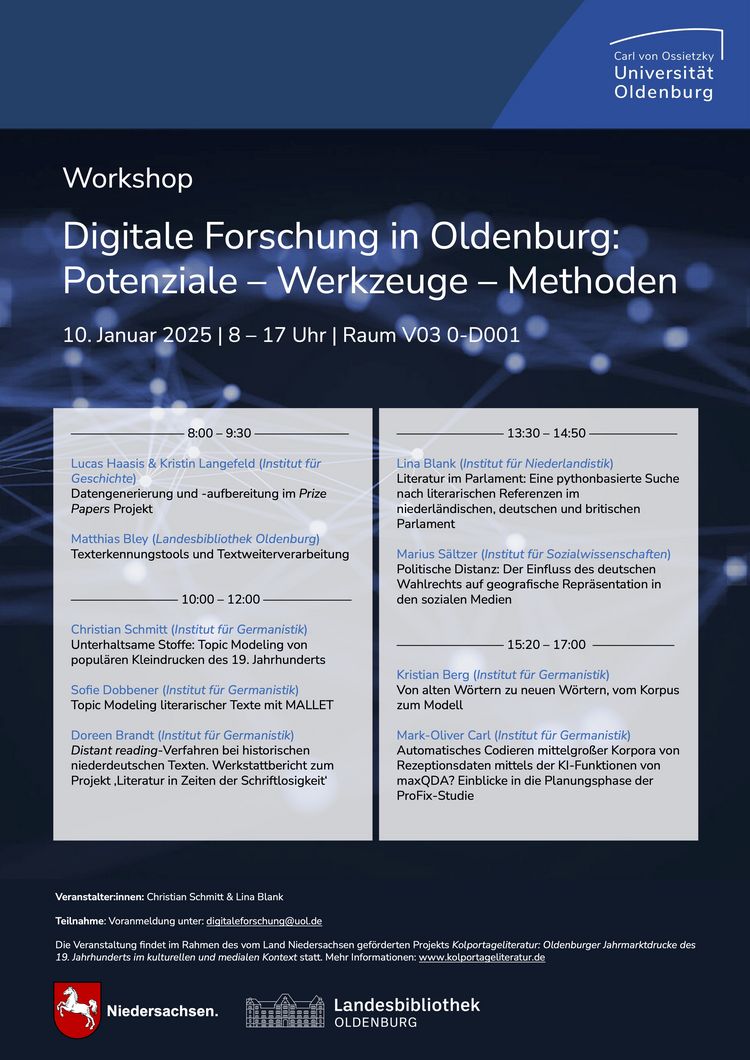
Advancing digitalisation has the potential to change research questions and practices in the cultural and social sciences. This is particularly true for sciences that deal with texts, as digital tools open up new possibilities for empirically analysing large amounts of data and text. In linguistics, corpus linguistics has benefited from these possibilities, while literary studies have utilised them as useful tools for distant reading methods. In both cases, of course, the methodological question arises as to how the resulting findings can be conveyed using qualitative and contextualising approaches(mixed methods).
The workshop aims to explore the potential and challenges of digital research using concrete projects or project plans from the cultural and social sciences that are being carried out or prepared in Oldenburg. On the one hand, this involves an interdisciplinary exchange of experience on the tools and methods of digital data processing, in particular data generated from texts. On the other hand, the workshop also serves to network Oldenburg researchers and/or practitioners - in order to generate synergies and provide impetus for the establishment of digital infrastructures at the university.
Time & place:
10 January 2025, 8-17 h
University of Oldenburg, Ammerländer Heerstraße 136, Room V03 0-D001
Programme:
The programme is available here as a PDF.
Organiser: inside:
PD Dr Christian Schmitt (Institute for German Studies) & Lina Blank M.A. (Institute of Dutch Studies)
Participation:
Guests are welcome, also for individual blocks. Pre-registration is requested at: digitaleforschung (at) uol.de
New publication: Ludwig Tieck: Novellenkranz - Ein Almanach auf das Jahr 1832. critical edition
Edited and annotated by Jakob C. Heller and Christian Schmitt (Dresden: Thelem 2024)
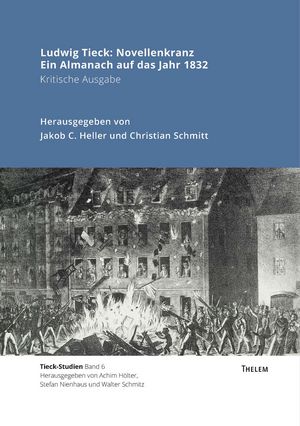
Witchcraft and city adventures: these are the themes of Ludwig Tieck's Novellenkranz. An almanac for the year 1832. The novella The Fair sends petty bourgeois from the provinces to the turbulent city, where their Biedermeier order is turned upside down. The historical novella The Witches' Sabbath allows a seemingly enlightened society to fall back into religious paranoia through intrigue. Both stories show Tieck to be a virtuoso writer of entertainment and a subtle critic of the times.
This critical edition presents the two novellas for the first time in their original publication context, revealing cultural and literary backgrounds with an afterword and passage commentary - and thus inviting readers to rediscover this almost forgotten Tieck.
Workshop: Under the sign of the medical model? Disability in the 20th century
7 - 9 October 2024 (Institute for German Studies, Oldenburg)
Under the sign of the medical model?
Disability in the 20th century
Meeting of the DFG network "Inclusive Philology. Literary Disability Studies in the German-speaking world"
Institute for German Studies, University of Oldenburg
7. - 9 October 2024
Location: Haarentor campus, Room A08 - 1-102
Ammerländer Heerstraße 114-118
26129 Oldenburg
To the programme
The event is open to the public. For organisational reasons, please register at: urte.helduser [at] uni-oldenburg.de
Contact person: Urte Helduser
Exhibition: "Germany at sea". Naval literature of the German Empire from the holdings of Oldenburg University Library
BIS Foyer, 17 July - 11 October 2024
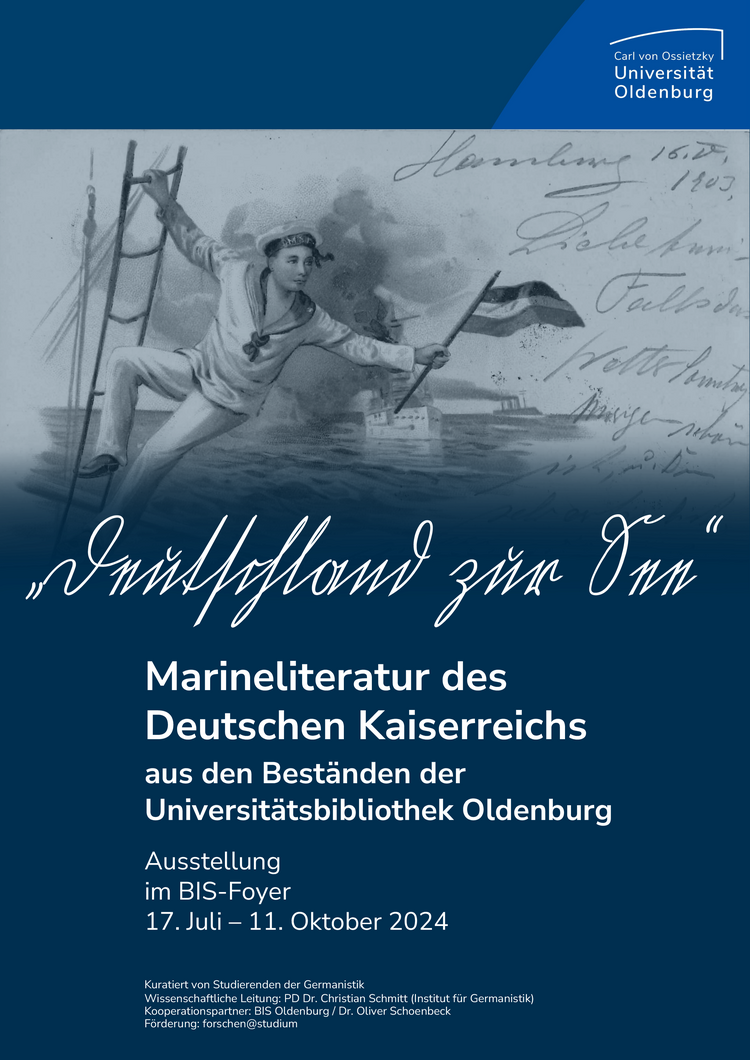
In the last quarter of the 19th century, German literature discovered the sea: from the 1880s onwards, a popular 'naval literature' accompanied the building of a German navy and contributed significantly to popularising the rearmament of Wilhelmine Germany as a great maritime power. At the same time, the narratives developed by the texts legitimised imperialist and colonialist ambitions that were closely linked to the building of the fleet. The popularity of this literature can also be explained by the fact that very different text types and media were used: In addition to fictional adventure tales, which were preferably aimed at young males, there are informative non-fiction books; periodical media such as magazines, yearbooks and 'penny dreadfuls' also served as multipliers.
The exhibition, curated by students from the University of Oldenburg, presents and contextualises 'naval literature' from the holdings of the Oldenburg University Library, supplemented by materials from the State Library and from private collections.
Curated by students of German Studies
Academic Director: PD Dr Christian Schmitt (Institute for German Studies)
Cooperation partner: BIS Oldenburg / Dr Oliver Schoenbeck
Funding: forschen@studium
Workshop: Madness Scenes. Therapeutic and aesthetic stages
15 May 2024 (University of Oldenburg)

When asked in 1991 what theatre was, Heiner Müller replied: "Controlled madness, quite simply" (Heiner Müller: Theater ist kontrollierter Wahnsinn. A reader. Edited by Detlev Schneider. Berlin 2014. p. 177).
But it doesn't seem to be quite that simple, because the paradox of 'control' and 'madness' at least gives pause, as madness is generally attributed precisely to the absence of control. And if theatre is madness - is madness also theatre? Augustine immediately springs to mind here, the young woman who is more often called a 'performer' than a 'patient' and who was admitted to the Salpêtrière in 1875 under Charcot's care. Charcot's patient presentations, intended as documentaries, literally staged the clinical pictures.
However, 'theatre in the madhouse' is by no means an exceptional phenomenon. The theatre of the Marquis de Sade in the Charenton asylum was probably the best known, which can be understood not only as a therapeutic but also as a socially regulating and aesthetic practice. When Johann Christian Reil calls for a theatre for every insane asylum in his Rhapsodieen über die Anwendung der psychischen Curmethode auf Geisteszerrütungen (1803), he is not merely talking about amusement or an occupation, but is pursuing the concrete idea of using theatre as a therapeutic method.
In the Insanity Scenes workshop, the points of contact and intersections between insanity and theatre will be reflected upon in two lectures and used as a starting point for discussions on this broad field:
Céline Kaiser (Ottersberg): Therapeutic theatre in Charenton. A controversy around 1800.
Sabrina Dunja Schneider (Oldenburg): "Fanno balare un tarantolato." On the staging of a treatment method.
Wed, 15.05.2024
10:00 s.t. - 14:00
Room V03 0-C003
Contact persons: Urte Helduser and Sabrina Dunja Schneider
Prize for excellent research 2023 of the Oldenburg University Society
Award for Prof Dr Thomas Boyken
Prof. Dr Thomas Boyken receives this year's prize for excellent research from the Universitätsgesellschaft Oldenburg e.V. This award recognises outstanding, internationally visible research achievements by younger academics at the University of Oldenburg. Prof Boyken was honoured for his research work on the mediality and materiality of children's and young adult literature.
Workshop: Media reflections and reflexive mediality. Children's and youth literature in the media competition
22 - 23 February 2024 (HWK, Delmenhorst)
As part of the workshop, we will address the question of how literature of the 20th and 21st centuries - specifically children's and young adult literature of this period - reflects media change and the 'penetration' of new media into the book's sphere of influence on the one hand, and how its 'own' mediality - the book-like nature of literature - is reflected on the other (cf. Pressman 2020; Boyken 2021; Coller 2004; Benne/Spoerhase 2019). In our opinion, literature of the 20th and 21st centuries is particularly suitable for such a question because medial reflections in literary texts have increased significantly since the beginning of the media shift around 1900 and in the course of the associated marginalisation of the book as a medium. The ongoing crisis discourses of the last 120 years, which have repeatedly predicted the demise of the book, seem to have provoked a kind of 'self-assertion reflex' (cf. Boyken 2022b, 123-126). In the course of this, literature not only increasingly reflects the status of competing - i.e. primarily technical or digital - media, but also its own status and that of its traditional medium, the book. The literature of the 20th and 21st centuries is decidedly reactionary in this respect and, in this reactivity, extremely intense and concrete, which makes it particularly suitable as a subject of research. The emergence of bibliophile 'counter-currents' that emphasise the aesthetics of the book - i.e. the material, the page, etc. - in contrast to the fleeting nature of the digital (cf. Hagner 2019; Freudenberger/Stein 2020; Lucius 2012) and spill over into the digital space in the form of 'book blogs' and the like (cf. Thomalla 2018; Schneider 2018) is also striking.
We would like to discuss the following key questions in the workshop
- What functional potentials are associated with motivic media reflections?
- Which media are superficially reflected and to what extent do these reflections possibly differ?
- What is the relationship between rejection/distinction and sympathy/acceptance in relation to reflections on the 'new' media (critical reflection vs. 'closing ranks')?
- To what extent do media reflections in children's and young adult literature serve the acquisition of general media literacy?
- How is reflective mediality specifically functionalised in children's and young adult literature of the 20th and 21st centuries?
- Is there a 'specific' form of reflexive mediality in children's and young adult literature in contrast to 'adult literature', for example?
- What role does the aspect of participation play in reflexive mediality in children's and young adult literature?
- Do the processes of motivic media reflection and reflexive mediality change with the onset of the digital revolution around 2000?
- Do historical focal points emerge in motivic media reflection? (e.g. with regard to the focussed media or the way of reflection)
Contact: Thomas Boyken
New publication: Authorship, genres and digital media. Sibylle Berg, Markus Heitz, Cornelia Funke and Michael Köhlmeier in the literary field of the present (2010-2020)
Ella Margaretha Karnatz (Bielefeld: Transcript 2023)
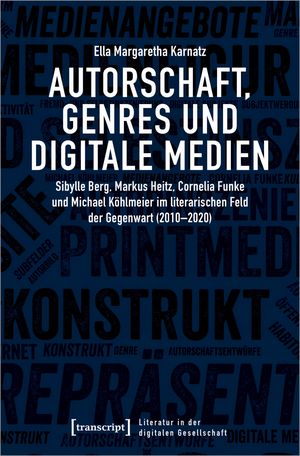
In order to be perceived as an author, you have to be recognisable as such. In this process of visualisation, images of authors emerge that are produced by various authors and media. Ella Margaretha Karnatz focuses on these images and, for the first time, explores the relationship between authorship, genres and digital media. Using a sociological approach to literature and media studies, she analyses reviews, interviews, websites and social network platforms by Sibylle Berg, Markus Heitz, Cornelia Funke and Michael Köhlmeier, among others.
Series of events: LiteraTour Nord 2023/24
29 October 2023 - 28 January 2024 (Wilhelm 13 House of Music and Literature, Oldenburg)
Every winter from October to January, selected authors of contemporary German-language literature go on the LiteraTour Nord and read from their new publications in Oldenburg, Bremen, Lübeck, Rostock, Lüneburg, Hanover and Osnabrück.
In the 2023/24 season, Deniz Utlu, Tonio Schachinger, Milena Michiko Flašar, Frank Witzel and Gianna Molinari will go on a reading tour with LiteraTour Nord.
The Oldenburg readings of the LiteraTour Nord will take place at the Wilhelm13 music and literature centre. The organisers are the Literaturhaus Oldenburg and, since the 2021/22 season, the Thye bookshop. The readings are moderated by the teachers of the Oldenburg NDL.
Information on the authors, books and dates can be found on the LiteraTour Nord website.
Seismograf - Oldenburg Poetry Talks on Children's and Young Adult Literature
Online: Podcast with the Austrian children's and young adult author Elisabeth Steinkellner

The event series "Seismograf - Oldenburger Poetikgespräche über Kinder- und Jugendliteratur" focuses on the poetological premises of writing for children and young people, but also on the social contexts and aims of writing. The question of the functions of children's and young adult literature in contemporary society - both in terms of the social and the literary-aesthetic dimension - thus becomes virulent and forms the basis for an exchange with authors and media professionals from the field of children's and young adult literature.
The Seismograph is a reorganisation of the Oldenburg Poetry Lectures, which have been organised by the Oldenburg Research Centre for Children's and Young Adult Literature and the Institute for German Studies at the University of Oldenburg since 2004. Guests have included Paul Maar, Kirsten Boie, Mirjam Pressler, Andreas Steinhöfel and the comic artist Flix.
One of the aims of the reorganisation is not only to talk about the poetics of children's and young adult literature within the university and a seminar, but also to reach people outside the university context who are interested in children's and young adult literature. In co-operation with the Oldenburg House of Literature, two consecutive events are offered each summer:
1. reading & discussion (evening event in Wilhelm 13)
2. podcast recording with students (which is then uploaded to the website of the Oldenburg Research Centre for Children's and Young Adult Literature )
The series of talks kicked off in summer 2023 with a visit from Austrian children's and young adult author Elisabeth Steinkellner (1981, born in Lower Austria). The podcast is now available here.
Elisabeth Steinkellner trained as a social pedagogue and studied cultural and social anthropology in Vienna before becoming a successful author of children's and young adult books. She has been known for more than a decade for her poetry, short stories and novels for children and young people. She has already received the Austrian Children's and Youth Book Prize for both her poetry collection "Die Nacht, der Falter und ich" (2016) and her young adult novel "Esther und Salomon" (2021). She has also won the Hans im Glück Prize and the Feldkirch Poetry Prize, among others. Her sketch and diary novel "Papierklavier" (2020) was also nominated for the German Youth Literature Prize.
New publication: Kolportageliteratur. Mediality, mobility and literariness of popular texts in the 19th century
Katharina Grabbe / Christian Schmitt (eds., Oldenburg: Isensee 2023)
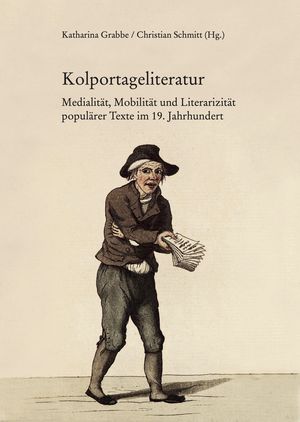
This volume invites readers to rediscover a form of literature beyond the 'great works' of the literary canon: texts that were sold on streets and markets in the 19th century and reached broad sections of the reading public. This popular 'colportage literature' has long been neglected by literary historians and scholars. The contributions in this volume examine the complex interplay of distribution mechanisms and the communication spaces they opened up, of media formats and the associated strategies of representation. Whether and how new approaches to forms of mobile and popular literature of the 19th century can be developed from this is the question that the contributions address with a view to different materials - including 'Kolportageheftchen' from the collection of the Oldenburg State Library.
Conference: Authorship in children's and young adult literature. Historical and current images and practices
16 - 17 November 2023 (The Smart House Oldenburg)

The topics of 'authorship' and 'staging' have been extensively analysed in literary and cultural studies over the last twenty years. Several publications have appeared that have analysed selected authors (cf. Jürgensen/Kaiser 2011, Kyora 2014, Schaffrick/Willand 2014, Fischer 2015) or individual media formats (cf. Oser 2014, Hoffmann/Kaiser 2014, Sporer 2019, Hoffmann/Wohlleben 2020). However, there have so far been hardly any contributions in research that deal with authors of children's and young adult literature (cf. Lang 2022, Hoffmann 2017, Karnatz 2023). In this respect, Corinna Norrick-Rühl and Anke Vogel also state in the current Handbook of Children's and Young Adult Literature that the "staging of children's and young adult authors [...] is a research gap" (Norrick-Rühl/Vogel 2020, 27).
At the same time, the way in which authors of children's and young adult literature present themselves, how they stage themselves and are staged, which 'brand' they represent, is likely to be of great importance for the perception of the texts and for the readership's loyalty to the author. After all, a separate sub-market with its own rules developed early on in the social system or sub-field of children's and young adult literature. Here, it makes sense to build on common systematisations in order to take a closer look at the importance of authors (see Hurrelmann 1992, Ewers 2012 and 2021, Gansel 2019). Research could also be expanded with framework theories that have so far received little attention in children's and young adult literature research - such as Pierre Bourdieu's field theory or Andreas Reckwitz's reflections on the 'subject' (cf. Tommek 2015, Kyora 2014). Following on from this, it would be worth examining which media were frequently used in the field of children's and young adult literature to generate attention and are still used today. A change can be observed here, which is particularly related to digital media. After all, authors have rarely been as visible as media figures as they are today, and the documented steps of their writing work and the exchange between them and their readers - for example via social media - are so easy to follow. Authors no longer only appear in public via the classic (black and white) photo on the back of the book, but present themselves in private and fictional worlds - such as Cornelia Funke, whose homepage was modelled on her garden and writing house for a long time.
These staging practices create images of authors that need to be analysed in more detail. In this context, the question of which models have emerged within the history of children's and young adult literature (such as the "children's literary narrator", Gansel 2019, 37) should also be examined. Do images of authors in children's and young adult literature participate in the models of authorship that are also dominant in general literature? Are there also poeta doctus or poeta vates in children's and young adult literature (cf. Hoffmann/Langer 2013)?
In this respect, our conference is orientated towards three thematic complexes. We would like to discuss the following questions at our conference:
Practices and images
- How does an author appear as an author of children's and young adult literature?
- What are (typical) staging practices of children's and young adult authors?
- Which staging practices are dominant in different periods (from the 18th to the 21st century)? Are there changes and continuities?
- Which media are used to visualise images of children's and young adult authors? Can media-specific images be recognised?
- Can conclusions be drawn about possible offers of identification with potential readers?
- What 'function' does an image/image have for a children's and young adult literary text?
Book market / marketing
- To what extent is the practice of staging also important in the context of marketing and commercialisation of children's and young adult literature?
- Have the images changed in the course of developments in the children's and young adult literature market?
- What significance do individual players in the submarket (publishers, agencies, intermediaries) have for staging practices and images?
Subsystem / subfield
- Do the practices and images suggest that children's and young adult literature can be understood as a subsystem or as a specific field (in Bourdieu's sense)?
- Are there specifics of national literatures (Switzerland, Federal Republic of German, German Democratic Republic, Austria, USA, etc.)?
The conference is being organised by OlFoKi (Oldenburg Research Centre for Children's and Young Adult Literature) in co-operation with the Swiss Institute for Children's and Young Adult Media (SIKJM) as part of the Oldenburg Children's and Young Adult Book Fair KIBUM.
Conference organisers: Thomas Boyken and Ella Margaretha Karnatz
To the conference programme.
New publication: Michael Ende. Poetics and Positioning
Thomas Boyken / Thomas Scholz (eds., Berlin: Metzler 2023)
The contributions examine Michael Ende's poetics and the relationship between the author, who was perceived as an author of children's and youth books, and the literary and intellectual field of the Federal Republic of Germany. The fact that Ende endeavoured to be recognised by the literary and intellectual field of the Federal Republic throughout his entire career as a writer is documented and forms part of Ende's discourse in feuilletonism and academia. The strategies and procedures Ende used for this purpose and the interrelationships between these and his literary work are systematically analysed here for the first time. The contributions draw on Ende's literary texts as well as his (literary) theoretical speeches in order to outline Ende's poetics and his positioning strategies.
To the publisher's page.
Inaugural Lecture: The Literature of the Illiterati. Oldenburg fairground prints of the 19th century in a cultural context
13 January 2023 (17:00 c.t., Lecture hall G, A07-0-030)
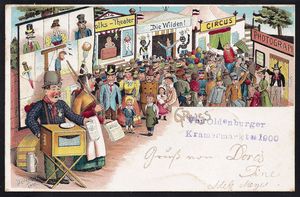
In his inaugural lecture as a private lecturer, Dr Christian Schmitt presents a form of popular literature that was distributed in the 19th century in the form of small prints at fairgrounds and folk festivals and thus reached readers who otherwise had little contact with literature. Using selected examples from the Oldenburg collection of fairground prints, the lecture will show why it is worth researching this 'literature of the illiterates'.
New publication: Handbuch Idylle. Methods - Traditions - Theories
Christian Schmitt et al. (ed., Stuttgart/Weimar: Metzler 2022)
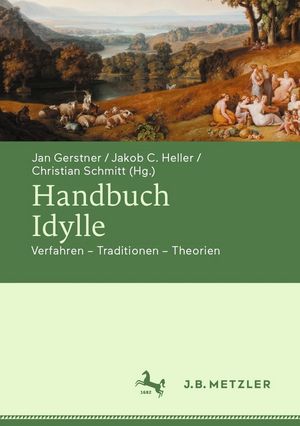
The handbook documents the current state of idyll research and shows new ways of understanding the 'idyll' and the 'idyllic' in literary and cultural studies. It thus fulfils the desideratum of a contemporary concept of the genre that also encompasses idyllic phenomena in a broader sense. Contributions from various philologies as well as from music, theatre, media and art studies complement the German studies focus of the handbook. They uncover the transnational and transmedial traditions of the genre from antiquity to the present day, test established as well as new theoretical approaches and explain constitutive topoi. The handbook understands the idyll as an effect of idyllising processes and thus presents it as a dynamic and contradictory form in itself. It thus also opens up new ways of analysing contemporary transformations of the idyllic in culture and politics.
Further information can be found on the publisher's website.
New publication: Arno Schmidt Handbook
Sabine Kyora et al. (eds., Berlin/Boston: De Gruyter 2022)
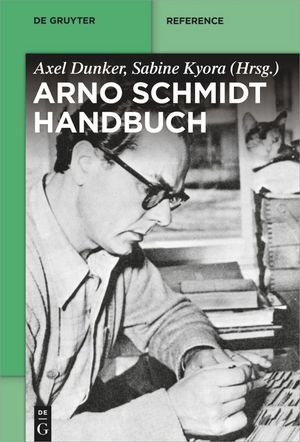
Arno Schmidt is perhaps the greatest outsider in German post-war literature. This handbook aims to make his work accessible, to awaken a desire to read it and to give Schmidt the place in literary history that he deserves. It offers information for a first encounter with Schmidt's texts as well as an overview of the current state of research for readers who are already familiar with his work.
Further information can be found on the publisher's website.
Conference: Shakespeare's 'Richard III. On its reception in the German-speaking world (18th-21st century)
25/26 November 2022 (Friedrich Schiller University Jena)
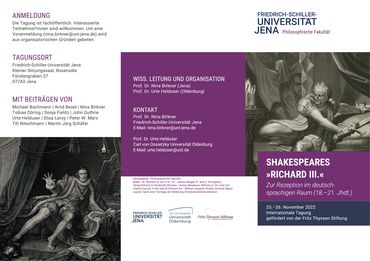
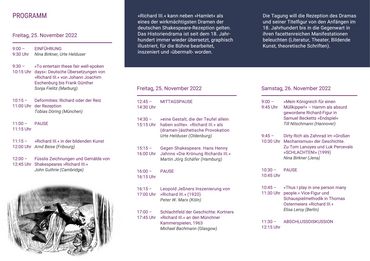
Contact: Prof. Dr Urte Helduser
Series of events: LiteraTour Nord 2022/23
30 October 2022-29 January 2023 (Music and Literature House Wilhelm 13, Oldenburg)
Every winter from October to January, selected authors of contemporary German-language literature go on the LiteraTour Nord and read from their new publications in Oldenburg, Bremen, Lübeck, Rostock, Lüneburg, Hanover and Osnabrück.
The Oldenburg readings of the LiteraTour Nord take place in the music and literature centre Wilhelm13. The organisers are the Literaturhaus Oldenburg and, since the 2021/22 season, the Thye bookshop. The readings are moderated by the teachers of the Oldenburg NDL.
Information on the authors and dates can be found on the LiteraTour Nord website.
New publication: Baltic educational history(ies)
Silke Pasewalck et al. (eds., Berlin/Boston: De Gruyter Oldenbourg 2022)
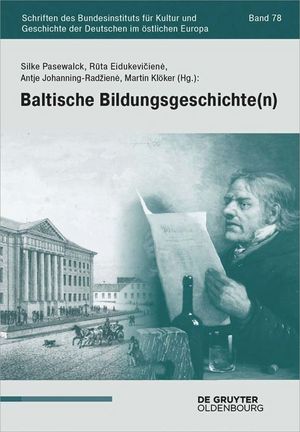
Further information can be found on the publisher's website.
Workshop: Idyll and Gender. Shepherd poetry of the early modern period in a cultural context
24 June 2022 (The Smart House Oldenburg)
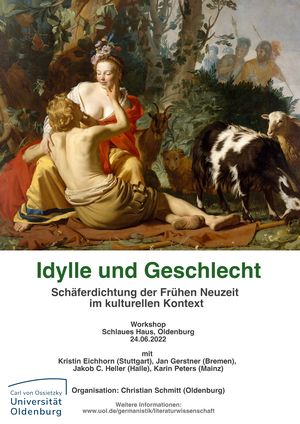
Gender orders and constellations of desire form a constitutive centre of the idyll genre and its predecessors, ancient and early modern pastoral poetry. While the gendered dimensions of pastoral have been the subject of lively discussion in English-language research, including differentiated theorising, the idyll has so far received little attention in the German-language discussion of the relationship between genre and gender. The workshop aims to fill this gap and invites participants to explore this relationship in the 17th and 18th centuries. The focus will be on the question of how idylls and pastoral texts construct gender(s) and desire and how such constructions relate to the cultural contexts in which they emerge.
Programme:
8:30-9:00 Christian Schmitt (Oldenburg): Idylls and gender. Welcome & Introduction
9:00-10:00 Karin Peters (Mainz): The untranslatable revolt: Jorge de Montemayor's Felismena ('La Diana') and its European reception
10:30-11:30 Jakob C. Heller (Halle): Shepherd poetry as a stage for chastity in Philipp von Zesen
11:30-12:30 Kristin Eichhorn (Stuttgart/Paderborn): Who gives the first kiss? Enlightenment concepts of love and gender in the pastoral play of the mid-18th century
13:30-14:30 Jan Gerstner (Bremen): Eyes and Ears in Concealment. Das Geschlecht der Beobachtung in der Schäferdichtung
14:30-15:00 Final discussion
The academic workshop is linked to a course and, due to limited space, will take place as a non-public event. Individual seats are available for interested listeners: Please contact Christian Schmitt (christian.schmitt (at) uol.de) by email by 22 June.
Workshop: The East in the West. German-language authors from Eastern Europe in radio after 1945
10/11 May 2022 (German Broadcasting Archive, Potsdam-Babelsberg site)
Organiser
- Federal Institute for Culture and History of the Germans in Eastern Europe, Oldenburg
- Leibniz Institute for Media Research | Hans Bredow Institute, Hamburg
- Foundation of the German Broadcasting Archive, Frankfurt am Main/Potsdam
- Historical Commission of the ARD
- German Cultural Forum for Eastern Europe, Potsdam
Further information and programme.
Contact: Silke Pasewalck
Guest lecturer: Hanna Christine Fliedner & Katrin Segerer
Summer semester 2022
We are delighted that, during the 2022 summer semester, Hanna Christine Fliedner and Katrin Segerer will be taking up visiting lecturer posts at our Institute, funded by the German Translators’ Fund. Click here for the German Translators’ Fund’s press release.
Ms Fliedner and Ms Segerer will be offering a seminar on the translation of English-language children’s and young adult literature as part of the Master’s programme. The title of the seminar is: “Child’s play? Far from it! The practice of translating children’s and young adult literature from English”.
Ms Fliedner and Ms Segerer are experienced translators who have translated numerous children’s and young adult books from English, French, Spanish and Portuguese into German. Further information on the seminar, the seminar times and the programme can be found in the course description.
Series of lectures: Diagnoses of the present? Literature (theory) in the 21st century
Summer semester 2022
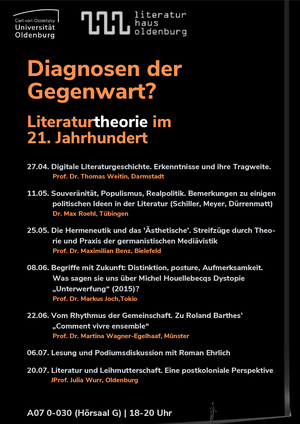
Unlike non-fiction, literary texts are mostly used for entertainment, but do they offer potential for social insight? Is literature - even in times that are perceived as particularly crisis-ridden - a means of not only naming or describing these crises, but also of formulating alternatives and solutions? Can literature make a contribution to society at all, and if so, what is it? What significance do literary texts have in our society?
We want to ask these and other questions as part of our series of lectures. After all, the current crises in particular not only raise the question of the status of literature in our society. Rather, the relationship between science and society is currently being re-examined.
With the support of the Universitätsgesellschaft Oldenburg (UGO) and in co-operation with the Literaturhaus Oldenburg, we have invited literary scholars to reflect on the significance of literature in our society and the function(s) of literary theory in the 21st century. We will also discuss questions of social relevance with the writer Roman Ehrlich.
We cordially invite all interested parties to the public series of lectures.
Date: Wednesdays, A07 0-030 (lecture hall G) | 6-8 p.m. c.t.
Organisation: Prof. Dr. Thomas Boyken & Dr. Haimo Stiemer
Conference: Michael Ende - Poetics and Positioning
24-25 March 2022 (German Literature Archive Marbach)
Michael Ende's poetics and his relationship to the literary and intellectual field of the Federal Republic of Germany will be at the centre of the conference. In addition to the theoretical texts, the public speeches and also the numerous interviews, which have only been given cursory consideration so far, the literary texts will also be discussed, as they provide both information about the implicit poetics and an insight into his 'work politics'. In these texts, Ende's strategy of emancipating himself as a serious writer from an area of literature that was not perceived as real literature by most literary critics and literary scholars of the 1970s, 80s and 90s is noticeable. The contributions will discuss the extent to which Michael Ende is a public intellectual of the 20th century. How Ende used literary strategies to position himself as a 'serious' writer will be discussed on the basis of case analyses. The conference is organised by Thomas Boyken (Oldenburg), Thomas Scholz (St. Louis) and the German Literature Archive Marbach. Further information can be found here: www.dla-marbach.de/forschung/tagungen/tagungen-detail/476/?cHash=814ad121679fefa193a6e0619805d748 |
New publication: Unstable equilibrium. Mediations of the idyll in the 19th century
Christian Schmitt (Hanover: Wehrhahn 2022)
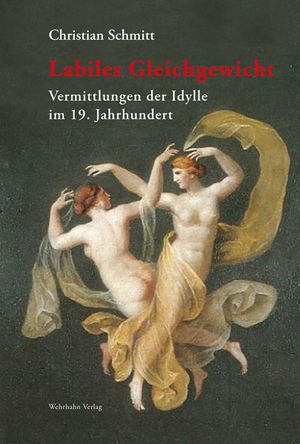
Idylls have been telling stories of balance since antiquity - but not, as critics of the genre have suggested, by juxtaposing complex realities with an 'ideal world' that denies them. Instead, as the study shows, idylls raise the fundamental question of how equalisation is possible and offer their readers answers that have ethical, social or political implications. This function of the genre is particularly important for 19th-century idylls, which have received little attention from research, as they represent a way of reacting to processes of modernisation without concealing the underlying tensions. On the contrary: these tensions come to the fore in a special way in the idyllic of the 19th century. This study opens up this potential of the genre for the first time with cultural studies readings of canonical and lesser-known texts by authors such as Adalbert Stifter, Annette von Droste-Hülshoff, Hans Christian Andersen, Ida Hahn-Hahn and Luise Mühlbach. The idyll thus provides insights into a wide variety of cultural areas in which modernisation processes have left their mark, such as tourism, the natural sciences and medicine. The idyll in the 19th century thus proves to be a literary laboratory in which the possibilities of mediating opposites are played out.
New publication: Media of the Enlightenment - Enlightenment of the Media. The Baltic Enlightenment in a European context
Silke Pasewalck et al. (ed., Berlin/Boston: De Gruyter 2021)

The Enlightenment as an epoch and intellectual movement is closely linked to a new use of the media. The acquisition, communication and distribution of knowledge may initially have been the privilege of a few learned minds, but at its core the Enlightenment intended to open up the respublica litteraria to all people. This shaping of the media took place not only in the centres of the Enlightenment, but also in its peripheries, such as the Baltic states. Enlightenment media also emerged and established themselves there. What were the most powerful media practices? Who were the most important carriers and who was the Enlightenment aimed at in Estonia, Livonia and Courland? What were the functions of the different languages? The book presents the Baltic States as an exemplary European region of the Enlightenment and uses various disciplinary approaches (German studies, history, comparative literature, art history, theology) to show the effectiveness of Enlightenment media formats in this region.
To the publisher's page.
47th Oldenburg Children's and Youth Book Fair
Leaps of thought! KIBUM philosophises - 13 - 23 November 2021
The 47th KIBUM is scheduled to take place from 13 to 23 November 2021 under the motto "Gedankensprünge! KIBUM philosophises" is planned. Whether KIBUM will be open to the public or whether it will once again be a digital KIBUM has not yet been decided in view of the developments surrounding the coronavirus.
In any case, KIBUM 2021 will be scientifically supported in two ways:
On the one hand, we will be relaunching the "Science in Ten Minutes" format established last year. In 2021, we will once again be presenting scientific analyses of current children's and young adult literature in video format. The digital forum can be accessed via the KIBUM homepage (www.kibum.de).
On the other hand, a digital symposium of the Oldenburg Research Centre for Children's and Young Adult Literature (OlFoKi) will take place from 22 to 24 November 2021. Prof. Dr Jörn Brüggemann and Prof. Dr Christa Runtenberg are organising a conference entitled "Philosophical questions in the mirror of children's and young adult literature: perspectives on literature and philosophy didactics". Registration is possible at: www.ofz.de
International conference: Figures of diagnostics
8/9 September 2021
Funded by the German Research Foundation
Organisation: Prof. Dr. Sabine Kyora, University of Oldenburg, Dr. Till Huber, University of Hamburg,
The starting point of the conference at the interface of literature and medicine is the concept of diagnosis. The hypothesis is that literary texts between the middle of the 19th century and the first third of the 20th century developed 'diagnostic modes of writing' and thus established diagnosis as a narrative typical of modernity. The conference will address the question of how medical argumentation structures are processed and changed in literature. It will also focus on the shift in medical vocabulary from the individual to the literary staged diagnosis related to society.
The medical term will be used in a metaphorical and narrative sense, which also emerged in the social sciences in the 20th century (as a diagnosis of society or the present). The title "Figures of Diagnostics" covers, firstly, literary figures that diagnose or are diagnosed, and secondly, figures in the sense of rhetorical figures and literary procedures are analysed as 'diagnostic modes of writing'. Thirdly, relevant literary and non-literary authorial productions are analysed. For example, Gottfried Benn, Alfred Döblin, Rainald Goetz and Ernst Weiß will be analysed as authors who process medical knowledge and make it socially understandable and transferable.
Online participation as a panellist is possible. For access, please send an email to
Wed, 8.9.2021
9.30 am
Introduction: Figures of diagnostics
Prof. Dr Sabine Kyora / Dr Till Huber
10.15-11.00 a.m.
PD Dr Urte Helduser (Marburg)
Gloomy diagnostics. Adalbert Stifter's story Turmalin and cretinism in the 19th century
Break
11.30 a.m.
PD Dr Lars Korten (Münster)
"She won't be back". Diagnostics and prediction in Theodor Fontane's Stine
Lunch break
14.00 hrs
Dr Till Huber (Hamburg)
"Narrating out of depression". Autofictional writing in Benjamin Maack's Wenn das noch geht, kann es nicht so schlimm sein and Thomas Melle' s Die Welt im Rücken
Break
3.00 pm
JProf. Dr Thomas Boyken (Oldenburg)
'Prose Nova'. Autopathographies and the possibilities of storytelling about illness
Break
16.15 hrs
Prof. Dr Sophie Witt (Zurich)
Diagnostics between medicine and society: psychosomatics in literary studies
Break
17.15 hrs
Keynote:
Prof. Dr phil. Dr Martina King (Fribourg)
The unstable ego: narrative self-diagnosis and narrated diagnoses in Ernst Weiß' doctor novels Der arme Verschwender (1936) and Georg Letham, Arzt und Mörder (1931)
Thursday, 9 September 2021
9.30 a.m.
Dr Philipp Pabst (Münster)
Beyond Aetiology, Epidemiology and Diagnostics. Popularised medicine and its doubts in Gottfried Benn's late poetry
Break
10.30 a.m.
Prof. Dr Christine Kanz (Linz)
The rejection of medical diagnostics in Ingeborg Bachmann's Todesarten project and in Male oscuro
Break
11.45 a.m.
PD Dr Anja Schonlau (Göttingen)
On the diagnosis of syphilis
Lunch break
14.00 hrs
Prof Dr Martin Butler (Oldenburg)
The singer-songwriter figure as diagnostician: On the appropriation of a (medical) mode of problematisation in popular culture
Break
15.00 hrs
Prof. Dr Sabine Kyora (Oldenburg)
(Time) diagnostics in Rainald Goetz' Irre
Break
16.15 hrs
Keynote:
Prof. Dr Cornelius Borck (Lübeck, Institute for the History of Medicine)
Ex juvantibus - The diagnosis as a performative act
Break
17.15 hrs
Final discussion
Conference: Of mouth and craft. Oral and written narration in texts for children and young people

Together with Dr Anna Stemmann (University of Bremen), I am pursuing a research project that deals with forms of orality(ies) and literacy(ies) in literary media for children and young people. We will be organising a conference on this topic in summer 2021.
At the centre of the conference will be the question of the productive tension and influence of written and oral forms in children's and youth media. The focus will be on the different forms of oral and written narration. Although oral and written narration are categorically different - oral narration takes place in time and is fleeting; written narration is presented on the page and is memorised - the book- and writing-based texts are also poetologically influenced by concepts of the oral. Children's book author Otfried Preußler notes that the boundary between written and oral storytelling cannot always be clearly defined: "As a storyteller, I have represented the oldest medium of entertainment, instruction and news transmission par excellence since Adam and Eve's time - a fact that fills me with pride without making me arrogant. On the contrary, it gives me a certain confidence in my own judgement and in my craft. Or should I say mouthwork? The distinction is difficult." (Preußler 2010, 91) At this point, it is not about the oral effects of an imitated narrative situation, as they occur in text types such as fairy tales. Rather, Preußler assumes an interaction between oral and written narration, which constitutes the poetological core of his stories: even if they appear in book form, they are structurally located on the boundary between oral and written narration.
The guiding questions of the conference are:
- How is orality created in written texts?
- How is orality produced in auditory media?
- What is the functional potential of orality/writtenness in different literary media for children and young people?
- What is the relationship between representation and content?
- Can a new perspective on the significance of the medium for literary and artistic forms be observed in the 21st century, possibly in the course of the digitalisation of printing and reading processes as well as intensified research into mediality and materiality, also informed by edition studies?
- Which medial translation and transcription processes are involved in the production and reception of audio books and other audio texts?
- And what role does the material-medial constitution of children's and young people's literary media play in the production of oral or written effects?
The conference pursues a twofold goal: on the one hand, it is about historical case analyses that examine the interactions between orality and writing using the example of selected children's and youth literary media. On the other hand, it is about a literary-theoretical specification of the relationship between oral and written narration. The aim is to work out the genuine poetic dimension of the interaction between oral and written narration on the basis of concrete examples.
Contact: Prof. Dr. Thomas Boyken
Programme
Conference report
Conference: Colportage Literature. Textual processes, media and forms of distribution of popular literature in the pre- and post-March period
24/25 June 2021
The online conference Kolportage-Literatur: Textverfahren, Medien und Distributionsformen populärer Literatur im Vor- und Nachmärz, funded by the Thyssen Foundation, will take place on 24 and 25 June 2021. The conference programme can be found on the pages of the Kolportage/Literatur project.
Contact: Christian Schmitt