Insight into research-oriented teaching
Contact

Insight into research-oriented teaching
Debates on the history of slavery
Head: Prof Dr Dagmar Freist
Summer term 2023
This seminar focussed on critical reflection on the debate surrounding the history of slavery in the (German) culture of remembrance. With the so-called "Historikerstreit 2.0", the German culture of remembrance in relation to the Holocaust has been compared to the reappraisal and commemoration of slavery and colonialism and debated for several years. Against this background, sources on slavery from the period of European expansion and colonialism were analysed over the course of the semester. The research project Prize Papers(www.prizepapers.de) provides digital copies of court cases and appeals from trade conflicts and naval wars, which contain extensive references to the trade in enslaved people. These materials were analysed in small project groups and placed in relation to the debate on the history of slavery. Over the course of the semester, the examples and focal points chosen by the students themselves were summarised in a poster presentation and an accompanying essay. An online collaboration with students from Nelson Mandela University in Gqeberha, South Africa, also took centre stage.
Captured under a neutral flag - Maritime neutrality and international law in the 18th century
Head: Lena Potschka
Summer term 2023
During the early modern period, the sea increasingly developed into an area of conflict between the dominant colonial powers of Great Britain, France, Spain, Portugal, Denmark and the Netherlands. Triggered by European expansion and the boom in transatlantic maritime trade, competition for new colonies and resources flared up. As a result, the era was characterised by almost permanent naval warfare. Capturing merchant ships therefore established itself as an effective instrument of state warfare.
A capture always had to be followed by a trial before an admiralty court to determine its legality and decide on the prizes, both the goods loaded and the captured ship. In the course of the 18th century in particular, a complex system of rules for the seizure of ships and captured goods developed in the form of a general law of naval warfare.
In addition to the belligerent powers, however, there were also a number of neutral parties.
Maritime neutrality was a central but above all enormously complex and multi-faceted phenomenon. In the 18th century, neutrality was not yet a concept defined by international law: the parties involved in international conflicts could interpret it in very different ways. The politically motivated interpretations of neutrality and the associated trade rights were a central point of conflict at international level for centuries and were the focus of this seminar.
Digital humanities and globalisation
Led by: Frank Marquardt
Summer Semester 2023
Large digital databases, handwriting recognition and analytical tools such as dynamic maps or text analysis using various forms of AI are becoming increasingly powerful. Digital innovations have long had a lasting impact on various areas of society. In recent years, they have also become increasingly important in the field of history.
The seminar examined how modern technologies (Digital Humanities) influence the way historical questions are addressed. However, a critical post-colonial perspective was also applied to these technologies in order to identify the limitations, problems and risks they pose for the humanities.
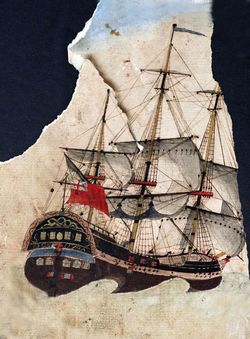
The aim of the seminar was to develop a new approach to quantitative research questions in the early modern period, drawing on sources from the digitisation project and the Prize Papers research project. Networks of traders were examined, as were biographical data on seafarers, slave transports and travel routes. The material from the Prize Papers provides an insight into processes of globalisation in the 18th century. Drawing on approaches from the field of Digital Humanities, the students developed methods to make these processes visible and analysable.
Captured!
Led by:
Jessica Cronshagen
Frank Marquardt
Late summer 2019
What was the experience of those travelling by sea to the colonies? What stories of illness, longing and slavery did they recount to their families in Europe? These accounts have been preserved in the captured documents of the British Admiralty Court in London. In late summer 2019, a joint crew comprising pupils from the Helene Lange School, students from the University of Oldenburg and staff from the Jade Oldenburg University of Applied Sciences and the Prizepapers project set out to trace these accounts.
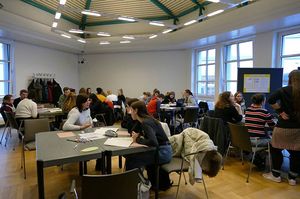
Through intensive research using the digitised sources from the Prizepapers collection, the students analysed the material from the perspectives of life in the colonies, life on board the ship, maritime trade and privateering, as part of a theatre project for Year 11. In a joint workshop between school pupils and the university students, research findings and possible ways of incorporating them into the theatre project were discussed. This joint endeavour will continue in the coming summer semester, with the aim of bringing the long-neglected insights from the Prizepapers to the stage. The play will be performed on 24 June 2020 at the Limonadenfabrik in Oldenburg!