
Cluster of excellence receives millions in funding from the state
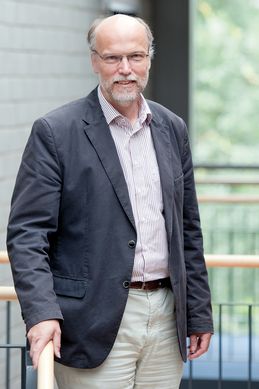
Prof Dr Dr Birger Kollmeier, Oldenburg hearing researcher and head of the Hearing4all cluster of excellence.
Cluster of excellence receives millions in funding from the state
Working together for the hearing research of the future
Cluster of excellence receives millions in funding from the state
Oldenburg. Outstanding hearing research: the Hearing4all cluster of excellence was successful in the "Top Research in Lower Saxony" competition organised by the Lower Saxony Ministry of Science and the Volkswagen Foundation. The scientists from Oldenburg and Hanover want to use the funding sum of one million euros to open up new fields of research - and at the same time increase the cluster's chances of being extended in the follow-up programme to the Excellence Initiative of the federal and state governments.
"With this programme, we are funding research projects by top scientists in Lower Saxony and making Lower Saxony's universities even more attractive. At the same time, we are putting the universities in a good starting position for the upcoming nationwide excellence competition with this programme," said Lower Saxony's Science Minister Dr Gabriele Heinen-Kljajic.
Prof Dr Dr Hans Michael Piper, President of the University of Oldenburg, emphasised with regard to the Hearing4all cluster of excellence: "In a world where almost a fifth of the population suffers from hearing loss, hearing research is essential both medically and socially. With the support now granted by the state, we will continue to intensively pursue the ambitious goal of hearing for all in the coming years."
The new two-year research network "Hearing for All" aims to build bridges from targeted hearing research to sustainable effects on everyday life. The coordinator is Prof Dr Dr Birger Kollmeier, Oldenburg hearing researcher and head of the Hearing4all cluster of excellence, which includes the University of Oldenburg, the University of Hanover and Hanover Medical School.
"We want to dovetail both the latest diagnostic methods and different types of hearing aids even more closely," says Kollmeier. The hearing researchers have three important and forward-looking challenges in mind: audiological precision medicine, better machine processing of speech and new materials and operating mechanisms for the hearing aids of the future. "We will also develop a comprehensive, interdisciplinary graduate programme to link cluster research and the training of young scientists even more closely," adds Kollmeier.
The aim of audiological precision medicine is to tailor hearing diagnostics much more precisely to individual needs when fitting hearing aids. The aim is to create a significantly more complex picture of patients with hearing loss - with new insights into the causes and their interrelationships. Based on this immense database, computer models will help to reliably predict the plausibility of diagnoses and the success of treatment options. The researchers also want to include genetic aspects in the future.
Under the heading "Hearing assistance and speech", the scientists are endeavouring to establish natural speech in a natural environment as a new benchmark in hearing research and thus enable better processing by hearing aids in conjunction with human processing. Until now, signal processing in hearing aids has often been based on physically familiar signals such as sounds and noises. However, essential characteristics of natural speech - especially in a natural environment - have not been taken into account. The hearing researchers have identified this as one reason why hearing aids - although they are getting better and better - reach their limits in demanding acoustic situations such as large groups.
The third pillar of the new alliance, "Hearing aids and the brain", is intended to pave the way for comprehensive hearing support for all patients in all situations and merge previous approaches to the interface between the brain and hearing aid with new concepts of stimulation, signal processing and control of the hearing aid. One aim is to develop multifunctional, biohybrid implants for hearing and brain, which, for example, use a cell coating to prevent an undesired tissue reaction after implantation. Multimodal sensors should enable scalable, universal hearing aids that cover the range from acoustic "transparency" for people with normal hearing to fully-fledged hearing aids for the severely hearing-impaired. The latest findings in neuropsychology and technology are also incorporated when it comes to the vision of a "cognitive hearing aid".
The Hearing4all cluster of excellence - funded by the federal and state governments since 2012 - is one of the world's leading centres of hearing research. It builds on the complementary research expertise in hearing aids and hearing implants of the two internationally recognised and closely networked cluster locations of Oldenburg and Hanover: Around 80 percent of all hearing aids worldwide contain "a piece of Oldenburg", and the world's largest centre for cochlear implants in Hanover is constantly shaping their further development. The cluster covers the entire development chain from the laboratory to the clinic, closing the gap between basic research and industrial application.
"Hearing for All" is the second research network coordinated by the University of Oldenburg to be successful in the "Top Research in Lower Saxony" competition, alongside a marine science network on marine biodiversity. The Ministry of Science and the Volkswagen Foundation are giving a total of eleven research networks and a location concept across the state the opportunity to prepare for the upcoming federal-state competition at an early stage.
Link to the article in Uni-Info