Contact

Press and Communication

+49 (0) 441 798-5446

News feed of the news

https://uol.de/en/news/rss (XML)
Copy address and paste into feed reader

News articles

News search

The façade can be seen against the sky, a few branches protrude into the picture from the left.
University of Oldenburg / Daniel Schmidt
Buildings Top News Marine Sciences

Opening ceremony for the new Helmholtz Institute building
Modern working conditions for marine biodiversity research – that's what the new building of the Helmholtz Institute for Functional Marine Biodiversity provides. The facility is an eye-catcher both inside and out.

more: Opening ceremony for the new Helmholtz Institute building
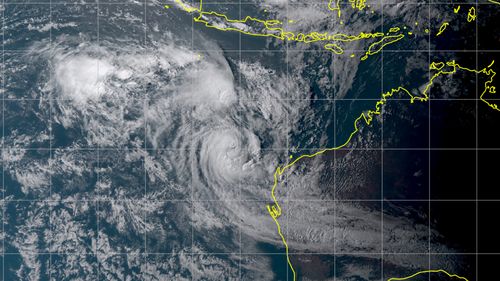
Satellite image of the two cyclones shortly before merging. The contours of Australia and Indonesia can be seen for orientation.
JAXA P-Tree System
Research Top News Marine Sciences

What happens in the ocean when two cyclones collide
In April 2021, two tropical cyclones, Seroja and Odette, collided in the Indian Ocean northwest of Australia. In a case study, Oliver Wurl and Jens Meyerjürgens investigated how this rare phenomenon affected the ocean.

more: What happens in the ocean when two cyclones collide
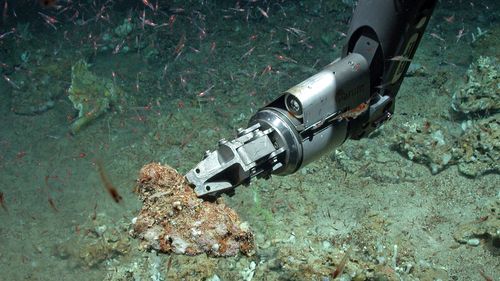
A probe collecting a sample of the Ocean Floor in the Gulf of Mexico.
MARUM - Centre for Marine Environmental Sciences, University of Bremen
Excellence Strategy Top News Marine Sciences

The Ocean Floor: A deep dive
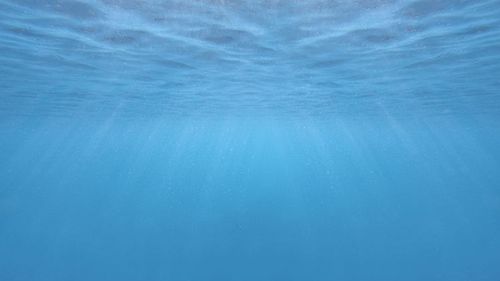
Researchers from Oldenburg and Bremen work together on issues important for the future. To further analyse the effects of global warming on marine ecosystems, the have jointly applied in the Excellence Strategy of the federal and state governments. 

more: The Ocean Floor: A deep dive
Excellence Strategy Research Top News Marine Sciences

An Ocean of Molecules
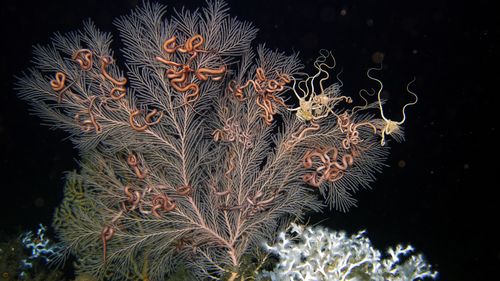
Millions of different organic compounds are dissolved in the world's oceans. These substances bind large amounts of carbon – sometimes for thousands of years. Does this affect the carbon cycle on Earth – and our climate? A multimedia story. 

more: An Ocean of Molecules
A white-greyish coloured deep-sea coral Callogorgia delta, on which brittle stars have settled. These are brownish in colour. The picture was taken under water. Other corals can be seen in the foreground.
Creative Commons CC0 1.0 / Ecogig Consortium
Excellence Strategy Top News Marine Sciences

Deep-sea corals are home to previously unknown bacteria
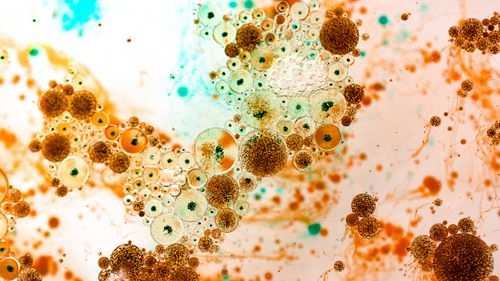
Only 359 genes and the amino acid arginine as its sole energy source: The metabolism of the bacterial family Oceanoplasmataceae, newly discovered in the Gulf of Mexico, is a mystery to the German-American research team that identified it. 

more: Deep-sea corals are home to previously unknown bacteria
Microscopic picture of a microbial community.
Adobe Stock / Turgay Koca / Wirestock
Excellence Strategy Research Top News Marine Sciences

"Completely new worlds"
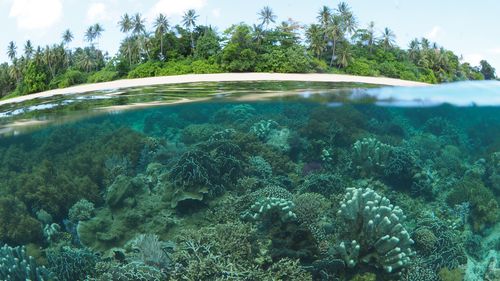
Computer scientist A. Murat Eren, who goes by Meren, is convinced that microbiology can contribute to solving many global challenges. In this interview, he talks about the astonishing progress the discipline has made in recent decades.

more: "Completely new worlds"
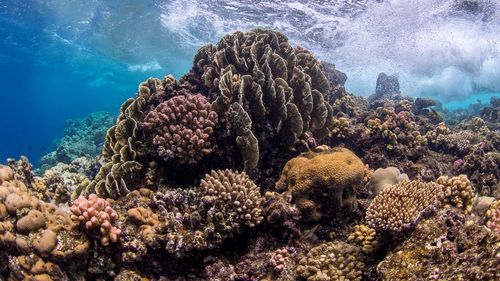
The picture shows a view of a coral reef. In the lower half of the picture, the reef is below the water surface. The corals shimmer in a green-bluish colour. In the upper half of the picture is a stand with palm trees. A blue sky with a few clouds can be seen above it.
Peter Schupp
Anniversary Marine Sciences

Oldenburg Climate Days with Ottmar Edenhofer

"Climate, people and the sea" is the title of the Oldenburg Climate Days 2024, which will culminate in an evening lecture by Ottmar Edenhofer, an expert on the economics of climate change.

more: Oldenburg Climate Days with Ottmar Edenhofer
The picture shows a coral landscape in the Red Sea. The corals are reddish-brown in colour and are only a few metres below the surface.
Anna Roik / annaroik.org
Excellence Strategy Research Top News Marine Sciences

New concept for the protection of marine biodiversity
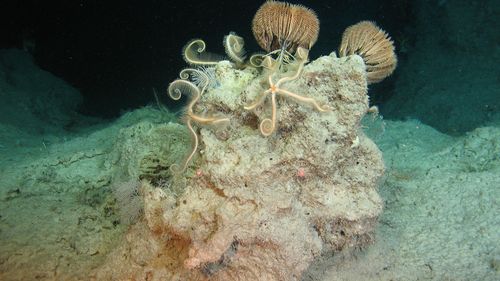
Climate change also affects the oceans. But how can the marine life affected by it be protected beyond the scope of national jurisdiction? A new consortium of researchers including scientists from Oldenburg is investigating this.

more: New concept for the protection of marine biodiversity
Image of a boulder in the Atlantic at a depth of 560 metres. On the rocks are brittle stars and crinoids, important organisms in the deep-sea ecosystem.
MARUM - Centre for Marine Environmental Sciences, University of Bremen
Excellence Strategy Research Top News Marine Sciences

"One feels like a true explorer"

The oceans are home to much of the planet's biodiversity. They have a major influence on our climate and provide food for billions of people. To mark World Oceans Day, researchers from Oldenburg and Bremen report on why their research is important.

more: "One feels like a true explorer"
Excellence Strategy Research Top News Marine Sciences

Biodiversity: A tale of change
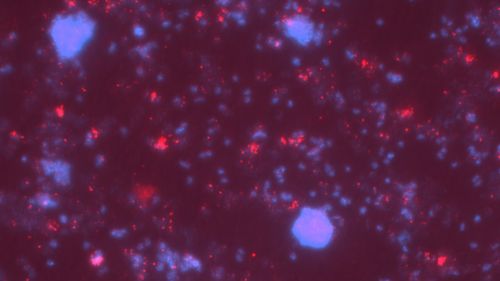
Thousand-year-old sediments from the Atlantic Ocean show how biodiversity in the oceans could develop with climate change. A team from Bremen and Oldenburg is conducting joint research - also to better assess how to protect marine life in the future.

more: Biodiversity: A tale of change
Pattern of larger and smaller blue and red dots, irregularly distributed on a dark background.
Wienhausen et al, Nature
Research Top News Marine Sciences

Marine bacteria team up to produce a vital vitamin

Two species of marine bacteria from the North Sea have established an unusual and sometimes destructive relationship to produce the important vitamin B12. This is reported by researchers from Oldenburg and San Diego in the journal Nature.

more: Marine bacteria team up to produce a vital vitamin
The picture shows the marine bristle worm Platynereis dumerilii in a blue water basin.
Florian Raible / University of Vienna
Excellence Strategy Research Top News Marine Sciences

No two worms are alike

In the animal kingdom, too, there are different personalities, each with their own lifestyle: even simple marine worms live their daily lives to their own individual rhythms, a new study suggests.

more: No two worms are alike
The picture shows a stony coral (Acropora millepora). It is greenish in colour. On its surface are numerous small individual polyps, also greenish in colour.
Samuel Nietzer
Transfer Campus Life Marine Sciences Marine Science

Coral researchers awarded EXIST start-up funding
Coral farming based on sexual propagation, leading to a more sustainable coral trade and helping to protect coral reefs – this is the goal of SciReef, a new start-up which is emerging from a research transfer project.

more: Coral researchers awarded EXIST start-up funding
University of Oldenburg / Daniel Schmidt
Excellence Strategy Research Top News Marine Sciences

The ocean microbiome
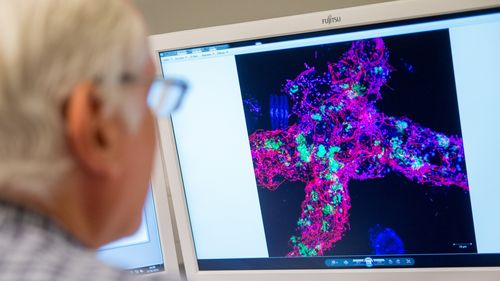
A group of bacteria lives in close association with other organisms throughout the world's oceans. Microbiologist Meinhard Simon and his team at the recently completed Collaborative Research Centre Roseobacter have spent 13 years investigating what makes these microbes so successful.

more: The ocean microbiome
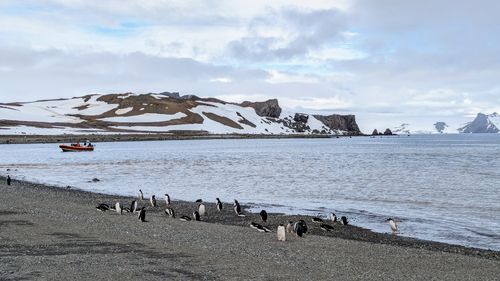
Photo of a bay off Kinge George Island, Antarctica. In the foreground are penguins on a grey pebble beach, in the background are mountains, partly covered with snow. On the water is an inflatable boat with researchers.
Lina Holthusen
Excellence Strategy Top News Marine Sciences

Climate research at the far end of the world
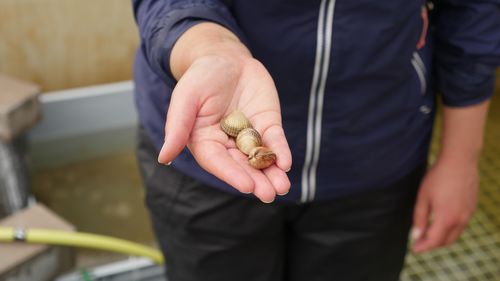
Glaciers, penguins and whales: Antarctica has a special appeal - also for PhD student Lina Holthusen, who is currently conducting research there. About the challenges of working in remote places, the team spirit needed and the best Christmas present.

more: Climate research at the far end of the world
Photo: University of Oldenburg / Sibet Riexinger
Excellence Strategy Research Top News Environmental Sciences Marine Sciences

Mudflat dwellers under heat stress
How does unusual heat affect the flora and fauna of the Wadden Sea? Researchers from the Institute of Chemistry and Biology of the Marine Environment and the Institute of Biology and Environmental Sciences have recently investigated this in a large-scale experiment.


more: Mudflat dwellers under heat stress
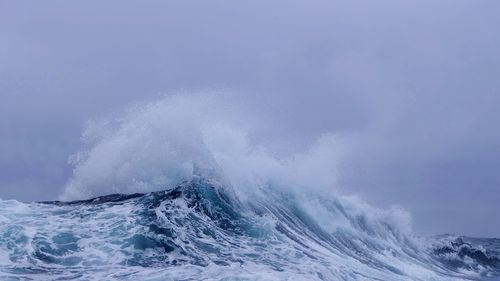
A wave with a head of foam up close.
Research Top News Marine Sciences

How microplastics end up in the marine atmosphere

Tiny plastic particles can be found in the marine atmosphere even far from coasts, according to a study recently published in the journal Nature Communications. Some of the microplastics come from an unexpected source.

more: How microplastics end up in the marine atmosphere
Numerous wind turbines in an offshore wind farm in the North Sea.
Sustainability Top News Marine Sciences

For a healthy North Sea region

Less plastic waste in the North Sea and better cooperation in spatial planning: two new EU projects at the university are addressing these topics.

more: For a healthy North Sea region
Underwater picture. A person in a diving suit with mask, oxygen tanks and fins knots a thick cord.
Research Campus Life Marine Sciences Studying

Diving for science

For those who like the idea of combining scuba diving with science, the Scientific Diving course at the Institute for Chemistry and Biology of the Marine Environment is an ideal option. Upon successful completion, participants are certified to dive on scientific missions.


more: Diving for science
A wooden board covered in sand lies on the beach.
Research Top News Marine Sciences

The fate of plastic waste

Researchers in the "Macroplastics" project studied the dispersal pathways of plastic waste in the southern North Sea for four years. 63,000 wooden plates played an important role – as did citizen scientists.

more: The fate of plastic waste
(Changed: 30 Mar 2026)  Kurz-URL:Shortlink: https://uol.de/p60209en
Zum Seitananfang scrollen Scroll to the top of the page

This page contains automatically translated content.