Contact

Press and Communication

+49 (0) 441 798-5446

News feed of the news

https://uol.de/en/news/rss (XML)
Copy address and paste into feed reader

News articles

News search

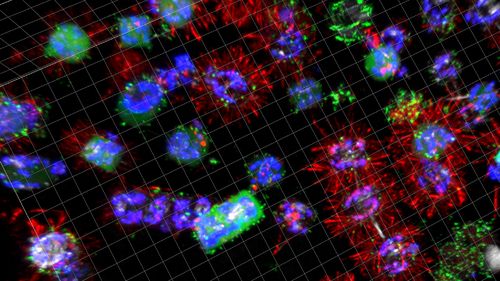
A number of differently colored algal cells are spread across the image against a black background, some have tuft-like hairs. They are colonised by bacteria to varying degrees.
Research Top News Marine Sciences

Diatoms provide an attractive habitat for bacteria
The surface of diatoms represents an astonishingly diverse habitat for bacteria. A team led by biologist Meinhard Simon has now made the preferences of different species visible for the first time.

more: Diatoms provide an attractive habitat for bacteria
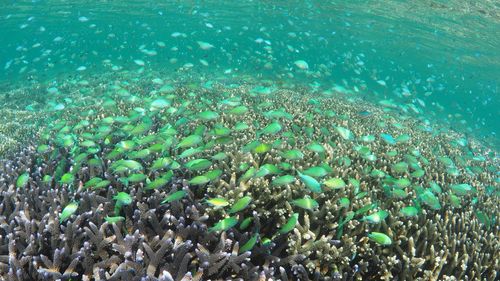
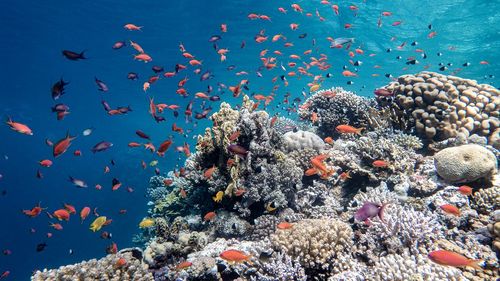
The picture shows an aquatic landscape with corals and fish
Campus Life Marine Sciences

Discover the colourful diversity of the oceans

Immerse yourself in the underwater world - from the local North Sea to tropical coral reefs: three Oldenburg marine biologists make this possible with their colourful exhibition "Discover the colourful diversity of the oceans".

more: Discover the colourful diversity of the oceans
Campus Life Marine Sciences

Terribly beautiful
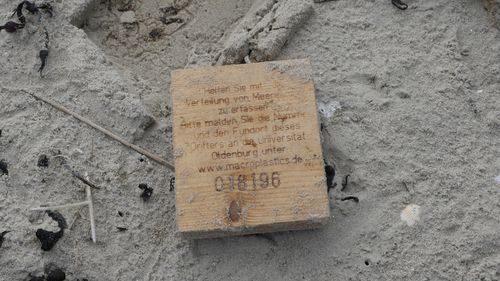
Plastic waste is a threat to the marine environment. A work of art that recently went on display at the Institute of Chemistry and Biology of the Marine Environment in Wilhelmshaven addresses the problem in a very unique way.

more: Terribly beautiful
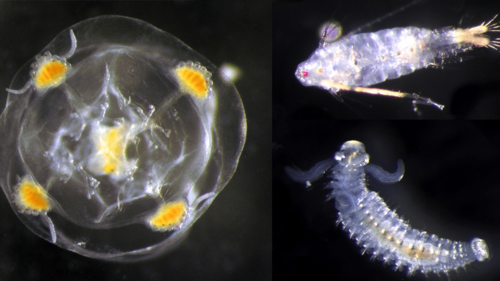
A collage of three microscopic images of the creatures. The hydromedusa is a gelatinous, translucent mass, the copepod looks like a silverfish and the bristle worm has an abdomen like a caterpillar and a head with larger, sickle-shaped antennae.
Excellence Strategy Research Top News Marine Sciences

Traces of diversity
Every litre of seawater is full of genetic material from different organisms. Biologist Silke Laakmann and her team are pioneering techniques that use these DNA traces to determine the biodiversity of marine communities.

more: Traces of diversity
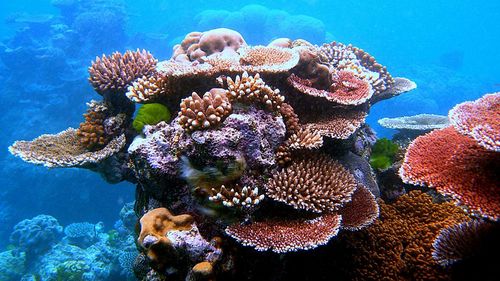
Corals in the Great Barreer Reef, Australia.
Top News Marine Sciences

Biodiversity and climate protection go hand in hand
A new treaty for the protection and sustainable use of nature is the goal of the UN Biodiversity Conference currently taking place in Montréal, Canada. Andrea Franke and Ute Jacob (HIFMB) on global challenges and local solutions.

more: Biodiversity and climate protection go hand in hand
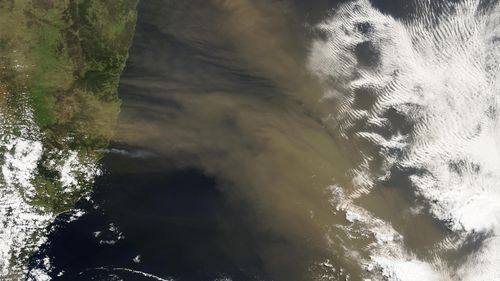
A satellite image shows the Australian coast, the Pacific Ocean, some white clouds and the brownish dust cloud.
Research Top News Marine Sciences

Travelling with the jetstream
Dust particles from central South America were the most important source of iron in the South Pacific during the last two ice ages. Researchers led by Oldenburg geochemist Torben Struve report their findings in the journal PNAS.  

more: Travelling with the jetstream
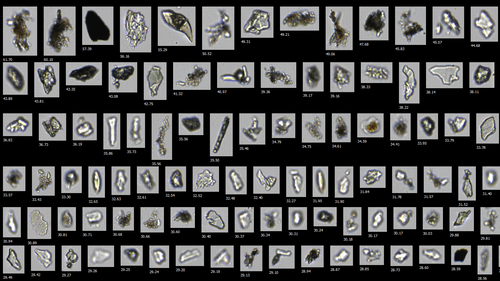
Collage of numerous small images, arranged in several rows on top of each other. The tiny particles described in the text can be seen.
Research Top News Marine Sciences

Unlocking the secrets of glacier flour
Glacial meltwater carries thousands of tiny rock fragments into the sea. Using a special camera, researchers at the University of Oldenburg can make these mineral particles visible in all their diversity – and investigate their impact on ecosystems.

more: Unlocking the secrets of glacier flour
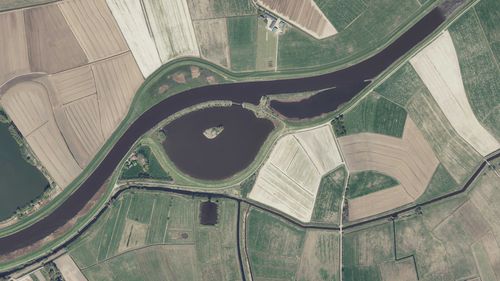
Aerial view of a loop of the Hunte with fields, a lake and other canals
Top News Marine Sciences Computing Science

AI for the water industry

The state of Lower Saxony is funding another future laboratory: the "Future Laboratory Water" research network, headed by Oldenburg marine researcher Oliver Zielinski, will begin its work on 1 October.

more: AI for the water industry
Abstract painting with wooden panels connected by lines to form a net.
Research Top News Environmental Sciences Marine Sciences

Safe havens for cooperation
How do networks with a high degree of cooperation form? A study by team led by Oldenburg network researcher Thilo Gross in the journal PNAS gives a surprising answer. The power to quit turns out to be an important piece of the puzzle.

more: Safe havens for cooperation
MARKUS HIBBELER
Campus Life Marine Sciences

University by the sea

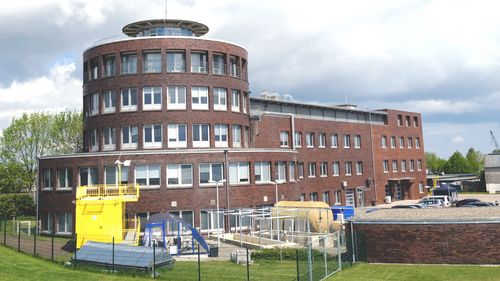
Wilhelmshaven is home to a part of the university: the Institute of Chemistry and Biology of the Marine Environment (ICBM) has a location near the southern beach, which has now been extended. A unique infrastructure.

more: University by the sea
Top News Marine Sciences Research

How harmful are sunscreens to corals?

What protects human skin from UV rays could have negative impact for animals. A team led by the marine biologist Peter Schupp is investigating the effects of sunscreen ingredients on coral reefs.

more: How harmful are sunscreens to corals?
Photo from the Southern Ocean. The sea is grey-blue and choppy, the waves have whitecaps. In the foreground on the left of the picture, the back and dorsal fin of a fin whale can be seen half emerging from the sea. On the horizon, the outlines of Elephant Island can be seen dimly on the left. On the right, two icebergs can be seen on the horizon, the left one smaller, the right one large and cuboid-shaped.
Research Top News Marine Sciences

Fin whales back in Antarctica
For the first time since whaling was banned, a team of researchers and filmmakers has documented large groups of fin whales in the Southern Ocean. The team now presents the results in the scientific journal Scientific Reports.

more: Fin whales back in Antarctica
MARKUS HIBBELER
Excellence Strategy Top News Marine Sciences

Intelligent measurement technology for the marine environment
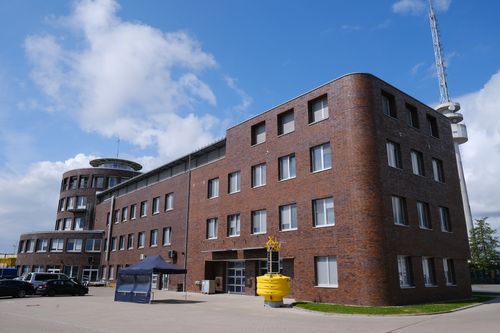
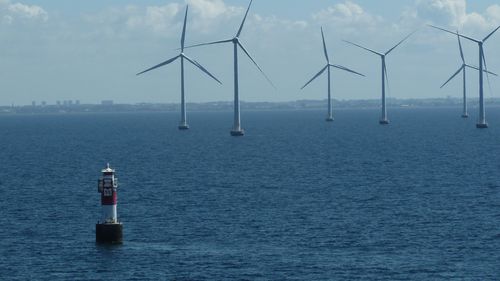
The new building of the Centre for Marine Sensors is all about measuring devices for the marine environment. The extension at the Wilhelmshaven site was officially inaugurated today.

more: Intelligent measurement technology for the marine environment
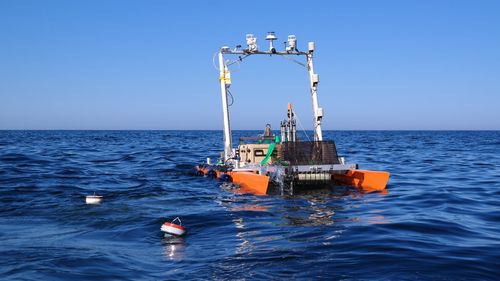
The catamaran floats in the sea in perfect weather.
Top News Marine Sciences Research

Exploring the ocean's thin skin
The microlayer between ocean and atmosphere is at the center of a new research group led by Oldenburg scientists. Over the next four years, the team will study this unique environment where harsh conditions prevail.

more: Exploring the ocean's thin skin
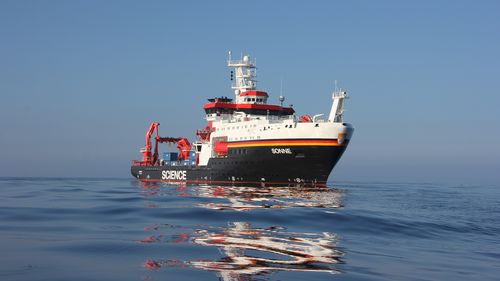
Photo of the research vessel Sonne in glassy seas.
Top News Marine Sciences

A view into the past of the Southwest Pacific Ocean
"Cast off" is the motto on board the research vessel "Sonne" this Friday. Led by Oldenburg geochemist Katharina Pahnke, an international team of researchers is setting off from New Caledonia in the South Pacific on an expedition to the Tasman Sea.

more: A view into the past of the Southwest Pacific Ocean
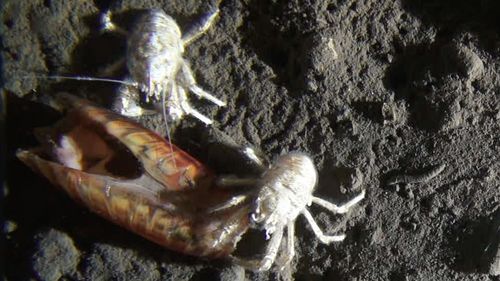
Two crabs are feasting on a mussel.
Top News Marine Sciences Research

A mutually beneficial relationship
Snow-white deep-sea crabs populate the seabed near hydrothermal vents. Oldenburg microbiologist Thorsten Brinkhoff was on the track of the animals with the submersible Alvin.

more: A mutually beneficial relationship
Top News Marine Sciences Research

Pooling knowledge for safeguarding the oceans
Protecting the oceans and using them sustainably: This is the goal of the second research mission of the German Marine Research Alliance, which officially starts today. A joint project led by Oldenburg researchers is part of the mission.

more: Pooling knowledge for safeguarding the oceans
MARKUS HIBBELER
Excellence Strategy Research Top News Marine Sciences

Microbes produce oxygen in the dark

There would be no oxygen on Earth were it not for sunlight; the key component in photosynthesis. Now researchers have made the surprising discovery that oxygen is also produced without sunlight, possibly deep below the ocean surface.

more: Microbes produce oxygen in the dark
A pile of larger plastic pieces (broken beverage crates, a bobby car, lids from a trash can, baskets, canisters, pipes...) lies on dark volcanic stones.
Top News Marine Sciences Research

Support from space

More and more plastic litter accumulates in the oceans. Remote sensing specialist Shungudzemwoyo Garaba from the Institute of Chemistry and Biology of the Marine Environment develops monitoring tools to identify and track the long-lived debris.

more: Support from space
View from above on one of the artifical islands located on the tidals flats off the island of Spiekeroog, East Frisian Wadden Sea. from above on one of the artificial islands in the back tidal flats of Spiekeroog.
Excellence Strategy Top News Marine Sciences

Of islands and species communities

The research group DynaCom is investigating how stable ecosystems are in the face of natural and anthropogenic environmental changes. The German Research Foundation is now funding the project for another three years.

more: Of islands and species communities
(Changed: 30 Mar 2026)  Kurz-URL:Shortlink: https://uol.de/p60209en
Zum Seitananfang scrollen Scroll to the top of the page

This page contains automatically translated content.