
The 1st Digital Humanities Day on 11 and 12 June is aimed at researchers, doctoral candidates and students with an interest in the use of digital technologies, particularly in the humanities, cultural studies, linguistics and social sciences.
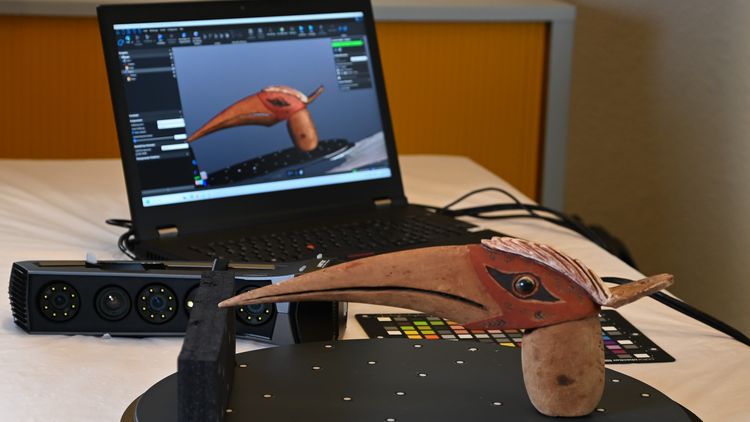
The Digital Humanities (DH) - in German: digital humanities - bring methods of Computing Science, data analysis and visualisation to subjects such as history, linguistics, philosophy and art history. "They enable completely new ways of answering old questions or even posing new questions in the first place," says Jonas Kaiser from the Digital Humanities Service Centre at the University Library.
Together with Oldenburg historian Dr Lucas Haasis, who is currently conducting research as a Gerda Henkel Fellow at the German Maritime Museum - Leibniz Institute of History (DSM) in Bremerhaven, and in co-operation with the University of Oldenburg's Graduate School for the Humanities and Social Sciences (3GO), Kaiser organised the first internal university conference for Digital Humanities. After the opening lecture in the evening on 11 June, the following day offers an extensive programme with short lectures, discussions and round tables.
The aim is to "provide a platform for exchange on current projects, new methods and the future of digital humanities at the University of Oldenburg - open to all researchers and interested parties", according to the organising team led by Kaiser, Haasis and Rea Kodalle, Managing Director of 3GO. This year's doctoral candidates' day on 11 June is also dedicated to the digital humanities, also in the university's library hall.
Academy President as opening speaker
This will be immediately followed at 6 p.m. by the keynote speech by Prof. Dr Andrea Rapp, President of the Academy of Sciences, Humanities and Literature since 2025. The German scholar, who researches and teaches at TU Darmstadt, specialising in computer philology, will speak on "Digital Research! Research cultures in the humanities".
On 12 June, Oldenburg researchers from the social sciences, history, material culture, Dutch studies and German studies will give short, concise presentations, while experts from the university's Computing Science, German studies, theology, education and history will take part in a round table. All Schools of Humanities, Cultural Studies, Linguistics, Social Sciences and Information Sciences are represented. The Digital Humanities Service Centre of the Library and Information System (BIS) will also be presenting itself.
The University Society UGO e.V. is sponsoring the conference. Interested parties can register online free of charge for both days, but also for a single day. Registration for the previous doctoral candidate day is possible via Stud.IP.