
How can the integration of refugee children be promoted? Special education students accompany 18 boys and girls for nine months and investigate which activities the children particularly benefit from.
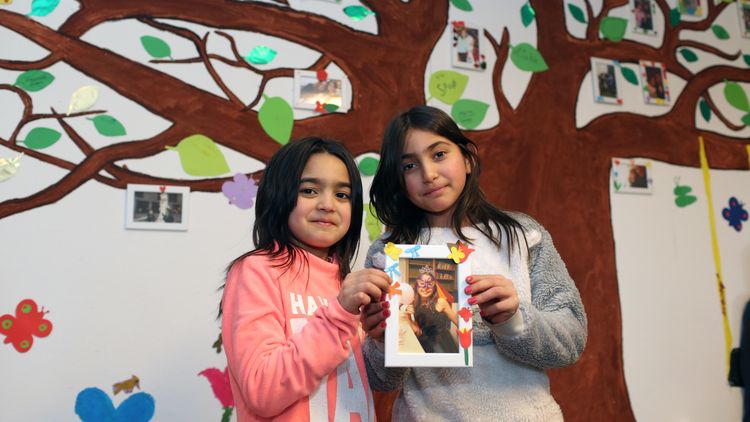
A large, strong tree with lots of leaves - this picture has recently adorned a wall of the common room in the Pophankenweg refugee centre. The mural is one of the results of a co-operation project between the University of Oldenburg and the shared accommodation centre, in which students from the subject of special education accompany children from refugee families for nine months.
Buddy pairs meet weekly
The so-called buddy project is currently taking place for the third time. One student looks after each refugee child and the two form a buddy pair. The students visit their protégés once a week, for example to cook with them, do handicrafts, make music or go to the museum or swimming pool. In addition, all buddy pairs organise joint activities - such as the painting project in Pophankenweg, where children and students designed the wall of the common room.
Both sides benefit
The project is supported by the city of Oldenburg and European Home Care GmbH, which runs the shared accommodation centre, and is funded by donations from the NWZ Christmas campaign. It aims to stabilise the refugee children emotionally and facilitate their integration. At the same time, the prospective special needs teachers acquire qualifications that they will need for their future work. "For example, the students learn to reflect on their role, build a trusting relationship and at the same time maintain a professional distance from their protégés," says Dorin Strenge from the University's Institute of Special Needs Education and Rehabilitation, who is coordinating the project.
The researcher evaluated the results of the two previous buddy projects together with her colleague Dr Eileen Schwarzenberg and found that both the students and the children benefited. "Activities where the children can build relationships with their peers and develop a positive self-image are particularly good at promoting integration," reports Strenge.
The close relationship between the buddy pairs is visualised in the common room of the shared accommodation: photos of the children and their buddies now hang in self-designed frames in the branches of the painted tree - surrounded by good wishes for the children's future.