


Scientists from Oldenburg have created 120 square metres of artificial islands in the Spiekeroog mudflats. This large-scale project, the only one of its kind in the world, is providing new insights for biodiversity research.
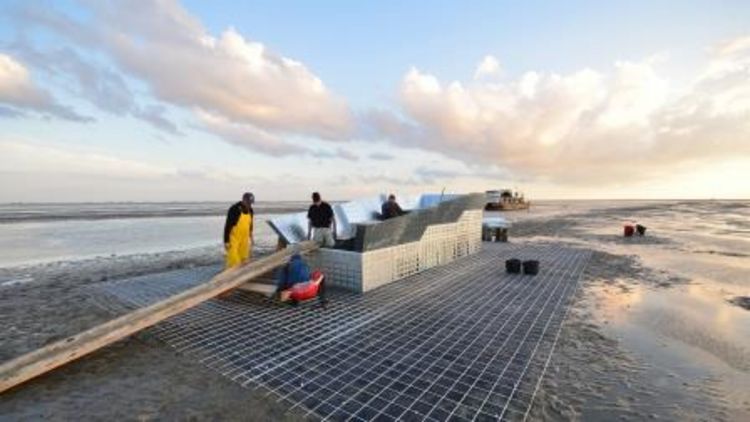
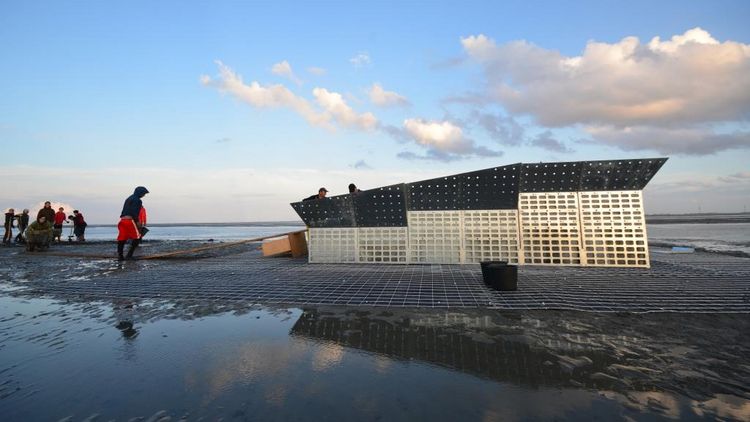
They can be seen from the ferry to Spiekeroog – right in the middle of the mudflats: twelve large metal cages made of heavy-duty ship’s steel. They look like huge, silver fortresses braving the water, the weather and the wind. But they are artificial islands. Artificial islands with which researchers from the University of Oldenburg are breaking new scientific ground. This large-scale, globally unique research project is a co-operation with the Wadden Sea National Park and the University of Göttingen. Its aim is to find out how plants and animals colonise islands in the Wadden Sea. And how biodiversity changes as sea levels rise.
“Islands are formed by the accumulation of sediments – that much is known,” explains landscape ecologist Prof. Dr Michael Kleyer from the Institute of Biology and Environmental Sciences (IBU). “But we know very little about how plants and animals colonise these areas when new salt marshes form far away from existing ones.” To find out more, Kleyer and a team led by the scientist Dr Thorsten Balke installed the artificial islands in the Spiekeroog mudflats last summer. It was back-breaking work.
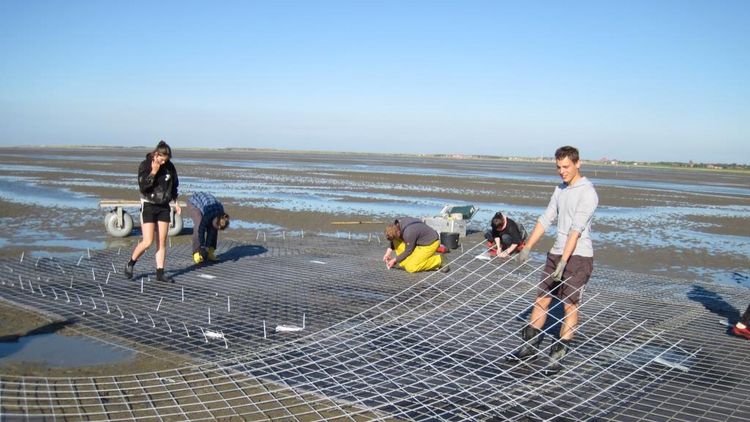
Ten students and early-career researchers spent eight weeks anchoring the heavy metal cages in the mudflats. They shovelled sediment and built a foundation using geotextile – a kind of weather-resistant mat designed to prevent the heavy cages from sinking into the mudflats. They fitted measuring devices to record salinity and temperature. Step by step, an open-air laboratory unlike any other in the world took shape – an island system in fast-forward: “We’ve condensed the entire process of an island forming in the mudflats into a single go,” laughs Balke. More than 120 square metres of artificial islands now document how a terrestrial ecosystem develops from a marine one.
Eight doctoral candidates and several postdoctoral researchers from Oldenburg and Göttingen are conducting research on this large-scale experiment. They are part of the ‘BEFmate’ project (Biodiversity effects on ecosystem functioning across marine and terrestrial ecosystems), which is funded by the Lower Saxony state government with three million euros. The project’s spokesperson is the Oldenburg-based marine scientist and Director of the Institute of Chemistry and Biology of the Marine Environment (ICBM), Prof. Dr Helmut Hillebrand.
Spiekeroog, the most unspoilt of the East Frisian islands, offers ideal research conditions for this extraordinary project. The ICBM’s ‘BioGeoChemistry of the Mudflats’ research group has been active there for years and, since 2002, has been using the ‘Yellow Measuring Pole’ to collect precise data on the physical, chemical and biological properties of the seawater flowing in and out. The scientists were therefore very familiar with the area. In addition, the university has recently set up a number of laboratories and apartments for scientists at the Wittbülten National Park Centre, where Kleyer and his team were able to stay whilst the facilities were being set up. “Spiekeroog is, after all, one of Germany’s tourist hotspots – accommodating the scientists was always extremely costly. Research projects often failed because of this,” reports Kleyer. Wittbülten counteracts this shortcoming.
Several hundred metres separate the experimental islands from Spiekeroog. Plants and animals that settle there must first overcome this barrier. Which plant will be the first to make the new island its home, and which animal? How do they interact with one another; do they influence each other? Will they be displaced by plants or animals that settle on the island later? What significance do they hold for the new ecosystem? How much new biomass is created through the colonisation process, and how does a new food web develop? To answer these questions, the scientists walk out to the islands almost daily at low tide during the summer, carrying out measurement campaigns and recording the plants and animals that settle there. It is a lengthy process. The research project is scheduled to run for three years – although the scientists are aiming for an extension to twelve years.
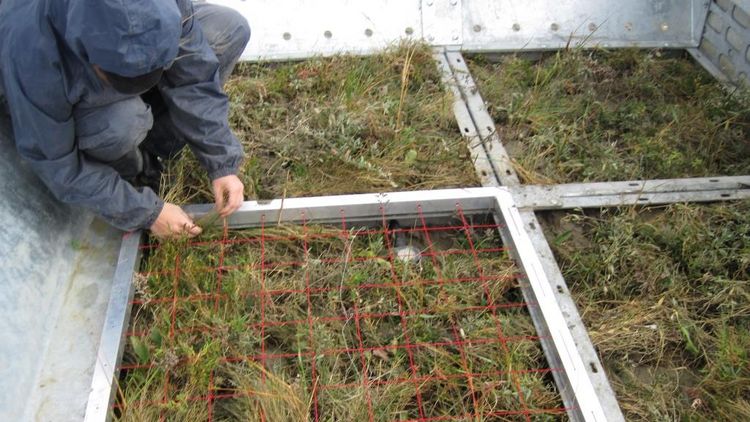
The experts planted six of the artificial islands in advance with plants found in the Spiekeroog salt marshes: saltmarsh grass, saltwort and sea lavender. The varying elevations of the artificial islands simulate the flood zones of the salt marshes, ensuring that the plants are exposed to North Sea salt water with varying frequency. In this way, the scientists analyse sea-level rise and its effects on the vegetation. “We deliberately subject the salt marsh plants on our artificial islands to stress to see how they cope with this ‘stress’ and adapt to the changing environmental conditions,” explains Kleyer. How long does it take for them to die off or be replaced by more resilient plants? How resilient are they? These are questions that urgently need answering, given the current relative rise in sea level of up to four millimetres per year.
However, the research project got off to a bitter start. A setback that impressively illustrates just how unique this project is. The research team installed the first artificial islands in the mudflats as early as the summer of 2013. Lighter metal baskets withstood the forces of nature until early December, when Storm Xaver struck the artificial islands – with wind force 13. Xaver effortlessly destroyed the complex structures. “There is no comparable project in biodiversity and ecology research in which colonisable islands have been built within a coastal system involving the sea, storm surges and waves,” explains Balke. “We had to gain experience first,” adds Kleyer. “We are the pioneers; we cannot visit and study any existing experimental set-up, let alone improve upon it.”
The close co-operation with the Wadden Sea National Park also demonstrates just how outstanding this research is. Until now, the park’s management had issued a strict directive: no experiments in the Wadden Sea. The research carried out by the Oldenburg scientists constitutes an exception within this highly protected UNESCO World Natural Heritage Site – a clear sign of trust and recognition of Oldenburg’s research.