Contact

Press & Communication

+49 (0) 441 798-5446

More

Research group Marine Geochemistry

Contact

Dr Michael Seidel

Institute for Chemistry and Biology of the Marine Environment

+49 441 798-3768

Dr Florence Schubotz

MARUM – Center for Marine Environmental Sciences, University of Bremen

+49 421 218-65724


  • The picture shows the seabed in the deep sea. The greyish sediment is partly covered by yellow sulphur crusts. There are some glass tubes in the bottom, which are labelled with plastic strips and numbers.

    Deep-sea sampling: Researchers used the submersible ALVIN to collect samples from the Guaymas Basin. WHOI Alvin group

New study on natural oil seeps in the deep sea

What is the role of hydrothermal vents in the cycle of dissolved organic matter in the ocean? Researchers from the Universities of Bremen and Oldenburg have analysed samples from the Guaymas Basin in the Gulf of California.

What is the role of hydrothermal vents in the cycle of dissolved organic matter in the ocean? Researchers from the Universities of Bremen and Oldenburg have analysed samples from the Guaymas Basin in the Gulf of California.

The Guaymas Basin is an active tectonic basin with hydrothermal activity that is known for its natural oil discharge sites. Here, microorganisms use the seeping oil as a source of energy and nutrition and thereby fuel the carbon cycle. Because microorganisms preferentially break down water-soluble organic molecules, it is important to understand how hydrothermal processes mobilize DOM, for example, those from natural oil seeps. To date, the mechanisms underlying this mobilization have not been well characterized. 

Analyses carried out by the team have revealed that the composition of the released water-soluble organic molecules, or DOM, is strongly influenced by the temperature of the hydrothermal systems and the composition of the petroleum. 

Their results indicate that hydrothermal sediments are a source of bioavailable organic molecules – compounds that microorganisms can degrade relatively quickly. At the same time, they can also release more stable and complex DOM, including water-soluble petroleum compounds that may persist in the deep sea over millennia, according to the study. These findings, now published in the journal Limnology and Oceanography, suggest that these hydrothermal systems may influence not only on local ecosystems, but also broader regions of the deep sea. The authors therefore emphasize the need for more quantitative research on the contribution of hydrothermal sediments to the DOM cycle – not only in the deep sea but also in the context of the global marine carbon cycle. In addition, the Guaymas Basin could be a source for what is known as black carbon. These complex and persistent carbon compounds are resistant to rapid microbial degradation and their origin is still not fully understood.

Participants in the study from MARUM – Center for Marine Environmental Sciences at the University of Bremen included Dr Florence Schubotz, and first author Jonas Brünjes who is now at the University of Toronto (Canada), Dr Michael Seidel from the Institute for Chemistry and Biology of the Marine Environment (ICBM) at the University of Oldenburg, and Prof. Andreas Teske of the University of North Carolina (USA).

Deciphering the sources and sinks for dissolved organic matter and its quantitative significance in the marine carbon cycle is also an integral element within the Cluster of Excellence “Ocean Floor - Earth's Uncharted Interface”, within the framework of which the study was supported.

Source: MARUM – Center for Marine Environmental Sciences
This might also be of interest to you:

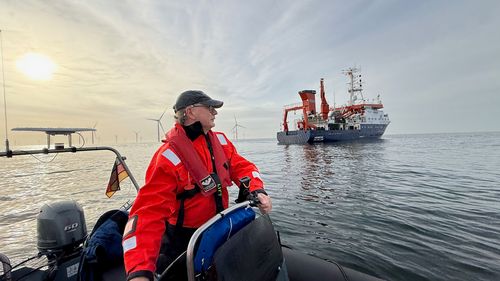
A man wearing a life jacket, an orange high-visibility jacket and a peaked cap is at the helm of a large inflatable boat. The water is relatively calm; in the background on the right is the research vessel Heincke, on the left a few wind turbines a little further away, and the setting sun, which bathes the scene in a golden light.
Thomas Badewien
Research Energy Top News Marine Sciences

Amidst the waves and wind turbines

A special research expedition recently took a team from Oldenburg to a stretch of sea north of Heligoland. The researchers had to overcome some…

more: Amidst the waves and wind turbines
Three yellow beehives, with lots of bees swarming around the flight holes; in the background is a garden
Adobe Stock / Vera Kuttelvaserova
Research Excellence Strategy Top News Biology

Inspired by honeybees

Despite their tiny brains, honeybees find their way home safely. International researchers, including biologist Jacqueline Degen, report in the…

more: Inspired by honeybees
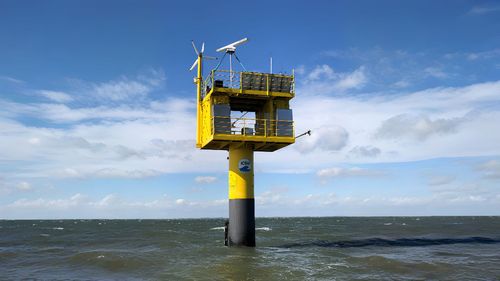
The picture shows the measuring pole in the sea; the sky is blue with a few clouds. The container is at the top of the pole. It has an open area in the middle, and there are several measuring instruments on the roof.
University of Oldenburg / Thomas Badewien (original photo enlarged using AI)
Research Top News Marine Sciences

Monitoring station off Spiekeroog is being replaced

Since 2002, a permanent monitoring station run by the university has been continuously collecting key environmental data between Langeoog and…

more: Monitoring station off Spiekeroog is being replaced
(Changed: 18 Aug 2026)  Kurz-URL:Shortlink: https://uol.de/p82n11119en
Zum Seitananfang scrollen Scroll to the top of the page

This page contains automatically translated content.