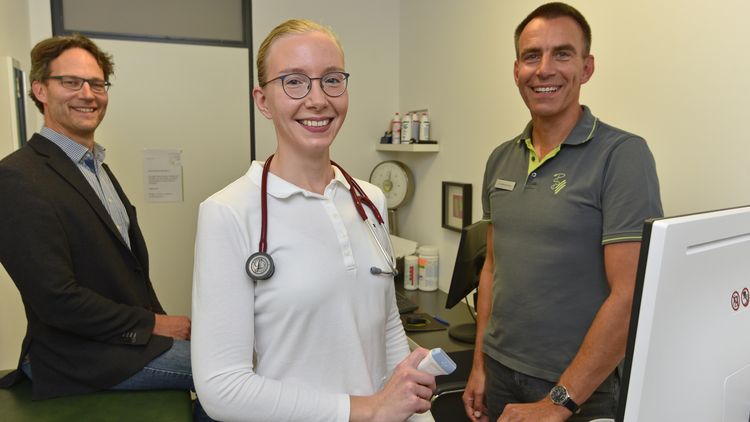

More than 180 medical practices in north-west Germany are helping to train apprentice doctors from Oldenburg. One former student now works at the practice where she trained – and is passing on her knowledge.
Anyone doing a placement at GP Dr Markus Ennen’s group practice in Schortens whilst studying medicine sometimes finds themselves sharing a private lunch with him, his wife – who also works as a doctor at the practice – and the couple’s two children. “We also give them an insight into life beyond the clinic,” says the 55-year-old. In this way, he aims to show medical students from Oldenburg not only specialist knowledge but also, for example, that it is possible to balance practice and family life.
Ennen’s group practice is one of around 180 practices where medical students from Oldenburg undertake several placements alongside their training periods in hospitals. The network of teaching practices stretches from the Emsland region to Lüneburg and from the Osnabrück area to the North Sea coast. Students can even complete internships at three island practices on Norderney, Spiekeroog and Wangerooge. Often, the supervising GPs also offer them accommodation – or, as in the case of Markus Ennen, even a place to stay with a host family.
Putting what they’ve learnt into practice straight away
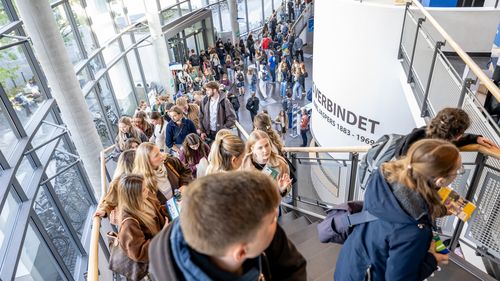
Once a year, the practising GPs meet for a teaching day at the University of Oldenburg – not least because this event also provides training for both new and long-standing network members alike. The network and the continuing professional development programmes for its members are organised by Prof. Dr Michael Freitag and his team. He heads the Department of General Practice within the Department of Health Services Research. “The GPs are delighted with our students – with what they already know and can do, and how they communicate with patients,” says Freitag. Students learn to link what they’ve learnt at university to real-life situations. “That boosts motivation,” Freitag is convinced.
He is constantly seeking new members for the network, not only to compensate for the loss of practices closing due to retirement, but also to expand the network. After all, the number of medical students in Oldenburg is growing. In the winter semester of 22/23, 120 students began the programme for the first time; the aim is to increase this number to 200 in the future. In the first three years alone, they will undertake four one-week internships in GP practices, plus a further two weeks in their fourth or fifth year of study. Students who decide to spend part of their clinical year in a GP practice will even be supervised for four months. “The partners in the network are therefore absolutely vital to the degree programme,” says Freitag.
Today, Rike Geiken passes on her knowledge to students
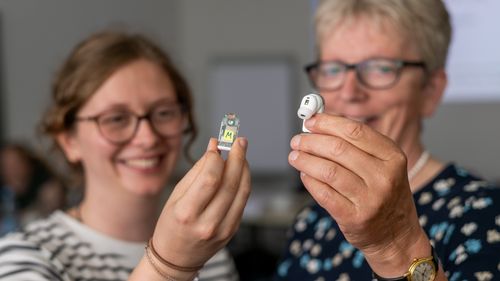
For the first time, students from Oldenburg are spending time in a GP practice just around ten weeks after starting their studies. “Back then, I felt I could barely name a few bones in the human body correctly, and yet my first work shadowing placement was a complete success,” recalls Rike Geiken. It has now been eight years since that first experience. She now works as a doctor undergoing further education at the joint practice for general and family medicine in Esens, a practice where she had previously worked as an intern. “It’s a decision I haven’t regretted for a single day,” Geiken assures us. “What appeals to me is that, as a GP, I can build particularly close doctor-patient relationships that often last for decades.”
Forecasts from the Lower Saxony Association of Statutory Health Insurance Physicians (KVN) highlight just how urgently GPs such as Markus Ennen and Rike Geiken are needed. According to these figures, the north-west of the Federal State, with its population of around 2.5 million, is in urgent need of GPs in private practice. The situation is particularly alarming when it comes to GP practices. Around 1,400 additional GPs will be needed by 2030.
Practical training with passion, enthusiasm and commitment
For Ennen, it is therefore important that primary care is given the image he believes it deserves. “We must proudly showcase the positive aspects of the profession and dispel the impression that we are mere ‘country doctors’,” he emphasises. “Only through the interplay between general practice and specialist care can a high standard of medical care be provided.”
Rike Geiken has also seen how GPs involved in training and further education promote their profession. “The GP tutors explained the importance and benefits of their profession to us students with passion, enthusiasm and dedication –
of course, also with the aim of ensuring future healthcare provision.” She was inspired and has been working at the East Frisian group practice since August 2021. There, she meets trainee doctors who are in the same situation she herself was in a few years ago. “I’m delighted when students come to our practice and I can spark their enthusiasm for this field of work.”