

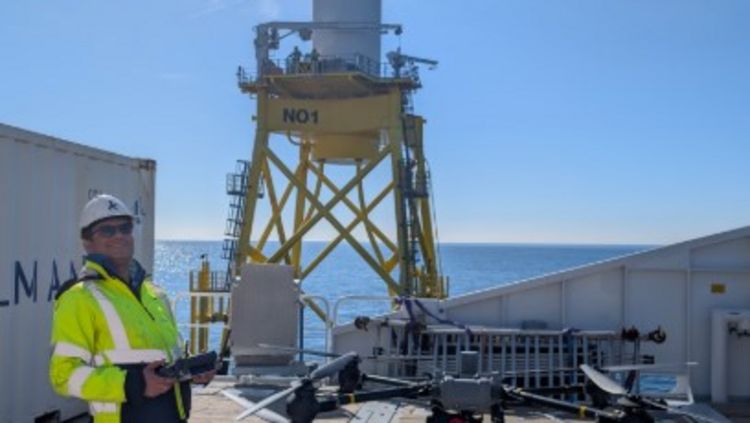
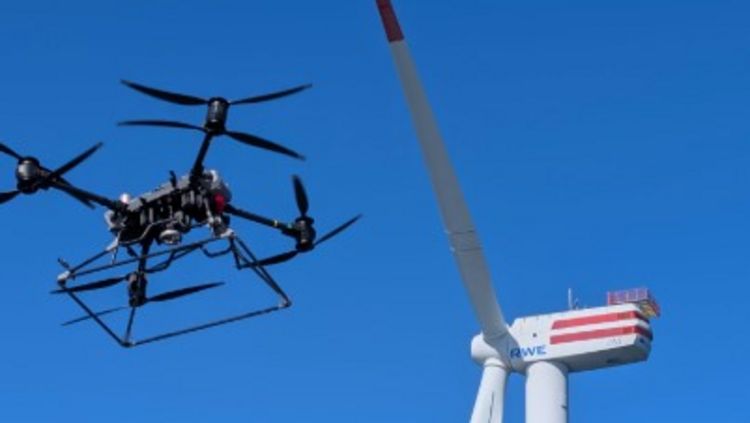
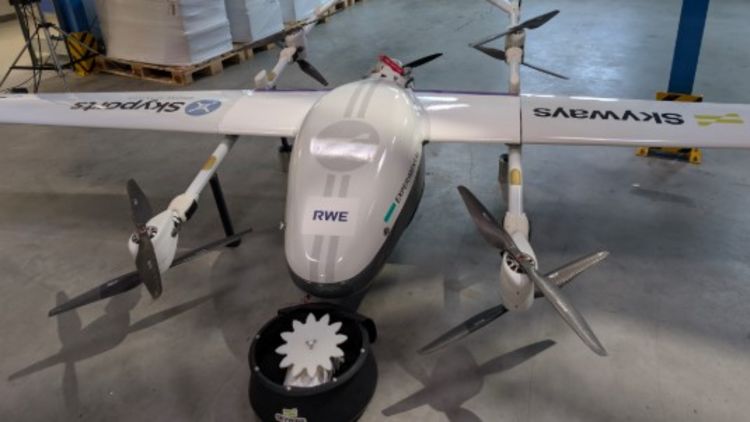


Vivek Trivedi (Germany, EUREC 2013-14) shares insights from leading a cargo drone project in offshore wind, exploring how drones can move from experimental trials to real operational value in O&M. The article reflects on lessons learned, regulatory challenges, and what it takes to scale beyond pilots.
Present position: O&M Optimization Manager (Offshore Wind), RWE Offshore Wind GmbH.
The idea of using drones in offshore wind is not new. What is new, however, is the growing pressure to move beyond pilots and demonstrate real operational value.
Over the past year, I had the opportunity to lead a cargo drone project focused on offshore applications. The ambition was simple on paper: explore whether drones can support logistics between shore and offshore assets. In reality, the journey quickly evolved into something much broader, involving regulatory alignment, operational constraints, stakeholder management, and practical limitations of current technology.
One of the key learnings was that technology is rarely the limiting factor. Most drone platforms today are capable of performing the basic task. The real challenge lies in integration. Offshore wind is a highly regulated and safety-critical environment. Introducing a new logistics layer requires alignment across aviation authorities, marine coordination, site operations, and internal governance structures.
We successfully demonstrated Visual Line of Sight (VLOS) operations and built a strong foundation for future use cases. However, scaling this to Beyond Visual Line of Sight (BVLOS) operations remains the real unlock. BVLOS is where drones transition from “interesting pilots” to “operational tools.” And this is exactly where regulatory frameworks, airspace coordination, and risk acceptance become critical.
Another important takeaway is the importance of defining the use case clearly. Drones should not be introduced because they are innovative, but because they solve a real problem. In offshore wind, that problem is often logistics inefficiency, high vessel costs, and time-critical deliveries. If drones can reliably reduce vessel dependency even in a small percentage of cases, the impact can be significant.
From an organizational perspective, projects like these also highlight the importance of cross-functional collaboration. Innovation cannot sit in isolation. It needs continuous input from operations, engineering, HSE, and external partners. In our case, engaging early with site teams and external stakeholders made a significant difference in both execution and acceptance.
As of today, while no immediate BVLOS deployments are planned in our fleet, the groundwork has been laid. The industry is moving in this direction, and it is only a matter of time before regulatory and operational frameworks catch up with technological capability.
Cargo drones in offshore wind are not a question of “if,” but “when and how.” The real opportunity lies in ensuring that when the transition happens, it is practical, safe, and truly value-driven.
For those working in similar environments, my biggest takeaway would be this: focus less on the technology itself and more on the system it needs to fit into. That is where real innovation happens.
If someone needs to know more or wants to connect, please feel free to connect with me on Linkedin, Full article; www.rwe.com/en/press/rwe-offshore-wind-gmbh/2025-10-15-rwe-successfully-pioneers-cargo-drone-operations-at-offshore-wind-farms/