
PD Dr Friederike Neumann

Contact
Institute of Theology and Religious Education (» Postal address)
School of Humanities and Social Sciences (» Postal address)
Lectures
Winter term 2026 / 2027
4.07.010
Einführung in das Alte Testament

PD Dr Friederike Neumann
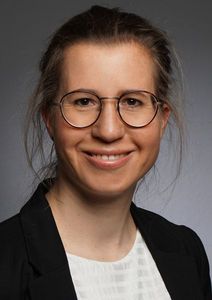
Personal details
- Born in Hamburg in 1982
- 2002: Abitur at the Cäcilienschule in Oldenburg
- Married, with two sons (2011; 2014)
Academic background
- 2002–2009: Studied Protestant Theology at the Georg-August University of Göttingen
- 2002–2004: Studied Protestant Religious Studies and German Philology at the Georg-August University of Göttingen (training to become a secondary school teacher)
- 2006–2007: Year of theological study in Jerusalem (DAAD scholarship)
- 2009: Diplom from the Georg-August University of Göttingen
- 2009 – 2015 PhD studies at the Georg-August University of Göttingen (supervisor: Prof. Dr Reinhard G. Kratz)
- 2016 Awarded a doctorate (Dr. theol.) from the Georg-August University of Göttingen
- 2025 Habilitation in Old Testament Studies at the Eberhard Karls University of Tübingen
Professional career
- 2004–2009 Student assistant to Prof. Dr Reinhard G. Kratz at the Old Testament Department of the Georg-August University of Göttingen; Hebrew tutor in the winter semester 2004/05
- 2009 – 2010 Research assistant to Prof. Dr Reinhard G. Kratz at the Old Testament Seminar of the Georg-August University of Göttingen
- 2009–2014 Research fellow in Research Training Group 896 ‘Images of Gods – Images of God – Worldviews’ (DFG)
- 2012–2013: Participated in the Certificate Programme in University Didactics at Göttingen
- 2018: Participated in the archaeological excavation at Tel Azekah (Israel) led by Prof. Dr Oded Lipschits (Tel Aviv) and Prof. Dr Manfred Oeming (Heidelberg)
- Since 2014 Research Assistant (on a permanent contract since 2022) in the subject of Old Testament Studies at the Institute for Protestant Theology and Religious Education at the University of Oldenburg
- Since 2025: Privatdozent at the School of Protestant Theology, Eberhard Karls University of Tübingen
- Summer semester 2026: Interim professorship for Old Testament Studies (Prof. Dr Sebastian Grätz) at Johannes Gutenberg University Mainz
Main research focuses
- History of theology and literature of the Old Testament
- Pentateuch
- Psalms
- Prophecy (esp. Jeremiah)
Memberships and international networks
- Since 2007: Forum Studienjahr Jerusalem e.V.
- 2009–2015 Member of the international network Old Testament Studies: Epistemologies and Methods (OTSEM)
- Since 2015: Society of Biblical Literature (SBL)
- Since 2019 German Association for the Study of Palestine (DVP)
- Since 2020: European Association of Biblical Studies (EABS)
- Since 2022: Scientific Society for Theology (WGTh)
- Since 2023: Associate member of the DFG project ‘Concepts of Biblical Israel’ (Eberhard Karls University of Tübingen, Prof. Dr Jakob Wöhrle, and Charles University in Prague, Assoc. Prof. Dr Jan Rückl)
- since 2025 Member of the steering committee of the “Genesis” section of the Society of Biblical Literature (SBL)
- Since 2025: Member of the steering committee of the ‘Concepts of Biblical Israel’ Research Unit of the European Association of Biblical Studies (EABS)
Monographs
- Scholastic Hymns. Form, Theology and Intention of Psalms 145 and 146–150 (BZAW 491), Berlin / Boston 2016 [doctoral thesis]
- Jacob and the Nations. On the Origin and Intention of Genesis 25–35 and 49 (FAT), Tübingen (forthcoming 2026) [Habilitation thesis]
Collected Volumes
- Rainer Albertz, Studies in the Pentateuch, edited by Jakob Wöhrle, in collaboration with Friederike Neumann (FAT 117), Tübingen 2018
- Mark Brett / Jakob Wöhrle (eds.), The Politics of the Ancestors. Exegetical and Historical Perspectives on Genesis 12–36, in collaboration with Friederike Neumann (FAT 124), Tübingen 2018
- Alma Brodersen / Friederike Neumann / David Willgren (eds.), Intertextuality and the Origins of the Psalter. Methodological Reflections – Theological Perspectives (FAT II/114), Tübingen 2020
- Jürg Hutzli / Friederike Neumann (eds.), Facing the Riddle of the Priestly Composition: New Perspectives on the Question of the Literary Profiles and Unity of P, in: HeBAI (forthcoming 2026)
- Filip Čapek / Friederike Neumann / Jan Rückl (eds.), Northern Traditions in the South (SCCB), Leiden et al. (forthcoming 2026)
- Walter Bührer / Friederike Neumann (eds.), Genesis (Themes and Issues in Biblical Studies), Sheffield / Bristol (in preparation)
Essays
- ‘The Lord will fight for you; you need only be still’ (Ex 14:14). Violence and the potential for violence in the Old Testament, in: ZThG 22 (2017), 186–202
- Israel and the Nations. A discourse on enmity and the overcoming of enmity at the end of the Book of Psalms, in: Kathrin Liess / Johannes Schnocks (eds.), Adversaries in Prayer: Studies on Enmity and the Overcoming of Enmity in the Book of Psalms (HBS 91), Freiburg im Breisgau 2018, 301–338
- A Song of Praise for Jerusalem. The Historical-Theological Background of Psalm 147 and its Significance for the Formation of the Book of Psalms, in: Alma Brodersen / Friederike Neumann / David Willgren (eds.), Intertextuality and the Formation of the Book of Psalms. Methodological Reflections – Theological Perspectives (FAT II/114), Tübingen 2020, 93–118
- All’s well that ends well. The final hallel (Psalms 146–150) and its significance in the history of redaction, in: BiKi 75 (2020), 238–245
- Praise beyond Borders. Transformations of Traditions and Universal Worship in Psalm 150, in: Christian Frevel (ed.), ‘Mit meinem Gott überspringe ich eine Mauer’ / ‘By my God I can leap over a wall’. Interreligious Horizons in the Psalms and Psalms Studies (HBS 96), Freiburg im Breisgau 2020, 158–174
- Jacob, Laban and the Two Daughters. Insights into the Formation of the Jacob-Laban Story (Genesis 29–31), in: Benedikt Hensel (ed.), The History of the Jacob Cycle (Genesis 25–35). Recent Research on the Compilation, the Redaction, and the Reception of the Biblical Narrative and Its Historical and Cultural Contexts (ArchB 4), Tübingen 2021, 35–55
- “Yhwh shall be King forever!” (Ps 146:10). The Phenomenon of continuation within the Final Hallel, in: Gianni Barbiero / Marco Pavan / Johannes Schnocks (eds.), The Formation of the Hebrew Psalter. The Book of Psalms Between Ancient Versions, Material Transmission and Canonical Exegesis (FAT 151), Tübingen 2021, 383–399
- On Documents, Narrative Cores and Editorial Processes – New Reflections on the Origins of the Jacob Narrative, in: BiKi 79, 2024, 11–18
- ‘City of my Joy’ (Jer 49:25): Literary and Historical Reflections on Aram and Damascus in the Latter Prophets, in: Jordan Davis / Benedikt Hensel (eds.), A Prophet to the Nations: Archaeological and Historical Perspectives on Jeremiah 46–51 (VTOA 4), Göttingen 2025, 170–192
- “… and he went to Paddan-Aram” (Gen 28:5): Political Geography and the Priestly Passages within the Jacob Story, in: HeBAI (forthcoming 2026)
- The “God of Israel” in the Book of Jeremiah, in: Jan Rückl / Kristin Tröndle (eds.), Israel in the Latter Prophets (FAT), Tübingen (forthcoming 2026)
- From North to South – Origins of the Jacob Story and Consequences for a Concept of Israel, in: Filip Čapek / Friederike Neumann / Jan Rückl (eds.), Northern Traditions in the South (SCCB), Leiden et al. (forthcoming 2026)
Encyclopaedia entries
- Entry: Dank / danken (AT), in: wibilex (2018)
- Entry: Gesture / Facial expression, in: wibilex (2021)
Reviews
- Review: Alma Brodersen, *The End of the Psalter. Psalms 146–150 in the Masoretic Text, the Dead Sea Scrolls, and the Septuagint* (BZAW 505), Berlin / Boston 2017, in: *ZAW* 130 (2018), 123–124
- Review: Mika S. Pajunen / Jeremy Penner (eds.), Functions of Psalms and Prayers in the Late Second Temple Period (BZAW 486), Berlin / Boston 2017, in: ThLZ 144 (2019), 1245–1247
- Review: Urmas Nõmmik, The Patriarchal Narratives in the Light of Courtly Narrative Art. Motif-Critical Studies on the Traditions of Lot, Isaac, Rebekah and Jacob (FAT 161), Tübingen 2023, in: ZAW 135, (2023), 673–674
- Review: Christoph Berner / Stephen Germany / Harald Samuel (eds.), Book-Seams in the Hexateuch II. The Book of Deuteronomy and Its Literary Transitions (FAT 168), Tübingen 2023, in: ZAW 136 (2024), 463–464
Selected lectures
- Göttingen-Lausanne Graduate Meeting (Lausanne 2012): A Scribal Hymn. Psalm 146 and Its Intertextual References
- OTSEM Meeting (Oxford 2012): A Scribal Hymn. Psalm 146 and Its Intertextual References
- IOSOT Congress (Munich 2013): Life or Death? – A Question of Relationship. On the Function and Theology of the Hymn in the Minor Hallel, with Reference to Psalm 146
- Symposium ‘Theology in Discourse’ (Oldenburg 2015): Death or Life? On the Function and Theology of the Hymn in the Lesser Hallel
- GFTP Symposium ‘Radicalisation in the Name of Religion’ (Nuremberg 2016): ‘YHWH will fight for you, but you shall be still’ (Ex 14:14). Violence and the potential for violence in the Old Testament
- SBL Annual Meeting (San Antonio 2016): Scribal Hymns: The Intention of the Hallelujah Psalms (Ps 146–150) at the End of the Psalter
- SBL International Meeting (Berlin 2017): Instruments of Remembrance: The Hymnic Transformation of Traditions in Psalm 150
- SBL Annual Meeting (Boston 2017): Instruments of Remembrance: The Hymnic Transformation of Traditions in Psalm 150
- Conference ‘Intertextuality and the Origins of the Psalter: Methodological Reflections – Theological Perspectives’ (Munich 2018): A Song of Praise to Jerusalem: The Historical-Theological Background of Psalm 147 and its Significance for the Origins of the Psalter
- SBL Annual Meeting (Denver 2018): Hope for Zion: Prophecy of Salvation in the Book of the Twelve and its Reception in the Later Psalms
- Conference “The History of the Jacob Cycle (Genesis 25–35)” (Tel Aviv 2018): Jacob, Laban and the Two Daughters: Insights into the Formation of the Jacob-Laban Story (Genesis 29–31)
- SBL International Meeting (Rome 2019): “YHWH shall be King forever!” (Ps 146:10) – Theology and Continuation within the Final Hallel
- IOSOT Congress (Aberdeen 2019): A Blessing for Jacob – A Curse for Esau? On Blessing, Power and Politics in Genesis 27
- SBL Annual Meeting (San Diego 2019): “And Laban had two daughters …” (Gen 29:16): The Historical Background of the Jacob–Laban Story (Gen 29–31)
- SBL Annual Meeting (San Antonio 2021): “Return to the land of your fathers and to your relatives, and I will be with you.” (Gen 31:3) – The Story of Jacob in the Persian Period
- Society of Old Testament Seminars at the Universities of Heidelberg and Tübingen (Tübingen 2022): How Esau Became a Hairy Man (Gen 27:11). The Beginnings of the Jacob Narrative
- Conference ‘Transjordan in Biblical Traditions. Exploring New Approaches and Perspectives for Future Research on Ancient Transjordan from Hebrew Bible Studies and Related Fields’ (Oldenburg 2022): Land, Identity, and the Question of Return: The Jacob Story in the Persian Period
- SBL International Meeting (Salzburg 2022): Land, Identity, and the Question of Return: The Story of Jacob in the Persian Period
- SBL Annual Meeting (Denver 2022): The Twelve Sons of Jacob: Considerations on the Birth Stories in Genesis 29–30
- Workshop ‘Unity and Literary Profile of the Priestly Writings’ (Prague 2023): “... and He went to Paddan-Aram” (Gen 28:5). The Priestly Passages within the Story of Jacob
- EABS Meeting (Syracuse 2023): The Twelve Sons of Jacob: The Story of Jacob and the Concept of Biblical Israel
- SBL Annual Meeting (San Antonio 2023): Exile and Return – The Story of Jacob in the Persian Period
- Lecture series ‘Respect, Tolerance and Human Rights – Religious History(ies) as a Model’ (Oldenburg 2023): Rule, Tolerance and Respect among Peoples. The Story of Jacob in the Hebrew Bible as an Example
- Conference ‘Israel in the Latter Prophets’ (Tübingen 2024): The God of Israel in the Book of Jeremiah
- SBL Annual Meeting (San Diego 2024): The Land of Canaan and Paddan-Aram: Reflections on the Political Geography of the Priestly Jacob Story
- EABS Meeting (Uppsala 2025): The “God of Israel” in the Book of Jeremiah
- IOSOT Congress (Berlin 2025): “... and It Shall Consume the Palaces of Ben-Hadad” (Am 1:4b; Jer 49:27b): The Formation and Historical Background of Jeremiah 49:23–27 and the Oracles Against the Nations
- Conference ‘Northern Traditions in the South’ (Prague 2025): From North to South – Origins of the Jacob Story and Implications for a Concept of Israel
- SBL Annual Meeting (Boston 2025): The Story of Dinah and Shechem and the Deuteronomistic Law: Genesis 34 as a Narrative Interpretation of Deuteronomy 7 and 22
- WGTh Conference ‘The Patriarchal Tradition’ (Berlin 2026): “And all the families of the earth shall be blessed through you” (Gen 12:3) – Reflections on the political dimensions of blessing in the Patriarchal narrative
- Workshop “Concepts of Biblical Israel” (Tübingen 2026): Israel as a Nation of Twelve Tribes? A Review of a Common Assumption based on the Story of Jacob, the Story of Joseph, and the Song of Deborah
- AT Society Bonn (Bonn 2026): Jacob, Esau and Laban – Or how did the first Jacob narrative come about?
- EABS Meeting (Leuven 2026): The Land and the People – Israel in the Priestly Texts of the Pentateuch
- SBL Annual Meeting (Denver 2026): Jacob, Israel and the Nations – Or How Political is the Jacob Story in Genesis 25–35?
Teaching in selection
- Introductory Course on the Old Testament
- Seminar: Major Texts of the Old Testament
- Seminar: Introduction to Old Testament Exegetical Methods
- Seminar: The Psalms: Origins and Theology
- Seminar : Abraham, Isaac and Jacob: The Patriarchs of Israel
- Seminar: The Kingship of God in the Psalms
- Seminar ‘...for you were strangers in Egypt’. Strangeness and Identity in the Old Testament
- Seminar : Abraham: Archetype of Faith, Encouragement to Set Out, Father of Religions?
- Seminar: From Creation to the Flood. Good and Evil in Genesis 1–11
- Seminar : “Go forth from your fatherland!” Homeland and Foreign Lands in the Old Testament
- Seminar The Patriarchal Narratives: Origins and Theology
- Seminar ‘Your People Are My People Too’ – Identity and Otherness in the Texts of the Old Testament (with an excursion)
- Seminar Prehistory in Genesis 1–11: Origins and Theology
- Seminar God as Creator, God as King – Images of God in the Psalms
- Seminar The Book of Jonah: Origins and Theology
- Lecture Introduction to the Old Testament
- Lecture: The Psalms
- Seminar on the supervision of Bachelor’s theses
- Seminar on Supervision of Master’s Theses