Biopolitics in the Viennese feuilleton of the interwar period
Biopolitics in the Viennese feuilleton of the interwar period
Biopolitics in the Viennese feuilleton of the interwar period. Close readings and quantitative analyses of newspapers
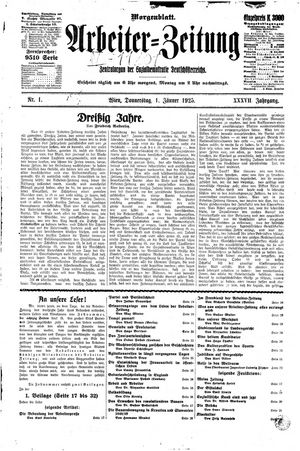
The DFG-funded research project is dedicated to the feuilleton of Viennese daily newspapers of the interwar period from a literary and knowledge-historical perspective and using methods of digital humanities and computational linguistics. At the centre of the investigation is biopolitical knowledge, in particular discourses on eugenics, hygiene and physical culture, which are formative for the media culture of modernity. The feuilleton of Viennese daily newspapers is of particular importance in this context, as the Austrian metropolis was a centre of medical-biological research and its popular communication in the interwar period and served as a socio-political laboratory for the reform projects of the Social Democratic municipal government of "Red Vienna". The project examines the two leading Viennese daily newspapers of the early 20th century, the Arbeiter-Zeitung and the Neue Freie Presse, which had a formative influence on political and cultural life, and thus focuses on the cultural and ideological tensions between Austromarxism and the liberal-bourgeois camp.
A special focus is placed on the literary texts published in the newspapers. Novels and stories published in the Arbeiter-Zeitung and Neue Freie Presse by authors such as Joseph Roth, Leo Perutz, Veza Canetti, Gina Kaus, Rudolf Brunngraber, Karel Čapek, Karl Schönherr and others reflect contemporary discourses on eugenics and physical culture in a dimension that has hardly been researched to date. The combination of the history of knowledge with media- and genre-related perspectives on the feuilleton is intended not least to illuminate the aesthetic dimension of biopolitical knowledge in the modern age of the early 20th century.
The processing of the two newspapers carried out by the Austrian National Library as part of the project will provide a comprehensive digital text corpus, which can then also be used to make methods from computational linguistics and digital humanities fruitful for data-driven research into the history of knowledge.
Project leader: Prof. Dr Urte Helduser
Collaboration: Wiebke Gärtner
Cooperation partners:
Prof. Dr Roland Innerhofer (Vienna/Linz)
Prof. Dr Nils Reiter (University of Cologne)
Type of funding: DFG, FWF (Weave)
Project duration: October 2025 to September 2028
