
Project
Project
EIN-IMDE - Influence of established and subjectively perceived and evaluated individual characteristics on the utilisation behaviour of people with depressive disorders? A longitudinal study to complement the "Behavioural Model of Health Services Use" and on demand-congruent utilisation
Two out of three people who fulfil the diagnostic criteria for depression do not make contact with the care system. From an objective perspective, this means that two thirds of all depression patients are underserved. Less consideration is given to the subjective perspective of people who (do not) utilise care when assessing care. The "Behavioural Model of Health Services Use" can be used to clarify the factors on which the utilisation behaviour of people with depression depends.
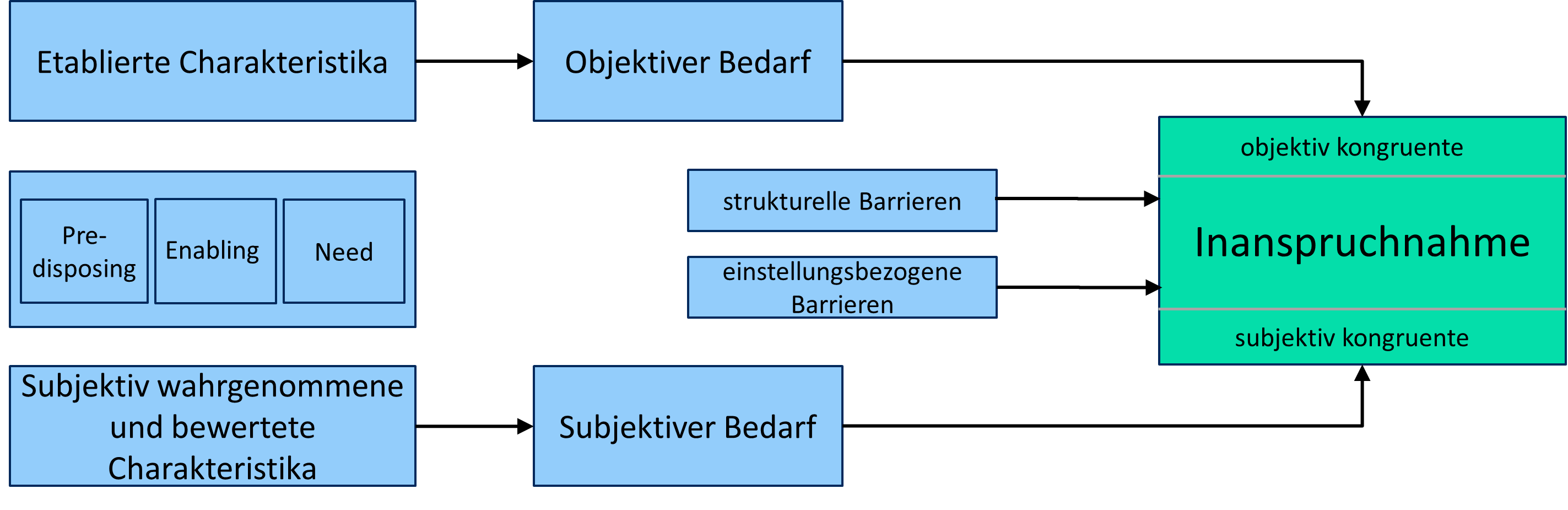
Figure 1: Addition of subjectively perceived and assessed characteristics to the Behavioural Model of Health Services Use.
and evaluated characteristics.
In order to identify characteristics associated with the utilisation of professional help by people with major depression, a systematic review was first conducted, which revealed a lack of prospective cohort studies and studies on the influence of subjectively perceived and rated characteristics (1). A pilot study in a cross-sectional mixed-methods design served to integrate subjectively perceived and rated individual characteristics into the "Behavioural Model of Health Services Use" and to uncover associations between them and the utilisation behaviour of patients with depression.
The aim of this prospective, representative longitudinal study with two measurement points is to investigate whether the addition of subjective characteristics to the "Behavioural Model of Health Services Use" can better explain the utilisation behaviour of people with depression (2). To this end, telephone interviews at T0 and 12 months later (T1) are used to quantitatively record established and subjective characteristics as well as utilisation. Furthermore, those individuals who utilise or do not utilise depression-specific care incongruent to the objective need or their subjective need will be examined more closely. Firstly, the proportion of these people will be described. Finally, we will investigate how people explain the incongruence in their behaviour (qualitative survey). Identified modifiable influencing factors represent starting points for strategies to increase the congruent utilisation of objective and subjective needs of people with depression.

- Magaard, J. L., Seeralan, T., Schulz, H., & Brütt, A. L. (2017). Factors associated with help-seeking behaviour among individuals with major depression: A systematic review. PloS one, 12(5), e0176730. doi.org/10.1371/journal.pone.0176730
- Reinhold, A.K., Magaard, J.L. & Brütt, A.L. (201). Influence of established and subjectively perceived as well as evaluated individual characteristics on the utilization of mental health services among individuals with depressive disorders: protocol of a longitudinal study examining how to supplement the "behavioural model of health services use" and on need-congruent use of mental health services. BMC psychiatry, 21(1), 1-10. doi.org/10.1186/s12888-021-03065-w