Latest news
Latest news
January 2026: Publication published in the Journal of Palliative Medicine
As part of the Gut-Leben project, the publication Umsetzung der Gesundheitlichen Versorgungsplanung in deutschen Pflegeheimen - Ergebnisse einer Fokusgruppenstudie mit Gesprächsbegleitenden has been published.
The aim of the study was to investigate which conditions favour or hinder the introduction of the health care planning (HCP) counselling service. Care facilities have the option of offering end-of-life care planning counselling and settling the costs via statutory public health insurance. 24 counsellors took part in four focus groups. The key findings show that structural framework conditions, co-operation within the facility and with external partners, and financing have a particular influence on the implementation of GVP. A basic palliative attitude and close cooperation between all those involved proved to be key prerequisites.
The publication can be downloaded free of charge via the following link: https://www.thieme-connect.de/products/ejournals/abstract/10.1055/a-2776-8843
December 2025: Christmas party of the junior research group Rehab Research
The junior research group came together in December for a Christmas party at the Patio in Oldenburg for a nice end to the year. A cosy and enjoyable exchange took place over delicious food.
Dezember 2025: Weihnachtsfeier der Nachwuchsgruppe
Für einen netten Jahresausklang ist die Nachwuchsgruppe im Dezember für eine Weihnachtsfeier im Patio in Oldenburg zusammen gekommen. Bei leckerem Essen fand ein gemütlicher und guter Austausch statt.
December 2025: Recording of a podcast on healthcare planning
Together with Diakonie Hessen, project staff from the Gut-Leben project have recorded a podcast. The podcast is about the presentation of the project results and the relevance of health care planning (HCP) for care homes. The podcast will be released at the beginning of 2026 and will help to disseminate the project results and raise awareness of the GVP service.
December 2025: Kick-off meeting of the HEARAZ Research Advisory Board
On 11 December 2025, the Research Advisory Board of the HEARAZ Research Training Group met for the first time at the University of Oldenburg. The kick-off meeting marked the beginning of a close collaboration between the researchers and the members of the Research Advisory Board, whose perspectives and experiences play a central role in shaping the HEARAZ research projects.
During the meeting, the HEARAZ Research Training Group was presented and the objectives and tasks of the Research Advisory Board were discussed. The meeting concluded with an outlook on future activities and the continued involvement of the Research Advisory Board in the HEARAZ projects.
October 2025: Publication published in the journal "BMC Palliative Care"
As part of the Gut-Leben project, the publication Advance care planning in German nursing homes from the perspective of the facilitators: A focus group study has been published. The publication presents the content of the focus groups conducted as part of the project. The focus groups with facilitators who provide counselling on health care planning (GVP) focus on their experiences of implementing GVP in nursing homes.
The results indicate that GVP consultations are very individual and vary depending on the resident. However, there is a roughly standardised procedure for the process, which, like the GVP documents, can be very complex. The GVP offer must be advertised more intensively in order to increase awareness of the offer, reduce inhibitions and simplify the initiation of counselling processes.
The publication can be accessed free of charge via the following link: https://link.springer.com/article/10.1186/s12904-025-01914-z
September 2025: DKVF in Hamburg
From 22 to 24 September, the 25th German Congress for Health Services Research took place under the motto "People. Relationships. Organisations. 25 years of joint health services research". On the occasion of its 25th anniversary, the congress looked back on the development of health services research and at the same time focussed on its future development. Both the actors and structures of healthcare and the collaborative work of a committed research community took centre stage.
Junior research group leader PD Dr Anna Levke Brütt took over the Chair of several sessions. Dr Carolin Baur and Anna Völkel gave presentations, while Charlotte Janning presented her project in a poster session.
September 2025: HEARAZ Summer School in Leer
The first summer school of the HEARAZ Research Training Group took place from 3 to 5 September 2025 at the Ostfriesen-Hof in Leer. During the three-day event, the participants exchanged ideas on content and internal developments and discussed the future direction of the Research Training Group. A central point of the programme was the poster presentation by the doctoral students, who presented their research work and received constructive feedback from the PIs. The Summer School was rounded off with an evening together in an informal atmosphere, which was ideal for networking.
September 2025: Interviews in the post-COVID rehab project completed
The last of a total of 28 interviews in the post-COVID rehab project has taken place. Great and informative discussions were held with post-COVID patients and employees from various professional groups (therapy professions, doctors, nursing staff, etc.) at the Oldenburg rehabilitation centre, providing important insights into the post-COVID rehabilitation concept. The content discussed in the interviews will be analysed in a next step and prepared for publication.
July 2025: Participation in the 1st Oldenburg Open Science Conference
On 18 July 2025, four doctoral students from the HEARAZ Research Training Group took part in the 1st Oldenburg Open Science Conference. One doctoral candidate presented a preregistered scoping review protocol on the role of hearing assistance technologies for the social health and participation of people with support needs as part of a poster session. The conference provided participants with valuable input on open science practices such as preregistration and transparency as well as an opportunity for interdisciplinary exchange on their implementation in health and care research.
July 2025: Workshop "Beyond the Lab: Integrating Patient Perspectives into Doctoral Studies"
From 10 to 11 July 2025, the doctoral students of the HEARAZ Research Training Group took part in a two-day workshop on Patient and Public Involvement in Health and Social Research. The event, organised by PD Dr Anna Levke Brütt together with Dr Elspeth Mathie and Prof. Julia Jones (University of Hertfordshire, England), took place at the Hanse-Wissenschaftskolleg in Delmenhorst. The event focussed on theoretical principles and practical approaches to successfully involving patients and the public in research projects in areas such as dementia, cognitive impairment and psychiatry. The doctoral students also developed their own concepts for integrating PPI into their doctoral projects and received feedback and ideas for further implementation.
July 2025: Extension of the Good Life project
The Gut-Leben project, which was originally funded by the Innovation Fund until the end of June, has been extended by nine months. Launched on 1 July 2022, the aim of the planned three-year project was to improve healthcare for people in the last phase of their lives in nursing homes. To this end, the implementation to date of the options for health care planning for the last phase of life in the care home setting, which were created by law in 2018, was analysed and proposals for practical further development were developed. The project will be extended until 31 March 2026, enabling the further production and publication of publications.
June 2025: First meeting of the HEARAZ Industrial Advisory Board
The first meeting of the HEARAZ Industrial Advisory Board took place on 13 June 2025 following the Hearing Instrument Developers Forum in Oldenburg. Both representatives of the Research Training Group and various hearing aid companies took part. The aim of the meeting was to introduce HEARAZ and to identify common interests and possible approaches to cooperation. In addition, three doctoral students (including Charlotte Janning) from the Research Training Group presented their research projects and received valuable direct feedback from the industry. The meeting facilitated an intensive exchange between science and practice.
May 2025: Last advisory board meeting held in the Gut-Leben project
The 12th and final meeting of the Gut-Leben advisory board took place in May 2025. The advisory board supported the Gut-Leben project throughout the entire duration of the project and met approximately every three months. Among other things, survey instruments were developed at the meetings and project results were categorised and interpreted in the practical context. In this way, practice and science were closely interlinked. The project team would like to thank the members of the advisory board for their valuable support and excellent cooperation.
March 2025: Organisation of a workshop in the Gut-Leben project

In March, a workshop was held as part of the Gut-Leben project with people from practice (Gut-Leben practice advisory board, GVP consultants, representatives of hospice and palliative care associations, organisations and networks) and science as well as representatives of insurance providers (AOK, GKV-Spitzenverband). After a welcome and presentation of the project results, there was a lunch break with lively discussions. The results were then discussed together. The main topics were the financing of the GVP programme, the GVP documents used and created in the process and the palliative and hospice culture in nursing homes. After a coffee break, the plenary session took a final look into the future.
March 2025: Participation of the junior research group Rehabilitation Research at the Rehabilitation Science Colloquium in Nuremberg
Five members of the junior research group Rehabilitation Research were represented at the Rehabilitation Science Colloquium in Nuremberg from 18 to 20 March 2025. Under the congress motto "Man meets machine - utilising digital opportunities in prevention and rehabilitation" , the focus was on the question of how participation services can be further developed through digital services, spatial barriers removed and access simplified. The application, possibilities and limitations of artificial intelligence were also addressed and discussed in various contributions. Carolin Baur and Sanny Witt gave presentations and Elena Brushinski and Anna Völkel presented posters on their project. Anna Levke Brütt also took part in an innovation workshop and a discussion forum.
December 2024: HEARAZ PhD KickOff Event
Interdisciplinary work: The PhD kick-off event in Varel focussed on networking as well as aspects of interdisciplinary work and its opportunities and challenges.
December 2024: Interviews in the SEMPRE project completed
The last interview in the SEMPRE project was conducted for the evaluation. In individual interviews, 10 participants were asked about their satisfaction and suggestions for improvement in the context of the Psychosomatic Rehabilitation Compass (PRK). In addition, 20 individual interviews were conducted with stakeholders (network partners, clinics) and one focus group interview with the pilots, in which the implementation of the Rehakompass was discussed. The next step is to analyse the 30 individual interviews and one focus group.
November 2024: Publication in the journal "Der Nervenarzt"
As part of a major research project, the content of standardised instruments used for people with multiple sclerosis was compared with the International Classification of Functioning, Disability and Health (ICF) in order to describe the distribution of content across the functional domains and contextual factors. This has resulted in a publication in the journal "Der Nervenarzt". The article can be accessed free of charge via the following link: link.springer.com/article/10.1007/s00115-024-01752-z
September 2024: Participation of the junior research group Rehab Research at the German Congress for Health Services Research in Potsdam
The 23rd German Congress for Health Services Research took place from 25 to 27 September under the motto "Implementation knowledge creates innovative care". The congress focussed on the exchange between the two disciplines of health services research and implementation science. In various formats, the stronger bundling of competences from health services research and implementation science and the beneficial changes in everyday care as well as in the healthcare system and how these can be realised more efficiently were discussed.
Junior research group leader PD Dr Anna Levke Brütt took over the Chair of several sessions. Dr Carolin Baur, Anna Reinhold and Anna Völkel gave presentations and Dr Elena Brushinski and Nadja Reeck presented the results of their projects in poster sessions.
August 2024: Departmental excursion of the junior research group Rehab Research
In August, the junior research group Rehaforschung organised a departmental excursion to the Zwischenahner Meer with all current and former employees. With handcarts and plenty of food in their luggage, they travelled by train to Bad Zwischenahn to hike along the circular trail around the Zwischenahner Meer. There was a picnic along the way and even the rain didn't dampen the good mood.

August 2024: Publication in the CoLVAD project published
An article on the quality and safety of care after implantation of a left ventricular assist device (LVAD) has been published in the Journal of Evidence, Training and Quality in Healthcare, which can be downloaded here free of charge. It reports qualitative results from the CoLVAD project, for which individual interviews were conducted with 18 patients living with an LVAD. As part of the content analysis, 28 categories on care-relevant aspects were developed, which describe patient characteristics, carer characteristics, requirements and tasks in care, aspects of the physical environment, aspects of medical devices and technologies, aspects of the living environment and external environmental factors at a social and political level. Based on this, three central recommendations for action for care practice were derived.
August 2024: Start of interviews in the SEMPRE project (2nd phase)
As part of the evaluation of the model project SEMPRE of the DRV OL-HB, interviews are conducted with actors and participants of the psychosomatic rehabilitation compass. The focus of the interviews is on the actors' experiences and their perception of the implementation of the Rehakompass. The participants are mainly asked about their satisfaction, possible barriers and support factors when participating in the Rehakompass.
July 2024: Publication in the EIN-IMDE project published
The first results from the EIN-IMDE project were recently published in the journal BMC Psychiatry. The aim of the study was to investigate the causal attributions of people with depressive symptoms with regard to their stability over time, dependence on treatment experiences and the differentiation of causal concepts. It was found that causal attributions relating to the social environment, the workplace and the participants' past were the most stable over time. People with treatment experience named significantly more causes of illness than people without treatment experience. In addition, respondents with treatment experience were more likely to cite "childhood/adolescence/parental home" and "predisposition" as causes. The causal concepts of people with depressive symptoms are very diverse.
Understanding how causal attributions and concepts are formed and change can be helpful in addressing these in treatment (e.g. by a psychotherapist).
The article has been published open access and can be read here free of charge.
July 2024: Interviews in the Good Life project completed
The last of a total of 36 interviews in the Good Life project on health care planning has taken place. Great conversations were held with various people and important insights into healthcare practice were provided. The content discussed in the interviews will be analysed in a next step.
April 2024: Start of interviews in the good life project
The interviews in the Good Life project have started. In the interviews, residents, relatives, counsellors, care staff and other stakeholders describe the counselling services offered by Healthcare Planning from their point of view. The aim is to illuminate as many different perspectives as possible. The project team is receiving support from committed counsellors and care homes in Lower Saxony, who are helping to find volunteers to take part.
March 2024: Good Life Practice Advisory Board - "Mid-term meeting"
The 6th meeting of the Gut-Leben Advisory Board took place in March. The cooperation that has taken place to date was reflected upon in a convivial atmosphere. A further six advisory board meetings are planned for the remainder of the project. Among other things, the results achieved at the end of the project are to be discussed and categorised together.

March 2024: Participation of the junior research group Rehabilitation Research in the Rehabilitation Science Colloquium in Bremen
Five members of the Rehabilitation Research junior research group attended the Rehabilitation Science Colloquium in Bremen from 18 to 20 March 2024. Under the congress motto "Sustainability and participation: ecological - economic - social", the focus was on the question of how the three dimensions of sustainability can be meaningfully reconciled in the further development of future-proof participation strategies. Carolin Baur and Elena Brushinski gave presentations and Sanny Witt presented a poster on her project. In addition, Anna Levke Brütt moderated a session on "Update on medical rehabilitation for patients with post-COVID syndrome - what has proven successful, what needs to be improved?".
December 2023: Completion of participant observation in the Psychosomatic Rehabilitation Compass in the SEMPRE project
As part of the evaluation, participant observations of the Psychosomatic Rehabilitation Compass were carried out at the cooperating clinics in October 2023 and December 2023. The focus of the participant observation is on the concrete implementation: Which planned modules of the Psychosomatic Rehabilitation Compass are being implemented unchanged and where might practical modifications take place? Which professional groups are involved in the implementation and how much time do the individual modules take?
November 2023: 1st quality circle held in the post-COVID rehab project
In regular meetings as part of a quality circle involving the Reha-Zentrum Oldenburg and the DRV Oldenburg-Bremen, qualitative and quantitative interim results are reported back and approaches for the further development of the post-COVID rehabilitation concept are discussed. The 1st quality circle was held at the Oldenburg rehabilitation centre in November. Initial impressions of the surveys carried out so far were exchanged and the next steps were discussed.
November 2023: Contribution to the 2nd German ACP Congress in Cologne
The 2nd German ACP Congress 2023 took place in Cologne from 8 to 10 November 2023. The junior research group Rehab Research was represented with the presentation "Gut-Leben research project on health care planning in nursing homes: cooperation with a practice advisory board".
October 2023: Participation of the junior research group Rehab Research at the German Congress for Health Services Research in Berlin
Six members of the junior research group Rehabilitation Research were represented at the German Congress for Health Services Research in Berlin from 4 to 6 October 2023. The motto of the congress was "Health-related health services research - the driving force behind evidence-based health policy". Elena Brushinski, Nadja Reeck and Anna Reinhold gave lectures and Carolin Baur and Anna Völkel presented posters on their end of projects. Anna Levke Brütt also took over the Chair and moderation of various sessions at the Patient:innentag.
October 2023: Questionnaire survey of the post-COVID rehab project at the Oldenburg rehabilitation centre has started
A quantitative approach will be used to investigate the efficiency of the Oldenburg rehabilitation centre's rehabilitation concept. To this end, the project team will conduct a survey with the rehabilitants at the start and end of rehabilitation at the Oldenburg rehabilitation centre. In addition, the rehabilitants will receive a further questionnaire by post six months after the end of rehabilitation.
September 2023: Contributions to the 37th Annual Conference of the European Society of Health Psychology
The junior research group Rehabilitation Research was represented with a poster presentation and a lecture at the 37th annual conference of the European Society for Health Psychology. The international conference took place from 4 to 8 September in Bremen under the motto "Health Psychology for all: Equity, Inclusiveness and Transformation".
September 2023: Implementation of the focus groups in the Good Life project completed
The last focus group in the Good Life project was conducted. A total of four focus groups were held with 24 counsellors who carry out the counselling service for health care planning (GVP) in care homes. The first three focus groups were conducted in person with counsellors from Lower Saxony and Bremen and the last focus group was conducted digitally with counsellors from all over Germany. The content discussed in the focus groups will be analysed in a next step.
July 2023: Post-COVID rehab project starts
The project "Post-COVID Rehab: Post-COVID Rehabilitation at the Rehabilitation Centre Oldenburg - Further Development and Evaluation of the Effectiveness of the Post-COVID Rehabilitation Concept", funded by the German Pension Insurance (DRV) Oldenburg-Bremen, started at the beginning of July.
The project uses a combined quantitative and qualitative (mixed-methods) evaluation to investigate the effectiveness and implementation of the post-COVID rehabilitation concept at the Reha-Zentrum Oldenburg. The primary target variable is subjective quality of life.
July 2023: Start of the focus groups in the Good Life project
The first focus group for the Good Life project was held. Two further focus groups will follow in August and one in September. In the focus groups, we would like to find out from those involved in the dialogue who provide advice on health care planning (HCP) in care homes what current HCP practice is like and what barriers and success factors are involved in implementing HCP.
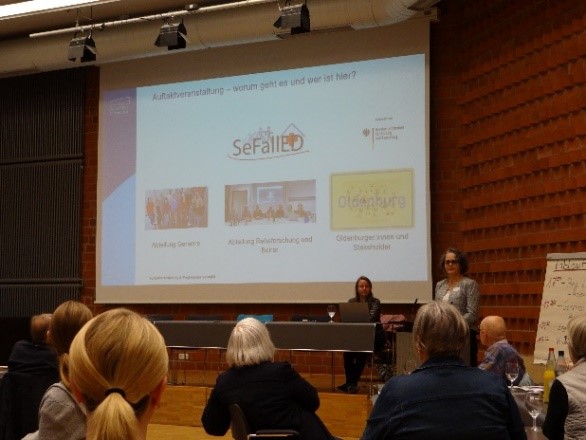
July 2023: SeFallEDE: Kick-off event
On 6 July 2023, the kick-off event for the 2nd project phase of the SeFallED fall project took place at the University of Oldenburg under the direction of Prof. Dr Tania Zieschang. Selected citizens were invited to discuss the topic of fall prevention. In addition to the project team, 29 citizens and experts in the field of fall prevention or senior citizen work from Oldenburg and the surrounding area took part.
The full text can be found on our homepage under the following link: https://uol.de/geriatrie/projekte/sefalled
June 2023: Joint presentation on the Rehakompass at the 2023 congress of the Fachverband Sucht+ e.V. in Münster
As part of the 2023 congress of the Fachverband Sucht+ e.V. in Münster, the scientific support of the Rehakompass (SEMPRE/ SEMRES) presented the path to care research through the Rehakompass. SEMPRE represents the Psychosomatic Rehabilitation Compass and is being evaluated by the University of Oldenburg. We would like to thank you for the opportunity and were very pleased with the interest!
April 2023: Results workshop of the pilot study of the BASE project in Oldenburg
On 18 April 2023, the results workshop of the BASE pilot study took place in the library hall of the University of Oldenburg. After the presentation of the initial key results of the pilot study and a short contribution on the current status of the development of the planned online platform, doctors from rehabilitation clinics, representatives of health insurance companies, social associations, the Federal Employment Agency, experts and employees of the DRV Oldenburg-Bremen and the University of Oldenburg discussed in small groups both current issues regarding the online platform and important future topics and visions relating to the topic of "Invitation to apply for rehabilitation".

March 2023: Publication from the Gut-Leben project published
The study protocol for the Gut-Leben project was recently published in the journal BMC Palliative Care.
The study protocol describes the Gut-Leben research project. The aim of the project is to evaluate the implementation of and barriers to health care planning (HCP) in nursing homes in Germany, with a particular focus on the Federal State of Lower Saxony, and to develop practical recommendations for the further development of end-of-life care.
The three-year mixed-methods study extends over five work packages (WP). The junior research group Rehaforschung is working on WP 5 and is linking, interpreting and reflecting on the results from WPs 1-4 through focus groups and individual interviews with GVP counsellors, nursing staff, residents, relatives and service providers. As part of a participatory approach, a practice advisory board has already been set up, which is made up of people who offer GVP and/or work in the care home and is closely involved in the entire research process.
If successful, the Good Life project can provide an insight into the implementation of and barriers to GVP in care homes.
The article has been published Open Access and can be read free of charge here.
March 2023: Research results from the ReHaFe project published
New results from the ReHaFe project were recently published in the journal Die Rehabilitation. The aim of the study was to first identify relevant needs for action and research for psychosomatic and orthopaedic rehabilitation from the perspective of rehabilitation patients and staff and then to prioritise these. The identification was carried out through a written survey of former rehabilitation patients and employees, while two methods were used for prioritisation (prioritisation workshop and two-stage written Delphi survey). The top 10 fields of action and research questions were reported and discussed. Practical action is needed first and foremost in the implementation of holistic and individualised rehabilitation. Research questions on access to rehabilitation led the top 10 list of research needs. The development of treatment and solution strategies for the identified topics as well as the implementation of these strategies should be focussed on in the future.
The article was published Open Access and can be read here free of charge.
February 2023: Presentation of the results from the first survey phase of a controlled longitudinal study in the SEMPRE project at the 23rd Rehabilitation Colloquium in Hanover
The results from the first survey phase of a controlled longitudinal study in the SEMPRE project were presented in the form of a poster contribution at the annual rehabilitation colloquium. SEMPRE comprises a total of four sub-studies for the evaluation and effect measurement of the (psychosomatic) Rehakopass model project, which include a controlled longitudinal study in two outpatient psychosomatic rehabilitation clinics, a further pre-post study, qualitative interviews and ongoing process documentation.
January 2023: SeFallED: Participatory evaluation phase started with the project advisory board
After conducting a total of twelve focus groups, we started the data analysis phase with our project advisory board. This initially took place in two separate teams - one consisting of two project employees and the other of two advisory board members - in order to then discuss the results in a joint meeting and reach a consensus. This approach enables a diverse interpretation of the results, as the advisory board members contribute additional perspectives through their personal fall experiences.
October 2022: Implementation of the focus groups for the SeFallED project completed
A total of twelve focus groups with 52 participants were conducted for the qualitative sub-project of the SeFallED study. The moderation team was supported by a member of the project advisory board. The needs and wishes of people who have fallen and their relatives that were discussed in the focus groups will now be analysed in the next step.
October 2022: German Congress for Health Services Research in Potsdam
From 5 to 7 October, we were represented at the German Congress for Health Services Research in Potsdam by 7 members of the junior research group Rehabilitation Research. Under the motto "Health Services Research - Benefits for Clinical Practice. Potentials and perspectives", we listened to many interesting presentations and used the opportunity to exchange ideas with other scientists. Elise-Marie Dilger, Nadja Reeck and Anna Reinhold also gave presentations on their respective projects. Anna Levke Brütt took over the Chair and moderation of various sessions at the congress and thus contributed in many ways.
September 2022: SeFallED: One-year anniversary of our project advisory board
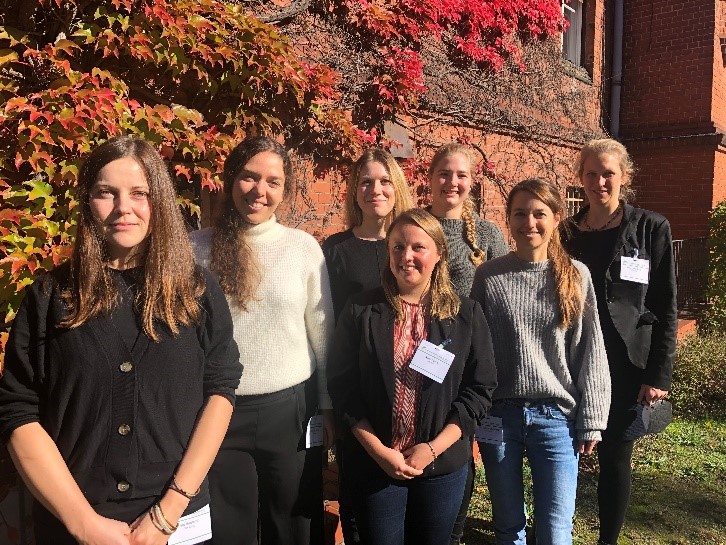
We are celebrating an anniversary - our project advisory board has now been in existence for a year!
Since its inception, the advisory board has played an important role in our project implementation and has contributed valuable insights and its own experiences.
During this year, the advisory board members have actively participated in decision-making processes and enriched our project with their experience. For example, they helped design the study participation flyer for the emergency department and gave us important feedback for the recruitment of our test subjects. We appreciate the cooperation, the diverse perspectives and the joint commitment to the successful implementation of our project. We look forward to the next year and would like to thank our advisory board.
September 2022: Participation and presentation of SEMPRE results at the first rehapro conference
Under the motto "Opportunities and challenges for strengthening participation in working life", the first specialist conference for scientific support in the federal rehapro programme was held in September. At this event, the SEMPRE project was able to present and discuss the results of the first evaluation and revision phase in a presentation. We would like to thank you for the constructive exchange and the insights into the various rehapro projects by participating in the conference!
September 2022: Presentation of initial results from SEMPRE at the multiplier meeting "The Rehakompass invites you!"
The DRV Oldenburg-Bremen organises a multiplier meeting as part of the Rehakompass pilot project. The first results from the scientific monitoring of the psychosomatic rehabilitation compass by SEMPRE were presented to the participating and interested network partners. We were very pleased about the interest and the exchange!
September 2022: Participation in the open day at the Department of Health Services Research
The Junior Research Group Rehabilitation Research took part in the open day at the Department of Health Services Research on 9 September 2022. Among other things, visitors had the opportunity to learn about the Department's ongoing research projects in short presentations. Mona Voigt-Barbarowicz presented the results of the PIKoG project, which is funded by the BMG and aims to improve professional health literacy, on behalf of our department. In addition, the staff from the other projects in our department were available to answer questions about our work.
September 2022: Publication from the forMP project published
A new article on the forMP project has recently been published. The article can be downloaded here free of charge. In the project, research questions were identified and prioritised together with people with an accidental spinal cord injury, their relatives and carers. A total of 38 unanswered research questions were identified. These were prioritised into a top 10 list via three surveys.
The list includes nine questions aimed at research into improving the living and care situation of people with spinal cord injury and one question aimed at finding a cure.
The prioritised questions should be taken up by research in order to address problems that are relevant to those affected, their relatives and professional carers.
July 2022: Good life project starts
The Gut-Leben - Gesundheitliche Versorgungsplanung für die letzte Lebensphase (according to § 132g SGB V) in nursing homes: Implementation to date, barriers and recommendations for further development project, funded by the Innovation Fund of the Joint Federal Committee, was launched at the beginning of July with a kick-off meeting in Bremen.
The Gut-Leben project aims to improve healthcare for people in the last phase of their lives in nursing homes. To this end, the implementation to date of the options for health care planning for the last phase of life in the care home setting created by law in 2018 is being analysed and proposals for practical further development are being developed.
July 2022: Completion of the ReHaFe project
The ReHaFe project was successfully completed at the beginning of July 2022. Over the course of three years, we worked with rehabilitation patients and staff to identify and prioritise the need for action and research in rehabilitation. The result was two lists with the most important fields of action and research for the future. In a final implementation phase, we held workshops with the participating rehabilitation clinics and the German Pension Insurance Oldenburg-Bremen, in which strategies were developed to address the identified need for action. We are also using the research needs identified in the project to initiate new research projects in our department.
We would like to thank all participants in the study for their support!
June 2022: Implementation of the first focus groups in the SeFallED project
We are starting to collect data for the qualitative sub-project of the SeFallED study. As part of the focus groups, we want to find out from people who have fallen and their relatives what needs and wishes older people have after a fall.
June 2022: Exchange on the MS-PoV project at the Assembly of Delegates of the German Multiple Sclerosis Society (DMSG)
The Assembly of Delegates of the German Multiple Sclerosis Society (DMSG) Lower Saxony took place on 25 June 2022. The DMSG Lower Saxony is a central project partner in the MS-PoV project. Elise-Marie Dilger (on the right) was invited to discuss the MS-PoV project and the provision of assistive devices in Lower Saxony with the delegates and provide an insight into the current status of the MS-PoV project (focus on the provision of assistive devices).
June 2022: Start of the 2nd survey wave at SEMPRE
The second wave of the participant and rehabilitant survey in the SEMPRE project has begun. We are looking forward to the next two-year survey phase!
May 2022: Qualitative study on the participation experience of people with multiple sclerosis - Presentation at the conference of the European Health Psychology Society
As part of Elise-Marie Dilger's dissertation, people with multiple sclerosis who have difficulty walking were asked in focus groups and additional in-depth individual interviews how they experience the opportunities for participation. This study combined a rehabilitation science concept with a health psychology theory. The study has been accepted for presentation at this year's European Health Psychology Society conference in Bratislava and will be presented there in August this year.
April 2022: BASE project starts
The BASE model project of the German Pension Insurance Oldenburg-Bremen, funded as part of the federal programme rehapro (Innovative Ways to Participate in Working Life), has been launched. It is aimed at insured persons who are ill and who are asked by their health insurance company or the employment agency to submit an application for rehabilitation. The aim is to improve the starting conditions for rehabilitation for these rehabilitants. Using a digital platform and rehab coaches, the aim is to remove barriers for these people individually, flexibly and in line with their needs before the rehabilitation programme. You can find more information about the project here.
March 2022: Completion of revision phase I in the SEMPRE project
The first revision phase of the SEMPRE project is nearing completion. After a one-year innovation phase, the results of the formative evaluation were presented to the project partners in a workshop, discussed together and tested for their application for the second intervention phase. We are looking forward to the next two-year innovation phase of SEMPRE.
March 2022: Publication in Monitor Versorgungsforschung
An article with the participation of Michael Levelink and Anna Levke Brütt from the junior research group has been published in the journal Monitor Versorgungsforschung. It reports the results of a patient survey on the effects of the COVID-19 pandemic on the care of non-COVID patients in Germany. These were also presented in a separate session as part of the Patient Day at the German Congress for Health Services Research 2021. Based on the participants' responses, 14 categories were developed using content analysis, which describe both positive and negative effects of the pandemic on healthcare provision, utilisation, healthcare requirements and their further development.
can be viewed here.March 2022: Presentation of the ReHaFe project results at the Rehab Colloquium 2022
The ReHaFe project is nearing completion. The top 10 identified and prioritised fields of action for psychosomatic and orthopaedic rehabilitation were presented at the Reha Colloquium 2022. It was emphasised once again how important it is to involve those affected and those working in care in rehabilitation research and in the design of rehabilitation practice in order to ensure patient-centred rehabilitation.
March 2022: ReHaFe project: strategy workshops held in rehabilitation clinics
As part of the final implementation phase of the ReHaFe project, strategy workshops will be held in the cooperating rehabilitation clinics of the German Pension Insurance Oldenburg-Bremen. Together with employees from the clinics, processing strategies will be developed for the needs for action in psychosomatic and orthopaedic rehabilitation identified in the project. The current care situation is analysed for selected fields of action. This is followed by a definition of what care should ideally look like. Specific goals are derived from this target state, for which concrete measures for implementation are then developed. Finally, the measures are set out in a timetable with specific responsibilities. The workshops have already been successfully carried out in two clinics.
February 2022: Research training for people with rheumatic diseases
Our working group is currently carrying out research training for people with rheumatic diseases. The training concept is based on a previously tried and tested research training programme for people with psychiatric experience. This was specially adapted to the questions of people with rheumatic diseases in a project funded by the Wolfgang Schulze Foundation with the participation of those affected.
The research training takes place online, on two dates of three hours each. During these online meetings, we search for scientific information together with the participants, determine questions, test survey methods and discuss ethical aspects. If you are interested in participating, you can register for the second round of research training until 9 March (16 and 17 March, from 9 am to 12 pm).
Registration by email to:
January 2022: Completion of data collection in the ReHaFe project
The data collection for the ReHaFe project was completed in January 2022. After the results on the future need for action and research in orthopaedic and psychosomatic rehabilitation were already available in October 2021, the results of the evaluation survey are now also available. The project is therefore nearing completion.
January 2022: Completion of data collection for the qualitative study in the SEMPRE project
The final interviews on the experiences of those involved in the SEMPRE project were conducted.
December 2021: Quantitative data collection in the EIN-IMDE project completed
The quantitative data collected in telephone interviews at two measurement points in the EIN-IMDE project are now available and will be analysed soon. The aim is to answer the question of whether the addition of subjective characteristics in the Behavioural Model of Health Services Use (Andersen) can better explain the utilisation behaviour of people with depressive disorders than established characteristics. Further qualitative interviews are currently being conducted with a sub-sample of the respondents who took part in both telephone interviews. As soon as the first results of the research project have been published, we will inform you on our project website.
December 2021: Publication on the CoLVAD project
An article on the results of the CoLVAD project has been published in the journal Artificial Organs, which can be found here can be downloaded free of charge. It reports the results of our qualitative study, for which we conducted individual interviews with 18 patients living with a left ventricular assist device (LVAD). As part of the content analysis, 30 categories were developed that describe psychological stress, coping strategies and resources. Based on this, concrete implications for care practice and further research were developed.
November 2021: Personnel changes in the SEMPRE project
Anja Gieseler is leaving the junior research group Rehab Research, in January 2022 Elena Brushinski will succeed her as a research assistant in the SEMPRE project.
October 2021: Lecture at discussion group for artificial heart patients
On 4 October, Michael Levelink presented his doctoral project and the results of the CoLVAD study at Doppelherzen. Doppelherzen is a cross-clinic discussion group for patients with a ventricular assist device that now has over 120 members. On the Double Hearts homepage you can find a transcript of the presentation as well as lots of other interesting information about life with an artificial heart.
October 2021: First results of the ReHaFe project are available
The need for action and research for orthopaedic and psychosomatic rehabilitation identified by rehabilitants and rehabilitation staff was finally prioritised in autumn 2021. To this end, we held a presentation workshop and conducted a written Delphi survey in parallel with the two groups named above. The result was a top 10 list of the most relevant topics for orthopaedic and psychosomatic rehabilitation that should be addressed in future rehabilitation practice and research.
October 2021: Completion of focus groups on the provision of assistive devices for people with multiple sclerosis
The focus groups on experiences in the provision of assistive devices for people with MS were successfully completed. Four focus groups with people with MS and four focus groups with people involved in the care process (physiotherapists, occupational therapists, neurologists, GPs, carers, medical supply store employees) took place. The data is now being analysed alongside the data from the online survey of people with MS in order to obtain a comprehensive overview of the provision of assistive devices for people with MS in Lower Saxony.
October 2021: Conducting the first interviews in the SEMPRE project
We start with the data collection for the qualitative study. Participants are interviewed about their experiences with the SEMPRE project.
September 2021: Foundation of the SeFallED project advisory board
As part of the SeFallED research project, a project advisory board consisting of seven older people was established. This advisory board will accompany the research project throughout its entire duration and take on an advisory role. A first meeting to get to know each other has already taken place. We look forward to continuing our collaboration!
July 2021: Systematic review on factors influencing the quality of life of LVAD patients
A systematic review by the working group has been published in the European Journal of Cardiovascular Nursing, in which factors influencing the quality of life of patients with a left ventricular assist device are identified. The review included 11 qualitative studies, which were analysed as part of a thematic synthesis. This is an open access publication, so the work is available here can be read and downloaded free of charge.
July 2021: Start of the 2-day trial rehab in the SEMPRE project
The first participants of the Rehab Compass attend the taster rehab, a 2-day intervention to familiarise themselves with psychosomatic rehabilitation. This marks the start of our data collection for the second study, a controlled pre-post study.
June 2021: SeFallED project starts
The SeFallED project has been launched in collaboration with the Department of Geriatrics. The aim of this study is to investigate the trajectories and needs of elderly patients after an index fall with presentation at the emergency centre without inpatient admission. As this group of people represents a high-risk group for further falls that has been little investigated to date, the aim of the study is to create a basis for the development of customised interventions for older people. You can find more information here.
April 2021: Survey on the impact of the COVID-19 pandemic on the care of non-COVID patients
A survey was developed in collaboration with other members of the German Network for Healthcare Research and launched on 16 April. In it, we ask patients, relatives and carers free-text questions about the positive and negative effects of the pandemic on general healthcare. The responses will be analysed and presented at this year's German Congress for Health Services Research as part of the Patient Day.
April 2021: Start of the SEMPRE intervention
In the SEMPRE project, recruitment of participants and counselling sessions for psychosomatic rehabilitation have begun. This also marks the start of data collection for the first study, a pre-post study.
November 2020: Start of the SEMPRE project (interface management for early identification of psychosomatic rehabilitation needs and timely management of psychosomatic rehabilitation)
As part of the SEMPRE pilot project, the German Pension Insurance Oldenburg-Bremen is launching an innovative, complex intervention to facilitate access to rehabilitative services for people with mental illnesses who have problems participating in the labour market. Scientific support for the project is provided by the junior research group Rehaforschung.
Find out more about SEMPREhere.
July 2020: Paper on patient research priorities published
A systematic review by the junior research group entitled "Priorities of patients, carers and health professionals for health research - a systematic review" was published in the journal Health Expectations. This is the first comprehensive comparison of the content of research priorities that were developed together with those affected by different health problems. The analysis included 331 priorities that were developed in 34 studies. Nine overarching topics were identified. The most prevalent topics relate to research on treatment options, patients and health systems. The results of the review can contribute to patient-centred research if researchers and funding organisations take them into account in their future work.
The article is available free of charge here.
July 2020: CoLVAD data collection completed
The data collection in the CoLVAD project was completed this month. 18 patients living with a left ventricular assist device were interviewed. The interviews lasted an average of 41 minutes, meaning that a total of 12:20 hours of interview material was collected. The original study protocol stipulated that all interviews would be conducted in person. However, due to the COVID-19 pandemic, the last 5 interviews were conducted by telephone. The data is now being analysed and the results will then be prepared for publication in a scientific journal.
April 2020: Start of the "MS-PoV" study
In the research project "Multiple sclerosis - patient-orientated care in Lower Saxony (MS-PoV)", we are investigating the care situation of people with MS with medical aids. We are carrying out the project together with colleagues from Hannover Medical School, the German Multiple Sclerosis Society of Lower Saxony, AOK Lower Saxony and MS Forschungs- und Projektentwicklungs- gGmbH. More information on our project homepage.
April 2020: Study forMP
In our forMP study, we are investigating which research topics are important to people with paraplegia, their relatives and carers. To this end, we collect research topics in an initial survey among the groups of people, which are then summarised and prioritised in a second survey. A report on the interim results of the first survey has now been published on DER-QUERSCHNITT.de, the information portal of the Manfred Sauer Foundation. The second survey is currently taking place and can be found under this link.
March 2020: New publication
Mona Voigt-Barbarowicz and Anna Levke Brütt from the junior research group Rehabilitation Research were able to publish an article entitled "The Agreement between Patients' and Healthcare Professionals' Assessment of Patients' Health Literacy-A Systematic Review" in the "International Journal of Environmental Research and Public Health" in March 2020. The systematic review describes and analyses the assessment of patient-related health literacy by patients and healthcare professionals and their agreement based on seven included studies. The literature search was conducted in November 2019 in the PubMed, Scopus, PsycINFO, CINAHL and Cochrane Library databases.
October 2019: Start of data collection in CoLVAD
The data collection for the CoLVAD project has started with the first interview. The project is investigating the stresses and strains experienced by patients after implantation of a left ventricular assist device (LVAD) and how they cope with them. To this end, around 20 patients who are expected to live the rest of their lives with the LVAD will be interviewed. The study design was developed with the involvement of both practitioners and patients.
October 2019: ReHaFe project starts
The ReHaFe project has started! Within the project, the future need for action and research for orthopaedic and psychosomatic rehabilitation is being identified and prioritised together with rehabilitation patients and rehabilitation staff.
July 2019: EIN-IMDE project starts
The EIN-IMDE project has started! The aim of this prospective, representative longitudinal study with two measurement points is to investigate whether the addition of subjective characteristics in the "Behavioural Model of Health Services Use" can better explain the utilisation behaviour of people with depressive disorders than established characteristics. To this end, telephone interviews at T0 and 12 months later (T1) are used to quantitatively record established and subjective characteristics as well as utilisation. Furthermore, those people who utilise or do not utilise depression-specific care incongruent to the objective need or their subjective need will be examined more closely. You can find more information on our project homepage.