Pehlken
Pehlken
Statement
"I write every grade with the awareness and knowledge of a thousand
years of music history."
Credo
The 20th century opened up new horizons for music, took
uncomfortable paths and explored extremes. The task of
composers born towards the end of the century is first of all to study the
works of Schönberg, Webern, Berg, Stravinsky, Boulez, Berio,
Stockhausen, Messiaen and others. Once you have understood their craft
, you are a composer. If you still
have something to say after knowing these works, you are a composer. I believe that the future of
music lies in the many possibilities of synthesising everything that
has gone before us. In this way, music itself will constantly reinvent itself.
Biography
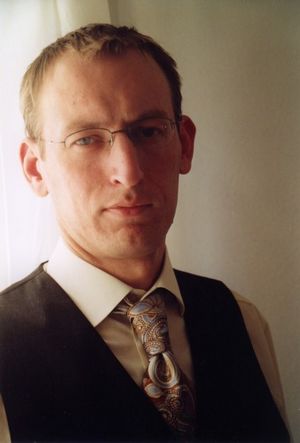
Thomas Pehlken, born in Oldenburg in 1970, received his first musical education in Krefeld and then mainly in Kempen/Lower Rhine, where he learnt classical composition from Stefan Tuschewitzki. Tuschewitzki also introduced Pehlken to newer music and mentored him in the composition of various works, one of which was honoured at the NRW state competition "Jugend komponiert" in 1991.
In 1992, Pehlken began his studies at the Cologne Academy of Music. In 1996, he passed the A examination for Protestant church music and was accepted into Prof Krzysztof Meyer's composition class for further study.
In 1998 and '99, Pehlken studied at the Krakow Academy of Music under its renowned rector, Prof Marek Stachowski, but also got to know other Krakow composers, including Krzysztof Penderecki. The "Polish school" had a lasting influence on Pehlken's work. His oeuvre includes orchestral works, cantatas, chamber music (string quartet, piano quintet, piano trio), songs, piano and organ works.
Pehlken performs at home and abroad both as a pianist and organist, has gained experience as a conductor and is also a successful composer. He has also worked as an organist and choirmaster since 1993 and has been district cantor in the Cologne-North church district since June 2005. As a church musician, Pehlken has conducted major oratorios such as Handel's Messiah, Bach's Christmas Oratorio, Mozart's Requiem and Beethoven's Mass op. 86, while also devoting himself to new music, particularly in organ works from Hindemith to Messiaen and Ligeti.
Selection of works
- Etudes for violin solo, 1985
- "Milla" for piano, timpani and string orchestra, 1990
- Sonatina for viola and piano, 1997
- String quartet, 1998
- Sonatina for piano, 1999
- "Fuga doppia" for piano quintet 2001
- "Ein Stein für Dorothee Sölle" for narrator, ensemble and choir, 2003
- Sonatina for flute and piano, 2006
- "Das Mondlicht" for baritone, violin, 2 violas, cello, 2007
- "Variations" for violin and large orchestra, 2008
- "Triptychon cisterciensis" for organ, 2010
- "Psalm 130" for 2 clarinets, cello, organ and choir, 2012
- "Rex Christe" for organ, 2019
- Sonatina for oboe and piano, 2020
More about my works at www.pehlken.info
