
Went
Went
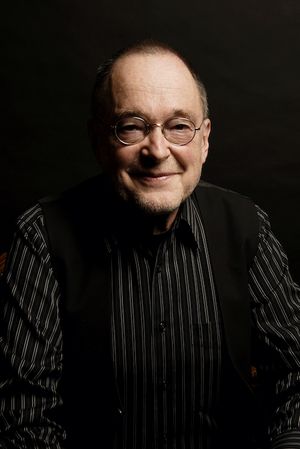
Credo
His own compositions can best be described as an attempt to transfer methods of so-called "securing evidence" to the production of music. This is a style within the visual arts from the seventies of the 20th century: collecting, viewing and organising a wide variety of materials, making an inventory of them and exhibiting them under all possible aspects from ethnological field research, natural history or history to fictional archaeology. Christian Boltanski is the big name associated with this to this day.
An exhibition by Nikolaus Lang at the Kestner Society in Hanover (1975/76) struck me like lightning. Afterwards, I created my first collection of sounds and instrumental gestures for a keyboard instrument, music about music, on the one hand backward-looking, on the other hand in the suspended state of an hour-long superstructure.
The next pieces of music were arrangements of four-part harmonies obtained in lengthy processes, which developed almost imperceptibly as quiet bands of sound. The criteria for their structure were always derived from analysing the material. Later, non-musical parameters were added, such as the control of sequences through texts.
The titles of the larger pieces, conceived for changing concerts:
Music for an exhibition. The titles of shorter etudes and occasional experiments: Tombeau . To this day, I do without the support of digital aids. On one occasion long ago, a pseudonym was absolutely necessary. Afterwards I stuck with it: the audience's reactions are always a little more honest this way...
Curriculum vitae
| 1952 | born in Wuppertal |
| 1960-1964 | Membership of a Protestant boys' choir |
| 1970-1974 | Studied Protestant theology in Wuppertal and Göttingen |
| 1974-1978 | Studied school music in Hanover |
| 1979-1981 | Assistant at the conservatory, harpsichord studies and concert participation in various ensembles |
| 1981-1983 | Preparatory service for a career as a librarian. Library career. Internships at the University of Oldenburg and at the Herzog August Library in Wolfenbüttel |
| 1983-2017 | Work at the library and information system of the University of Oldenburg: supervision of the music collection there |
| from 1990 | Teaching position for harpsichord and basso continuo at the Carl von Ossietzky University of Oldenburg continued: concert participation in various formations, including over 10 years in the ensemble Hamburger Ratsmusik Decades of involvement with his own compositions |
| from 1980 | Engagement with forensic methods |
Selection of works
Karl-Ernst Went
alias
Leon Łukasiewicz:
Musik für eine Ausstellung (1979-1981)
performed in the sound dome of the Columbus Centre Bremerhaven
in June 1994(unerhört), then in the Oldenburg Galerie am Schlosswall in July 1994(oh ton: aus der reihe)
4. music for an exhibition (2013/14)
simultaneous combination of the exhibition music 2 and 3,
partly performed over several hours at the Oldenburg
Long Night of Music 2014
5. music for an exhibition (2014/15)
rearranged overall sequence of the 4th music,
partially performed at the Oldenburg Long Night of Music
2015, repeated in the cellar vault of the Wilhelm Wagenfeld House Bremen on the occasion of the Long Night there in July 2015
6. music for an exhibition (2016/17): Rosarium gaudiosum
A complete rosary liturgy with sound background, performed at the Oldenburg Long Night of Music in June 2017 in the Catholic Church of St Peter.
7th Music for an exhibition (2018/19): Stille Gedanken von Gott...
Extract of the 5th exhibition music, performed in a three-channel experimental arrangement for mixed sounds. Text basis: a song poem by Gerhard Tersteegen. Oldenburg, Friedenskirche,
Long Night June 2019.
8th music for an exhibition (planned for 2020): Archiv der verlorenen Bilder
Almost 3000 variants of a plagal cadenza, combined with the descriptions of a collection of old family photos.
3rd Tombeau for harpsichord (1986)
Synthetic strophic bass variations from virtuoso toccata passages of the 17th century. Version as poster in oversize format and as playing score.
5th Tombeau for recorder quartet (1987/88) for the ensemble
"ut re mi", premièred in Nuremberg in 1988. Multi-layered sound study, based on a song text by Tersteegen.
Also arranged as a piano piece.
6th Tombeau (1992) for the ensemble "Camerata moderna",
premièred with an introduction by Prof. Peter Becker in the Hannoversche Eisfabrik October 1992:
Short simultaneous run of the related sections of the 1st and 2nd exhibition music: 2 recorders in hoketus, lute, viola da gamba and harpsichord
12th Tombeau (2019)
Sound research on the two chorale arrangements "An Wasserflüssen Babylons" by J. A. Reinken and J. S. Bach,
different versions.
