
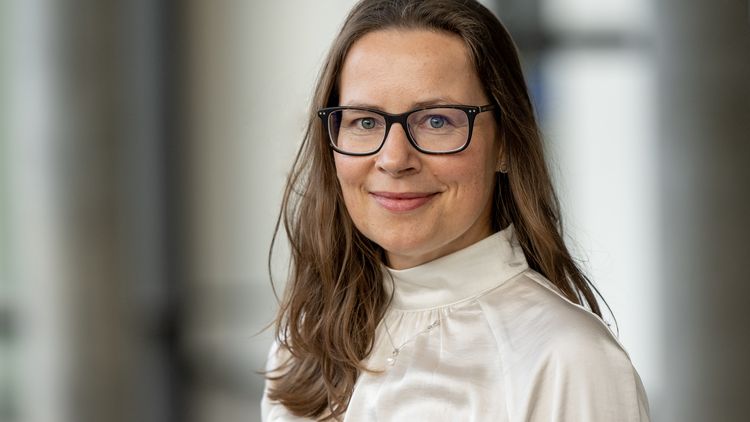


"Low German goes to school" - this is the heading under which experts from politics, culture and education are meeting at the university today. What is Low German and how has it developed over the past centuries? An interview with German scholar Doreen Brandt.
Low German - what is it actually: a dialect? A language? Or a historical form of German?
All three possible answers are correct, or at least not wrong. Historically speaking, Low German is a variant of German, just like High German. But while High German became established as the standard language over time, fewer and fewer people spoke and wrote Low German - or Plattdeutsch, as New Low German is also known. Whether it is a dialect or a language today has been the subject of much debate in recent years. Many Low German speakers see it as a language in its own right. Since 1999, Low German has also been protected by the European Charter for Regional or Minority Languages. The condition for this was Low German's status as a language in its own right.
What are the practical implications of being included in the Charter?
By recognising the Charter, the North German Federal States commit to promoting Low German - for example through cultural events or by introducing Low German as a school subject. Prospective teachers at the University of Oldenburg also learn how to teach Low German.
And you teach them Low German?
No, I don't speak Low German myself. A colleague of mine runs the language courses. But I understand Low German very well and give seminars on Low German literature from the Middle Ages to the present day.
That's quite a long period. What period do the sources you mainly work with come from?
As far as the historical forms of Low German are concerned, I'm particularly interested in the literature of the 15th and 16th centuries. This is also the period in which Low German was most widespread - not only in northern Germany, but also in northern, western and eastern Europe. This was due to the fact that Low German was the language of the Hanseatic cities. Wherever the Hanseatic League had trading centres and trading partners, Low German also spread: it was used for business correspondence, for example.
What literature is there from this period?
All sorts of things! In addition to business correspondence, for example, there are also inscriptions, collections of proverbs, bibles and legends, guidebooks and specialised literature, songbooks, tales, city charters, wills, chronicles ... The concept of literature used by medieval studies to describe the literature of the Middle Ages is very broad. It includes much more than what we generally understand by literature today.
And which of these works are particularly relevant to research?
One of them is the animal epic Reynke de Vos. This is a verse tale set in the animal kingdom. The sly and cunning fox Reynke repeatedly confronts the other animals in the kingdom of King Nobel, the lion, with violence and deceit. Although he ends up in court for this, he always manages to escape punishment thanks to his cunning. There is more to this story than meets the eye. It is also about covert criticism of the nobility and the clergy.
People still talk about the cunning fox today...
Yes, and that can also be traced back to this work. A version in Low German was published in Lübeck in 1498, which formed the basis for many other translations in the 16th century, for example into High German or Latin. From today's perspective, one would speak of a bestseller that remained popular for a very long time. Even Goethe took up the theme. The work is also relevant in terms of literary history because it was long assumed to be a Low German original - unlike many other Middle Low German works, which are adaptations from other languages. However, 19th century research was able to show that the Lübeck version can be traced back to a Dutch original.
How did it come about that Low German was later spoken and written less and less?
The gradual decline of the Hanseatic League in the 16th and 17th centuries probably played a role in this. As a result, the language lost its position as a supra-regional lingua franca. Over the course of the 16th century, the cities in the north gradually switched to using High German for their written correspondence. This process had begun even earlier in the princely chancelleries, where High German was more prestigious. As a result, from the 17th century onwards, Low German was almost exclusively spoken, but hardly ever written. From the 19th century onwards, spoken Low German also declined. For example, pupils were encouraged to speak High German in class.
Today, however, they are supposed to learn Low German again.
Yes, this is a measure within the framework of the Language Charter to promote and preserve Low German. Because there are fewer and fewer people who can speak it. The Institute for Low German regularly conducts surveys in the Federal States where Low German is spoken - i.e. Schleswig-Holstein, Lower Saxony, Mecklenburg-Western Pomerania, Hamburg, Bremen, Brandenburg and certain parts of Hesse, Saxony-Anhalt and North Rhine-Westphalia. In 2016, only around 16 per cent of respondents said that they spoke Low German very well or well. In 1984, 35 per cent said the same.
What tips do you have for anyone interested in learning Low German?
A good introduction can be bilingual literature, for example by Norbert Johannimloh, Bolko Bullerdiek and Waltrud Bruhn. They wrote Low German plays which they translated into High German themselves. This format was partly used to reach a wider audience - for example, people who don't understand Low German very well. Or you start with works that you already know. For example, Asterix or Harry Potter are also available in Low German today. In any case, there are many approaches to Low German literature. Today, it is mainly short stories and poetry that are originally written in Low German. Overall, however, there is a wide range, from theatre to radio plays and film to poetry slams. There are older authors who have grown up with Low German - but also younger ones, some of whom have only just learnt it.
The interview, conducted by Iria Sorge-Röder, first appeared at the end of August 2021 in the blog "Forschungsnotizen" of the transfer project "Innovatige Hochschule Jade-Oldenburg! (IHJO)". This is a slightly abridged version.